Ghana’s government is presenting the planned Accra-Kumasi Expressway as a long-term, economy-wide transport investment, citing shorter travel distance, faster journey times and modern highway standards as it advances early implementation steps under its “Big Push” infrastructure agenda.
Officials say the project is designed as a new, access-controlled corridor linking Accra to Kumasi through parts of Greater Accra, Eastern and Ashanti regions, while easing pressure on the existing Accra–Kumasi highway and improving safety on one of the country’s busiest routes.
Project rationale and “strategic investment” framing
Roads and Highways Minister Governs Kwame Agbodza has described the Accra-Kumasi Expressway as a strategic national investment intended to decongest major corridors, improve road safety and strengthen Ghana’s role as a transport hub in West Africa.
He said the expressway will follow a “carefully selected” alignment and is not expected to pass directly through communities, with access planned through interchanges and service lanes.
Expected transport and economic impact
In the 2026 Budget statement, government said the expressway will be 198.7 kilometres on a new alignment, reducing the current travel distance between Accra and Kumasi from about 250 kilometres by more than 50 kilometres. It said the project is expected to halve travel time and reduce transport costs by nearly 40 percent.
Government also said the project is expected to create more than 30,000 direct and indirect jobs during construction and to support industrial parks, logistics hubs and service economies along the corridor, aligned with its 24-hour economy programme.
Design features officials have outlined
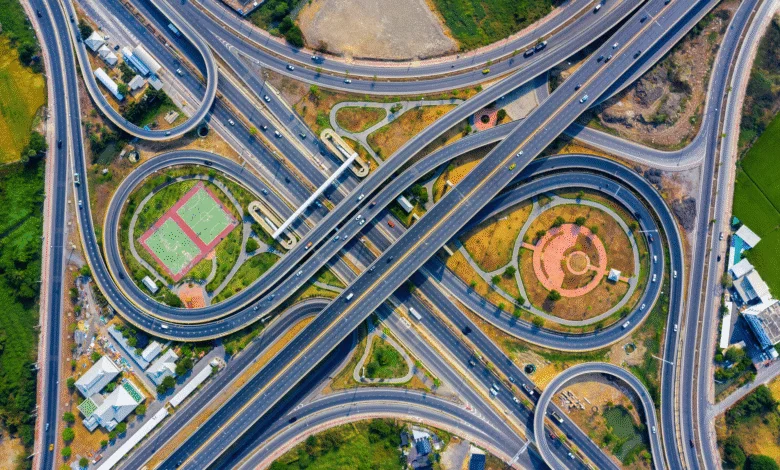
Government’s budget document described the expressway as a modern six-lane, bi-directional expressway and said it will feature eight major interchanges, with locations listed including Accra Hub, Adeiso, Asamankese, Akyem Oda, Ofoase, Lake Bosomtwe and Kumasi.
It also said the project will include major bridges over the Birim and Pra rivers, full-service areas with emergency medical facilities, fire stations, maintenance and rescue centres, rest stops, fuel stations, electric vehicle charging stations and parking lots, as well as two mainline toll plazas with 20 toll lanes each in Accra and Kumasi using automated systems.
Timeline and delivery model shared so far
Government says feasibility work has informed the project’s inclusion in the Big Push programme, and the Finance Minister, Cassiel Ato Forson, said in September 2025 that feasibility studies for a new Accra-Kumasi motorway had begun, describing it as a top national priority and stating it was expected to be completed within two and a half years.
In Parliament, a concession agreement between the Ministry of Roads and Highways and Accra-Kumasi Expressway Limited was approved on December 18, 2025, clearing a key step in the project’s rollout, according to state broadcaster reporting on the proceedings.
Agbodza has said the project is planned under a 50-year concession arrangement through a special purpose vehicle set up to own, fund and maintain the road, with cost recovery expected over time, including through tolling, and with repayment referenced over a 15-year period. He also said government was in the final stages of selecting an operator for a national electronic tolling system intended to run without physical toll booths.