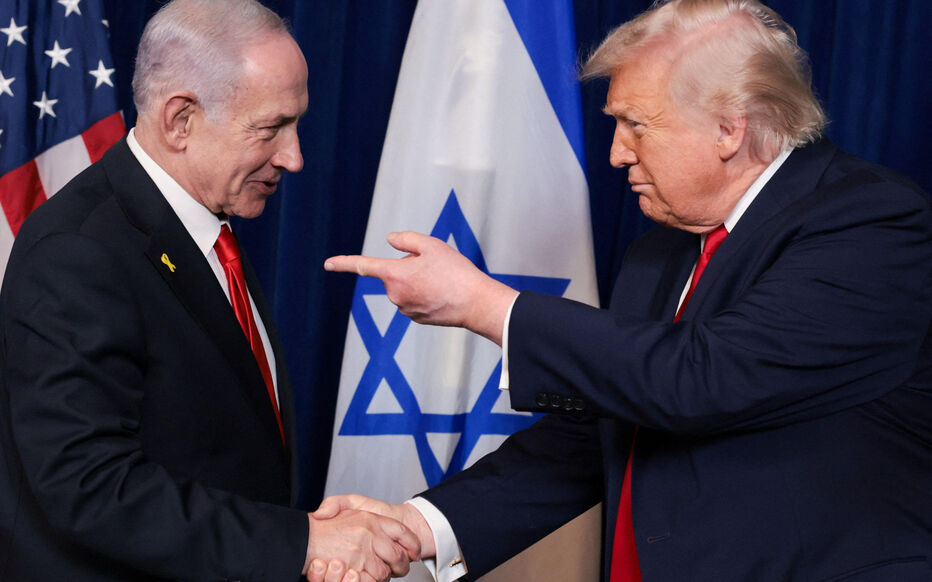
Donald Trump meets Benjamin Netanyahu in Washington on Wednesday, seeking alignment on how far to widen diplomacy with Iran. Netanyahu wants any U.S.–Iran track to cover ballistic missiles and Tehran’s support for allied armed groups. The meeting lands as Iran marks the 47th anniversary of the 1979 Islamic Revolution and signals it will not bow to outside pressure.
What Netanyahu wants from Washington
Israel fears a narrow nuclear understanding that leaves missiles and proxies untouched. Netanyahu will press for “maximum pressure” across all three files. He also aims to sync with Washington on Gaza policy and regional deterrence. Trump says a deal is still possible but warns of tougher steps if talks stall.
In Tehran, a defiant message
At Tehran’s Azadi Square, Massoud Pezeshkian told supporters that Iran “will not yield to excessive demands.” He repeated that Iran is not seeking a bomb and said the country is ready for verification of its program. Those remarks framed the day’s rallies and set a firm public line as diplomacy resumes.
A phone call that hints at mediation
Hours before the White House meeting, Sheikh Tamim bin Hamad Al Thani spoke by phone with Trump. Both sides backed efforts to de-escalate and keep channels open. The call underlines Doha’s continuing role around U.S.–Iran talks after recent indirect contacts in Oman.
On the streets and in the headlines
Iran’s anniversary rallies filled central Tehran with flags, posters and military symbolism. The optics stressed resilience at home as leaders assailed foreign pressure. The visuals also fed a narrative of strength while talks inch forward.
Trump meets Netanyahu — what changes now
Three outcomes would shift the calculus. First, a U.S.–Israel understanding to fold missiles and regional activity into any deal timeline. Second, a clearer U.S. position on sanctions relief triggers and snapback. Third, a pathway that pairs public firmness with a protected backchannel. Markets and regional actors are watching for signals beyond general statements.
Key facts for today
The meeting is at the White House on Wednesday, February 11, 2026. Iran’s president set red lines at Azadi Square the same day. Qatar weighed in with a de-escalation call ahead of the talks. Each thread points to a familiar mix: hard public lines and quiet exchanges in the background.
The day’s choreography is deliberate. Israel seeks broader constraints on Iran’s power. Tehran asserts rights under civilian nuclear rules while rejecting pressure. Washington balances leverage with a path to talks. What emerges from the Trump–Netanyahu session will shape the next moves—at the table and across the region.