A Junta Under Siege: Mali’s Governance Crisis Exposes the Limits of Military Rule and Foreign Security Dependency
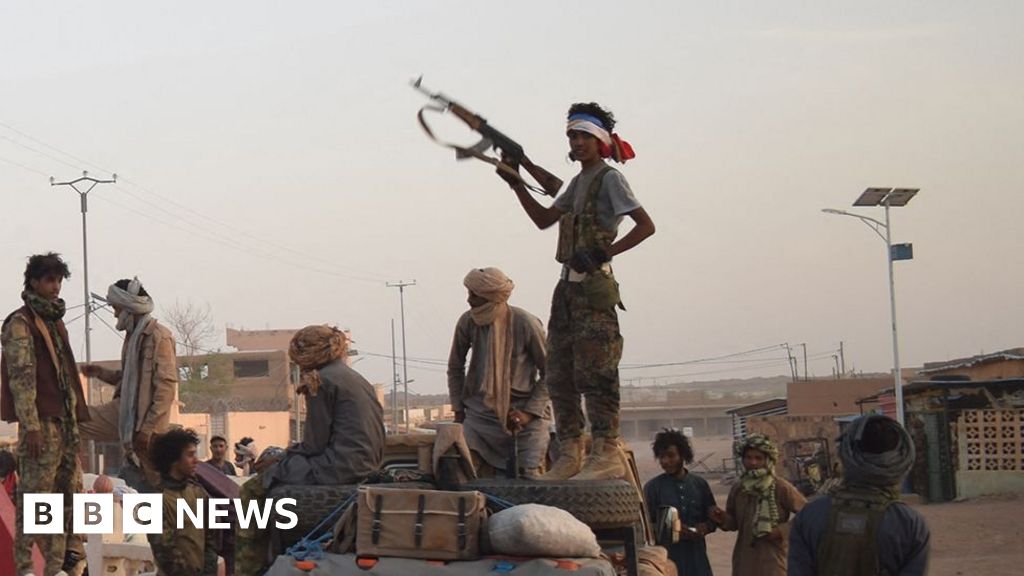
The coordinated rebel offensive that breached Bamako’s defenses, killed Defence Minister Sadio Camara, and handed the northern city of Kidal to separatist forces has exposed a fundamental failure of Mali’s post-coup security governance model. The attacks, claimed jointly by the separatist Azawad Liberation Front (FLA) and the al-Qaeda-linked Jama’at Nusrat al-Islam wal-Muslimin (JNIM), represent the most severe institutional stress test faced by Colonel Assimi Goïta’s junta since it seized power in August 2020.
For West African governance analysts and regional policymakers, the offensive raises questions that extend well beyond Mali’s borders: Can military governments deliver the security mandates they use to justify their seizure of power? And what does the visible failure of Russia’s Africa Corps signal for the foreign-dependency model that has defined Sahel security policy since 2021?
The Institutional Vacuum at the Heart of Mali’s Crisis
Goïta’s junta came to power promising to resolve a security crisis that elected civilian governments had failed to contain. Nearly six years later, the Malian state controls most major urban centers but has lost effective sovereignty over vast swaths of its territory. The fall of Kidal to FLA forces and the multi-city gunfire and explosions that greeted Malians on Saturday morning represent the operational collapse of a security strategy built on two pillars: Russian military partnership and political isolation from West African regional institutions.
The assassination of Defence Minister Camara is particularly damaging to institutional continuity. According to Ulf Laessing, head of the Sahel programme at the Konrad Adenauer Foundation, Camara was “the main interlocutor for Moscow and the brain behind the deployment of Russian mercenaries in the Sahel.” His death removes a critical node in Mali’s civil-military command structure at precisely the moment when coordinated counter-offensive planning is most needed.
Goïta’s delayed public response, appearing on national television three days after the offensive to declare the situation “under control,” compounded perceptions of institutional fragility. The presidency’s decision to publicize his meeting with Russia’s ambassador, Igor Gromyko, as a reassurance signal underscores how dependent the junta’s legitimacy has become on external security guarantors rather than domestic institutional capacity.
Russia’s Africa Corps: A Security Model Under Scrutiny
The Bamako offensive delivers a significant reputational blow to Russia’s military partnership model in Africa. When Goïta expelled French Barkhane forces in 2022 and invited in Russian fighters, the strategic logic was clear: replace a Western security partner perceived as neo-colonial with one offering fewer governance conditionalities. Moscow offered military hardware, Wagner Group (now Africa Corps) personnel, and political cover at the UN Security Council in exchange for influence, mining concessions, and a West African foothold.
That model is now under direct scrutiny. Beverly Ochieng, senior analyst at Control Risks, states that Russia’s reputation “has taken a huge blow” following the Africa Corps’ failure to defend Bamako and prevent the fall of Kidal. For other governments in the region that have adopted or are considering similar Russian security partnerships, including Burkina Faso and Niger, the Mali offensive functions as a live stress test with visible results.
The strategic question for Moscow is whether it can sustain influence in West Africa if its primary selling point, reliable security provision, has been demonstrably undermined. Russian military partnerships in Africa have been marketed as transactional and non-interventionist in domestic politics. But a security partner that cannot protect the capital of its primary Sahel client faces a credibility deficit that no amount of diplomatic signaling can easily repair.
Mali’s Security Partnership Diversification: Turkey, the US, and the AES Bloc
Faced with the limitations of exclusive Russian dependency, Bamako has already been quietly diversifying its security relationships. Turkish-supplied drones reportedly played a decisive role in Mali’s recapture of Kidal from rebel forces in 2024, and Ochieng notes reports of Turkish security personnel deployed to train the presidential guard. Ankara’s growing military footprint in Africa, built on drone diplomacy and defence agreements with states seeking alternatives to both Western conditionality and Russian reliability concerns, positions Turkey as a credible supplementary partner for Bamako.
Simultaneously, Washington has signaled a recalibration of its own approach. Earlier this year, Nick Hocker, head of the State Department’s African affairs section, traveled to Bamako to express US “respect for Mali’s sovereignty” and outline a “new course” in bilateral relations. The visit, which also referenced closer engagement with Burkina Faso and Niger, suggests the Trump administration is prioritizing security access over governance conditionality in the Sahel, a shift that opens diplomatic space for Goïta even as his institutional position weakens.
The Alliance of Sahel States (AES), the political bloc uniting Mali, Niger, and Burkina Faso after all three withdrew from ECOWAS in January 2025, has pledged solidarity with Bamako. However, the AES remains a declaratory body without a functioning joint military command or rapid deployment capacity. Its collective security architecture exists on paper; Saturday’s offensive tested whether it exists in practice. The answer, so far, is that it does not.
The Rebel Coalition: Governance Implications of an FLA-JNIM Alliance
The FLA-JNIM operational alliance that executed the Bamako offensive is tactically effective but ideologically unstable, a dynamic with direct implications for any post-junta governance scenario. The FLA presents itself as a nationalist, separatist movement seeking Tuareg self-determination in the Azawad region. JNIM is a transnational Islamist organization formally affiliated with al-Qaeda’s global network.
FLA leader Sayed Bin Bella has explicitly rejected a formal merger with JNIM, telling the BBC: “All the flags we have raised are our own, not those of al-Qaeda. If they wish to merge with us, they must withdraw from the global al-Qaeda organisation.” An FLA spokesman simultaneously described JNIM fighters as “cousins” sharing a common enemy. This rhetorical tension reflects a coalition of military convenience rather than political convergence.
Ochieng raises the possibility of a Syria-type scenario in which a group formerly affiliated with al-Qaeda assumes governing authority while distancing itself from its jihadist origins. JNIM has already moderated its public rhetoric in recent years, largely avoiding the global jihadist framing associated with al-Qaeda affiliates. Analysts monitoring jihadist media report that this pragmatism has already drawn accusations of ideological compromise from hardline Islamist observers, precisely because of JNIM’s alliance with the secular-nationalist FLA.
For West African regional institutions, the prospect of a fragmented northern Mali governed by competing armed factions, one separatist and one Islamist, presents a governance vacuum with direct spillover risks for Burkina Faso, Niger, and ultimately the ECOWAS member states to the south.
Regional Integration Consequences: ECOWAS Authority and the Post-AES Security Order
Mali’s departure from ECOWAS, alongside Burkina Faso and Niger, removed three Sahel states from the bloc’s collective security architecture at precisely the moment when that architecture is most needed. The Bamako offensive illustrates the governance cost of that withdrawal: Mali has no institutional mechanism to request ECOWAS rapid response support, no ECOWAS monitoring mission on the ground, and no multilateral diplomatic framework through which regional partners can formally intervene.
ECOWAS retains both the mandate and the institutional capacity to engage in conflict mediation and peacekeeping under its ECOWAS Standby Force framework. But the AES withdrawal has severed the formal channels through which that capacity could be deployed in Mali. The result is a security governance gap that benefits armed non-state actors and weakens the regional integration project that ECOWAS has spent decades constructing.
For investors and development partners operating across West Africa, the Mali crisis reinforces the governance premium attached to ECOWAS membership and institutional compliance. Countries maintaining strong ECOWAS engagement, including Côte d’Ivoire, Senegal, and Ghana, offer more predictable operating environments precisely because they remain embedded in regional accountability frameworks. The Bamako offensive is, among other things, a data point on the cost of institutional exit.
What Mali’s junta does in the coming weeks will determine whether military governance in the Sahel retains any residual legitimacy as a security delivery mechanism, or whether Saturday’s offensive marks the beginning of a terminal phase for a model that has failed on its own terms.