AUDA-NEPAD at 25: African Integration Agenda Confronts Structural Deficits and Competing External Interests
Twenty-five years after NEPAD’s founding architects, including South Africa’s Thabo Mbeki, Nigeria’s Olusegun Obasanjo, Algeria’s Abdelaziz Bouteflika, and Egypt’s Hosni Mubarak, positioned the initiative as Africa’s self-directed development framework, a Cape Town gathering marking the anniversary produced an unsparing assessment: the continent’s integration machinery remains structurally underpowered, and the window to close the gap is narrowing.
Intra-African Trade at 15%: A Governance and Institutional Failure
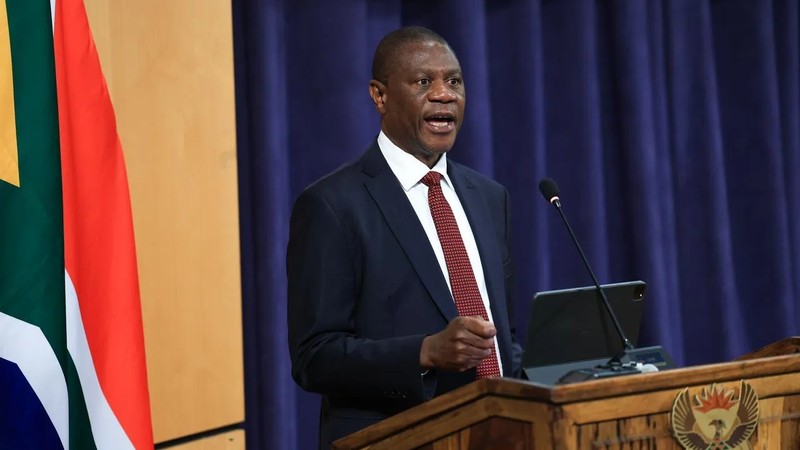
The headline figure from the anniversary conference is damning. Intra-African trade stands at just 15% of total African trade, a ratio that compares unfavorably with Europe (67%), North America (48%), and Asia (59%). South African Deputy President Paul Mashatile, addressing delegates co-convened by the Thabo Mbeki Foundation and AUDA-NEPAD, framed this not as a market anomaly but as a governance failure with compounding consequences.
“The continual reliance on the export of raw commodities represents the export of jobs,” Mashatile said, pointing to food imports as a specific policy contradiction: many African countries that are agriculturally capable continue to import manufactured food products, transferring value-added revenue outside the continent.
The structural logic is straightforward. Without regulatory harmonization, cross-border infrastructure, and enforceable trade frameworks, African producers face higher transaction costs trading with neighbors than with buyers in Europe or Asia. The African Continental Free Trade Area (AfCFTA), operational since 2021, provides the legal architecture to reverse this, but implementation has lagged behind the treaty’s ambitions. Tariff schedules remain incomplete, rules of origin negotiations are ongoing, and non-tariff barriers persist across most corridors.
Infrastructure Deficits Undermine Market Integration
AUDA-NEPAD’s head of infrastructure, governance and partnerships, Armien Chad Henricks, quantified the physical constraints that suppress intra-African commerce. 600 million Africans lack electricity access entirely; a further 300 million have access only to unreliable supply. 400 million people lack access to clean water, a figure Henricks noted rises sharply when the standard shifts to safe, controllable water resources.
These are not peripheral welfare statistics. Unreliable energy and water infrastructure directly constrain manufacturing capacity, cold chain logistics, and digital connectivity, each a prerequisite for the value-added industrial activity that AfCFTA is designed to stimulate.
The conference cited a 12-year delay in constructing a 250-kilometer rail link between Kenya and Somalia as a concrete illustration of how misaligned national interests translate into lost regional connectivity. Infrastructure projects of this scale require coordinated financing, harmonized technical standards, and political will across multiple jurisdictions. When any element fails, the corridor stalls.
AUDA-NEPAD’s One-Stop Border Post (OSBP) programme offers a partial counterpoint. Launched with a single crossing at Chirundu between Zambia and Zimbabwe in 2009, the programme now operates 32 posts, with 85 more in preparation. Border efficiency gains at these crossings reduce transit times and compliance costs, producing measurable trade facilitation benefits. The challenge is scaling this model to the continent’s more than 100 land borders, many of which remain administratively fragmented.
External Funding Dependencies and Competing Corridor Interests
A recurring concern among delegates was the degree to which Africa’s integration agenda is shaped, and sometimes distorted, by external financing priorities. Trade corridor funding from the European Union, the United States, and China frequently comes with design parameters that reflect donor interests rather than continental integration logic.
This is not a new observation, but it carries fresh urgency in the current geopolitical environment. As major powers compete for influence over African infrastructure, energy, and digital systems, African institutions face pressure to accept financing terms that may fragment rather than unify regional markets. A Chinese-financed port in one country and a US-backed corridor in a neighboring state may each be economically viable in isolation while collectively undermining the regional network coherence that AfCFTA requires.
Mashatile called explicitly for reforms to global financial architecture, including fairer developing-economy representation at the International Monetary Fund and the World Bank, and financing mechanisms calibrated to Global South development needs. The argument is institutional: African countries cannot negotiate financing terms on equal footing when they hold marginal voting shares in the institutions that set those terms.
The conference also flagged the continent’s over-reliance on aid funding for project implementation. When development projects depend on external grant cycles rather than domestic revenue mobilization or regional capital markets, they remain vulnerable to donor-country political shifts, a risk that has become more visible as Western aid budgets face domestic political pressure.
Regulatory Harmonization: Where Institutional Progress Is Measurable
Against the broader picture of slow integration, AUDA-NEPAD’s African Medicines Regulatory Harmonisation (AMRH) programme provides a model of what coordinated institutional action can deliver. By aligning regulatory standards across the East African Community, the programme cut medicine registration timelines from an average of two to three years to under twelve months. The practical effect is faster access to treatments for HIV, malaria, and tuberculosis across member states.
The AMRH model is instructive because it demonstrates that regulatory harmonization, often dismissed as technically complex and politically contentious, can produce concrete outcomes when anchored in a regional institution with a clear mandate and member-state buy-in. The African Union‘s broader regulatory harmonization agenda under Agenda 2063 could replicate this approach across customs procedures, product standards, and professional licensing, each of which currently fragments the continental market.
Mashatile identified beneficiation, manufacturing, logistics integration, energy cooperation, and digital industrialization as the operational pillars of Africa’s economic transformation. These are not aspirational categories; they map directly onto specific policy instruments: local content regulations, regional energy pools, digital trade protocols under AfCFTA, and investment frameworks that prioritize processing capacity over raw commodity export.
Xenophobia as an Integration Governance Problem
The conference addressed a dimension of integration that economic frameworks often underweight: the social and political conditions for free movement. Mashatile described recent xenophobic violence in South Africa as “shameful” and inconsistent with government policy, calling for law enforcement agencies to act against perpetrators.
The governance dimension here is precise. The ECOWAS Free Movement Protocol guarantees citizens of member states the right to enter, reside, and work across the region. The AU’s broader free movement agenda, including the Free Movement of Persons Protocol adopted in 2018, extends this principle continentally. But legal frameworks are only as effective as their domestic enforcement. When host-country populations perceive migrant workers as economic threats rather than integration beneficiaries, political pressure on governments to restrict movement can override treaty obligations.
Addressing this requires not only law enforcement responses to violence, but public communication strategies that frame regional integration as a shared economic project rather than a zero-sum competition for scarce resources.
Policy Pathways: From Anniversary Declarations to Implementation Accountability
The Cape Town gathering produced clear institutional priorities. AUDA-NEPAD, as the African Union’s primary implementation arm for Agenda 2063, carries formal responsibility for translating the integration agenda into operational programs. The anniversary marks a moment to assess where that mandate has been met and where it has not.
Three accountability mechanisms warrant specific attention. First, AfCFTA’s dispute resolution system needs to demonstrate that it can adjudicate trade complaints between member states with the same credibility as the WTO’s system, building the institutional trust that encourages private-sector participation in intra-African trade. Second, the AU’s infrastructure financing framework needs to reduce dependence on external corridor funding by mobilizing domestic capital through instruments like the African Development Bank‘s regional integration bonds. Third, AUDA-NEPAD’s OSBP programme needs a financing model that can sustain the 85 border posts in preparation without relying on donor grant cycles.
The 25-year anniversary is not a milestone for celebration alone. It is a governance audit. The founding diagnosis, poverty, underdevelopment, and structural inequality, remains accurate. What has changed is the availability of institutional tools, AfCFTA, the AU’s regulatory harmonization programmes, the OSBP network, and the AMRH framework, to address it. Whether African governments deploy those tools with the consistency and coordination the moment requires is a political choice, not a technical constraint.