Mbeki’s Africa Day Warning: Implementation Deficits and Land Governance Undermine Continental Development Agenda
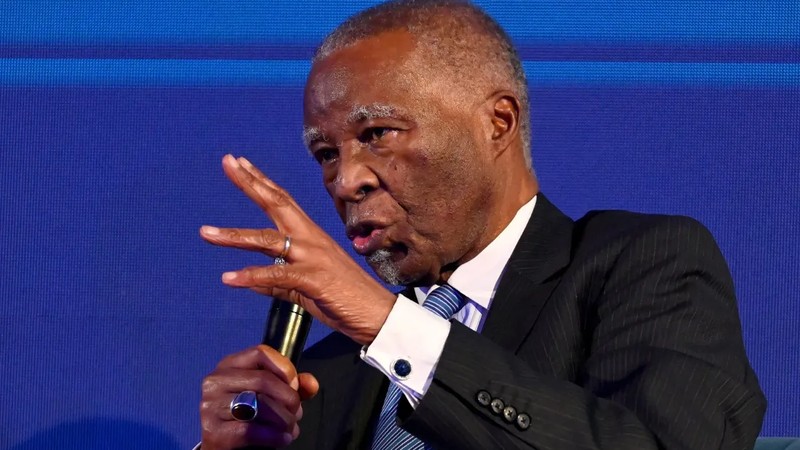
Former South African President Thabo Mbeki used the 15th edition of his eponymous Africa Day Lecture to deliver a pointed diagnosis of African governance failure: the continent does not lack sound policy frameworks, it lacks the institutional capacity and political will to execute them, while structural contradictions in land and investment policy continue to entrench poverty rather than dismantle it.
The Implementation Gap at the Heart of African Governance
Mbeki’s central argument, delivered in Dar es Salaam, Tanzania, between 18 and 25 May 2025, cuts to a governance challenge that development economists and regional institutions have long documented: African Union member states routinely adopt ambitious frameworks, from the Comprehensive Africa Agriculture Development Programme (CAADP) to the AfCFTA protocols, yet consistently fall short in execution.
Speaking under the theme “The State of the Continent: Reigniting the African Renaissance,” Mbeki identified human capital development as the binding constraint. Africa, he argued, has produced sufficient policy architecture. What it has not produced in adequate numbers are trained administrators, technocrats, and institutional operators capable of translating continental decisions into national-level outcomes.
This is not a peripheral concern. The AU’s own assessments of Agenda 2063 implementation progress have repeatedly flagged capacity gaps in member state bureaucracies as a primary obstacle to achieving the continental blueprint’s flagship targets, including infrastructure integration, intra-African trade expansion, and food security benchmarks.
In West Africa specifically, ECOWAS has faced persistent criticism for the gap between its normative output, directives, protocols, and supplementary acts, and actual domestic implementation rates. A 2022 ECOWAS Commission review found that fewer than 40 percent of community directives had been fully transposed into national legislation across member states, a figure that illustrates precisely the structural weakness Mbeki identified.
Land Policy Contradictions and the FDI Paradox
Mbeki’s sharpest critique targeted a specific policy contradiction visible across sub-Saharan Africa: governments publicly commit to smallholder agriculture and food sovereignty as anti-poverty instruments, while simultaneously auctioning agricultural land to multinational corporations under foreign direct investment frameworks that deliver limited local benefit.
This tension is institutionally acute in West Africa. Ghana, Senegal, and Côte d’Ivoire have each attracted large-scale agricultural investment deals over the past decade, some structured through bilateral investment treaties that offer investor protections exceeding those available to domestic smallholders operating under customary land tenure systems.
In Ghana, the 2023 Land Act reforms sought to modernize tenure registration and reduce the legal ambiguity that has historically made smallholders vulnerable to displacement. However, implementation has been uneven, and community land rights remain inadequately protected in practice, particularly in peri-urban and resource-rich zones where investor pressure is highest.
Senegal’s experience with large-scale land allocations in the Casamance and Senegal River Valley regions offers a comparable case study. Research by the Oakland Institute and the International Land Coalition documented cases where FDI-linked agricultural concessions displaced subsistence farming communities without adequate compensation or resettlement mechanisms, directly contradicting the government’s stated poverty reduction objectives.
The governance failure Mbeki describes is therefore not merely rhetorical. It is embedded in the structural design of investment promotion frameworks that prioritize capital attraction over rights protection, and in the absence of enforceable community consent mechanisms within national land administration systems.
The African Renaissance Framework and Its Institutional Limits
The Thabo Mbeki Foundation has convened the Africa Day Lecture since 2010 as a platform for continental intellectual and policy engagement. Its 15th edition, co-organized with the University of South Africa (UNISA), where Mbeki serves as Chancellor, brought together political leaders, diplomats, academics, and civil society representatives to assess Africa’s development trajectory.
The African Renaissance concept that underpins the Foundation’s work carries specific institutional implications. It positions African agency, meaning African-designed solutions implemented through African institutions, as the legitimate pathway to development, explicitly rejecting dependency frameworks that subordinate continental priorities to external conditionalities.
This framing has direct relevance for ongoing debates within ECOWAS about institutional reform following the withdrawal of Mali, Burkina Faso, and Niger from the community in 2024. The formation of the Alliance of Sahel States (AES) and its declared rupture with both ECOWAS and France represents, in one reading, a radical assertion of sovereignty and African agency. In another, it represents the fragmentation of the very institutional architecture through which continental integration and shared governance standards are meant to be enforced.
Mbeki’s governance critique applies with particular force to this fracture. The Sahel states’ withdrawal was driven in significant part by popular frustration with governance failures, corruption, and the perceived inability of civilian administrations to deliver security and basic services. These are precisely the implementation deficits Mbeki identified. The political consequence, however, has been a turn toward military governance that most governance analysts assess as deepening rather than resolving those structural weaknesses.
Human Capital, Institutional Capacity, and the AfCFTA Execution Challenge
Mbeki’s emphasis on human capital as the critical missing variable has specific implications for the AfCFTA’s operational phase. The agreement, which entered into force in 2021 and covers a market of approximately 1.4 billion people with a combined GDP of around US$3.4 trillion, is structurally sound as a trade liberalization instrument. Its execution, however, depends on customs administration capacity, rules of origin certification systems, dispute resolution mechanisms, and regulatory harmonization processes that require exactly the trained institutional personnel Mbeki identified as scarce.
The AfCFTA Secretariat’s own data indicates that intra-African trade as a share of total African trade remains below 18 percent, compared to approximately 60 percent for Europe and 55 percent for Asia. Closing that gap requires not only tariff reduction schedules but functional trade facilitation infrastructure at border posts, ports, and customs administrations across 54 member states.
In West Africa, ECOWAS has made measurable progress on trade corridor development through the West Africa Trade and Investment Hub and the Abidjan-Lagos corridor project. But border delays, informal taxation, and regulatory inconsistency continue to impose transaction costs that effectively negate formal tariff preferences for many small and medium enterprises.
Policy Pathways: What Institutions Must Now Prioritize
Mbeki’s diagnosis points toward three concrete institutional priorities for African governments and regional bodies.
First, member states must close the transposition gap between AU and ECOWAS normative frameworks and domestic legislation. This requires dedicated parliamentary capacity, legal drafting resources, and accountability mechanisms that track implementation against agreed timelines.
Second, land governance reform must move beyond legislative modernization toward enforceable community rights frameworks. Investment promotion agencies need to integrate free, prior, and informed consent requirements into FDI approval processes, with independent monitoring and binding compensation mechanisms where displacement occurs.
Third, the human capital deficit Mbeki identified requires sustained investment in public administration training, not only in technical ministries but in the mid-level bureaucratic tiers where policy implementation actually occurs. The AU’s African Governance Architecture provides a framework; member states need to fund and operationalize it.
The 15th Africa Day Lecture did not offer a programmatic roadmap. What it did, with the authority of a former head of state who helped architect key continental frameworks, was restate with clarity that Africa’s governance deficit is primarily one of execution, accountability, and political will, not of ideas. That distinction matters for how regional institutions, investors, and citizens assess the distance between continental ambition and continental reality.