FOCAC’s Modernisation Agenda: Structural Transformation or Dependency Deepening for West Africa?
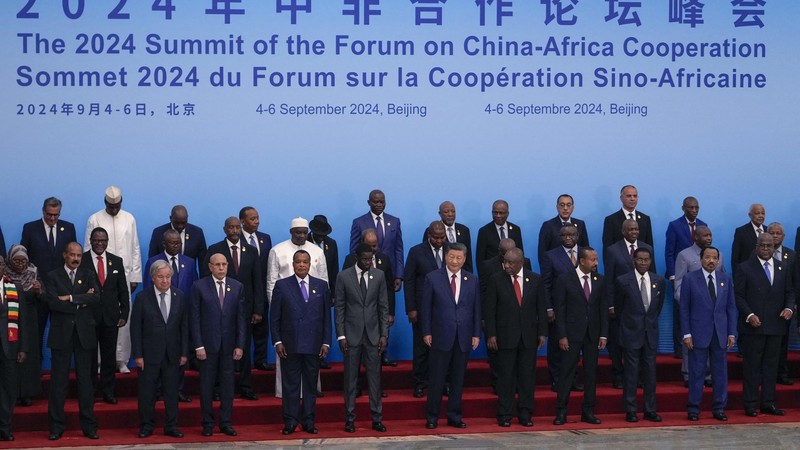
The 2024 Forum on China-Africa Cooperation Summit in Beijing elevated “modernisation” as the defining framework for Sino-African engagement, committing both sides to industrialisation, agricultural transformation, and green development. For West African governments navigating AfCFTA implementation and ECOWAS integration mandates, the question is not whether to engage China, but on what institutional terms and with what structural outcomes.
From Rhetoric to Architecture: What the FOCAC Framework Actually Commits To
The word “modernisation” appeared 40 times in the 2024 FOCAC Action Plan, compared to just twice in the 2021 iteration. That frequency signals a deliberate reframing of the partnership’s ideological scaffolding, not merely a rhetorical upgrade.
The framework identifies three structural pillars: industrialisation, agricultural modernisation, and green development. In November 2025, China and South Africa formalised this architecture further by signing the Initiative on Cooperation Supporting Modernisation in Africa on the sidelines of the G20 Summit hosted in Johannesburg, anchoring the agenda within multilateral settings where African states can exert collective leverage.
For West Africa specifically, these commitments carry both institutional opportunity and governance risk. The region hosts several of the continent’s most active Chinese investment corridors, including Guinea’s bauxite sector, Mali’s gold operations, and Niger’s uranium and oil infrastructure. How these existing relationships evolve under the new modernisation framework will determine whether FOCAC’s language translates into durable industrial capacity or entrenches commodity dependence.
Industrial Policy Alignment: ECOWAS Mandates Meet Chinese Capital
FOCAC’s industrialisation commitments, including the establishment of special economic zones, free trade zones, and industrial parks, theoretically align with ECOWAS’s own regional industrial policy framework and the African Union’s Agenda 2063 goal of building integrated manufacturing value chains.
The practical record, however, is uneven. Chinese enterprises have established mineral processing plants across the Democratic Republic of Congo, Zimbabwe, Guinea, and Mali since the 2024 summit. In Guinea, Chinese-backed bauxite and alumina processing operations have expanded, but local value addition remains limited relative to raw export volumes, and fiscal revenue capture by the Guinean state has been contested.
The AfCFTA’s industrial development protocol, still under negotiation, offers a governance mechanism through which West African states could collectively set minimum local content thresholds and processing requirements for Chinese-financed resource projects. Ivory Coast and Ghana, both positioning themselves as regional manufacturing hubs, have a direct institutional interest in ensuring that Chinese SEZ investments complement rather than bypass AfCFTA’s preferential trade architecture.
Nigeria, as ECOWAS’s economic hegemon, faces a particular tension. Its domestic manufacturing sector has repeatedly flagged Chinese import competition as a structural constraint, while its government simultaneously courts Chinese infrastructure financing. A coherent Nigerian industrial policy that conditions Chinese investment on technology transfer and local supply chain integration would set a regional precedent.
Agricultural Modernisation: Whose Technology, Whose Governance Standards?
FOCAC’s agricultural commitments include the establishment of a China-Africa Agricultural Sciences and Innovation Union, joint research laboratories, mechanisation support, and cross-border agricultural logistics infrastructure. China also committed to promoting local production of inputs including pesticides, fertilisers, and machinery.
For West Africa’s predominantly smallholder agricultural economies, including Senegal, Ghana, and Burkina Faso, the governance question is whether Chinese agricultural technology partnerships will be structured through national research institutions and ECOWAS’s regional agricultural policy framework, the ECOWAP, or whether they will operate as bilateral arrangements that fragment regional standards.
Senegal’s agricultural modernisation agenda under its Vision 2050 plan and Ghana’s Planting for Food and Jobs programme both require external technology partnerships. The risk is that multiple bilateral Chinese agricultural deals, negotiated independently by individual West African governments, will produce incompatible input standards, fragmented logistics networks, and reduced collective bargaining power on technology licensing terms.
A coordinated ECOWAS approach to China’s agricultural technology offer, negotiating common standards for pesticide registration, seed certification, and machinery compatibility, would generate significantly more structural benefit than the current state-by-state approach.
Sovereignty Framing and the Governance Accountability Gap
FOCAC’s modernisation framework explicitly positions itself against Western-led development conditionality, invoking South-South cooperation principles and non-interference in domestic governance as foundational commitments. Chinese and African leaders have consistently framed this as respect for sovereignty and self-determination.
That framing resonates politically across West Africa, particularly in Sahel states where French institutional influence is being actively rejected. Mali, Burkina Faso, and Niger, all governed by military juntas that have expelled French forces and terminated bilateral security agreements, have deepened economic and security ties with China and Russia since 2023.
The governance accountability question, however, is not resolved by invoking sovereignty. When Chinese-financed mineral processing plants in Guinea or Mali generate environmental liabilities, when SEZ labor standards fall below ILO thresholds, or when debt service obligations on Chinese infrastructure loans constrain fiscal space for social spending, the costs are borne by African citizens and governments, not by FOCAC’s institutional architecture.
Ghana’s experience is instructive. The country’s Bank of Ghana and Ministry of Finance have both cited the structural composition of external debt, including non-concessional Chinese loans for infrastructure, as a complicating factor in the 2022-2023 debt restructuring process under the G20 Common Framework. Accra’s ability to negotiate comparable debt relief terms to those secured by Zambia was constrained by the opacity of Chinese loan terms and the absence of a multilateral framework governing Chinese sovereign lending.
Policy Pathways: Collective Bargaining Over Bilateral Dependency
The modernisation framework FOCAC has constructed is institutionally coherent on the Chinese side, coordinated through the Ministry of Commerce, state policy banks, and state-owned enterprises operating with aligned mandates. On the African side, engagement remains fragmented across 54 bilateral relationships, each negotiated with asymmetric information and limited peer review.
Three institutional mechanisms would materially improve West Africa’s structural position within the FOCAC framework.
The 2024 FOCAC modernisation agenda offers genuine resources, technology, and infrastructure financing that West African states need. Whether those resources produce structural transformation or deepen commodity dependence depends on the institutional quality of African engagement, not on Chinese intentions. The governance architecture to negotiate better terms already exists within ECOWAS, the AU, and AfCFTA. The deficit is political will to use it collectively.