US Rate Hike Fears and Iran Conflict Drive Global Market Volatility, Rattling West African Investment Flows
A convergence of geopolitical risk and tightening monetary signals from Washington sent global equity markets lower on Thursday, as fresh US military strikes on Iran and above-target inflation data reinforced expectations of a Federal Reserve interest rate increase before year-end. For West African economies managing external debt in US dollars and competing for foreign direct investment, the repricing of global risk carries direct institutional consequences.
Federal Reserve Signals and the Inflation Threshold
May inflation data released Wednesday showed the US Consumer Price Index rising above 4%, a more than three-year high driven largely by fuel costs tied to the ongoing Iran conflict. While core inflation came in slightly below forecasts, the headline figure, combined with a stronger-than-expected US jobs report earlier in the week, has materially shifted market expectations around Fed policy.
Futures markets now price in a rate increase before the end of the year, even if new Federal Reserve Chair Kevin Warsh is unlikely to move at the institution’s next policy meeting in approximately one week. One market analyst noted that “the Fed is swinging more quickly behind a hike than it might have done or markets might think,” adding that “headline CPI above four percent against a really strong labour market clearly deserves attention from the Fed.”
For West African sovereign borrowers, a Fed rate hike translates directly into higher refinancing costs on Eurobond debt and a stronger US dollar that erodes the purchasing power of local currencies. Ghana, which restructured its external debt under an IMF programme beginning in 2023, and Senegal, which issued a Eurobond in early 2024, are among the ECOWAS member states most exposed to this transmission mechanism.
Equity Market Contagion and the Technology Sector
On Wall Street, the Nasdaq fell 2% and the S&P 500 shed nearly as much, with rate-sensitive technology stocks bearing the brunt of the sell-off. Asian markets followed: Seoul’s KOSPI, which had reached record highs on a technology-led rally, declined more than 1%. Markets in Tokyo, Hong Kong, Shanghai, Singapore, Sydney, Wellington, and Taipei also closed lower.
The technology sector’s vulnerability matters for West African capital market development. The Nairobi Securities Exchange and the Ghana Stock Exchange have both sought to attract listings from tech-adjacent firms, and institutional investors allocating to frontier markets typically recalibrate risk appetite when US equity benchmarks correct sharply. A sustained Nasdaq downturn reduces the risk tolerance that drives portfolio flows into sub-Saharan African equities.
The West African Capital Markets Integration project, supported by ECOWAS and currently linking the Ghana Stock Exchange, the Nigerian Stock Exchange, and the BRVM serving WAEMU countries, remains at an early stage of harmonisation. Regulatory divergence across these bourses limits the region’s capacity to absorb or buffer external shocks collectively, a structural gap that Thursday’s volatility again exposed.
Iran Conflict and the Oil Price Dimension
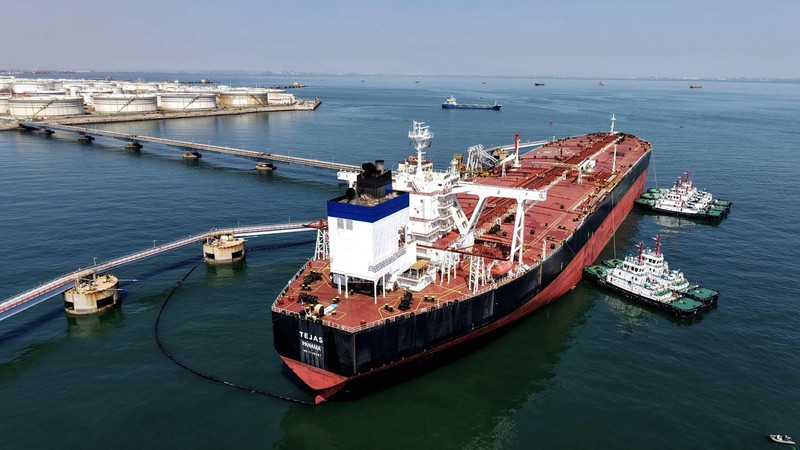
A series of US military strikes on Iranian targets, including operations on Tuesday following the downing of an American helicopter, pushed oil prices higher on Thursday. Brent crude’s upward movement reflects genuine supply-side uncertainty: Iran’s production capacity and export routes remain under pressure, and any escalation risks disrupting Gulf shipping lanes that carry a significant share of global crude volumes.
The oil price dynamic cuts differently across West Africa’s diverse producer and importer landscape. Nigeria, the continent’s largest crude producer and an OPEC member, stands to benefit from elevated Brent prices in terms of fiscal revenue, though the country’s chronic refining deficit means domestic fuel costs rise in parallel. Ghana’s Jubilee and TEN offshore fields also generate revenue tied to international benchmarks, providing some fiscal buffer at a moment when the country’s IMF-supported adjustment programme demands revenue performance.
By contrast, landlocked Sahelian economies including Mali, Burkina Faso, and Niger, all of which have recently withdrawn from ECOWAS to form the Alliance of Sahel States, face acute fuel import cost pressures with no corresponding export revenue offset. The political rupture with ECOWAS compounds their vulnerability: these states no longer benefit from the bloc’s collective trade facilitation mechanisms or its macroeconomic surveillance frameworks at a moment of external financial stress.
Institutional Implications for ECOWAS Monetary Cooperation
The episode renews questions about the pace and architecture of West African monetary integration. The ECOWAS single currency project, the ECO, has been delayed repeatedly, with the most recent target dates missed as member states failed to meet the bloc’s macroeconomic convergence criteria on inflation, fiscal deficits, and central bank financing of government budgets.
A Fed rate hike environment historically strengthens the US dollar and places downward pressure on emerging and frontier market currencies. The Ghana Cedi (GHS), the Nigerian Naira, and the Sierra Leonean Leone have all experienced significant depreciation episodes in recent years, eroding import capacity and fuelling domestic inflation. WAEMU countries, whose CFA franc is pegged to the euro through the French Treasury arrangement, are partially insulated from dollar volatility but face their own competitiveness pressures when the euro weakens against the dollar.
The Bank of Ghana, operating under an inflation-targeting framework since 2007, will face renewed pressure to defend price stability if the Cedi comes under renewed depreciation pressure. Its institutional credibility, tested during the 2022-2023 debt crisis when the government’s fiscal dominance threatened central bank independence, remains a key variable for investor confidence in Ghana’s ongoing recovery.
AfCFTA, Trade Finance, and the Cost of External Volatility
Beyond capital markets, the global risk environment affects the operational conditions for intra-African trade under the African Continental Free Trade Area (AfCFTA). Trade finance costs, which are benchmarked to US dollar interest rates, rise when the Fed tightens. African Development Bank data indicates that the trade finance gap on the continent already exceeds US$80 billion annually, with West African small and medium enterprises disproportionately excluded from formal credit instruments.
A higher-rate global environment widens this gap, making it more expensive for West African firms to access the letters of credit and working capital facilities needed to participate in AfCFTA’s preferential tariff arrangements. The AfCFTA Secretariat in Accra has identified trade finance as a structural bottleneck; Thursday’s market moves illustrate why resolving it requires both domestic regulatory reform and coordinated regional financial architecture.
For policymakers across ECOWAS, the immediate response to external volatility should focus on three institutional levers: maintaining central bank policy credibility and independence to anchor inflation expectations; accelerating domestic capital market deepening to reduce reliance on external portfolio flows; and advancing the ECOWAS trade finance harmonisation agenda to lower transaction costs for intra-regional commerce. These are not abstract reform objectives. They are the specific mechanisms through which West African economies build resilience against the kind of external shock that Thursday’s market session delivered.