US-Iran Ceasefire and Strait of Hormuz Reopening: What West Africa’s Energy-Import Economies Stand to Gain
A ceasefire agreement between the United States and Iran, brokered by Pakistan and set for formal signing in Geneva on 19 June 2025, has triggered an immediate 13% drop in global crude oil prices, raising a concrete policy question for West African governments: will the commodity price relief translate into lower fuel costs for consumers and reduced fiscal pressure on subsidy-dependent states?
A Chokepoint That Shapes West African Import Bills
The Strait of Hormuz, through which approximately 20% of global crude oil flows, was effectively closed by Tehran following US-Israeli strikes on Iran on 28 February 2025. The closure drove Brent crude prices sharply higher over the following three months, compounding inflationary pressures across West Africa’s predominantly fuel-importing economies.
Ghana, Senegal, Côte d’Ivoire, and Togo all import refined petroleum products or crude oil for domestic refining, making their current account balances and domestic fuel pricing directly sensitive to global oil benchmarks. Nigeria, the region’s sole major crude exporter, occupies the opposite position: higher oil prices bolster its export revenues but also inflate domestic fuel costs in a country where the Dangote refinery is still ramping up to full capacity.
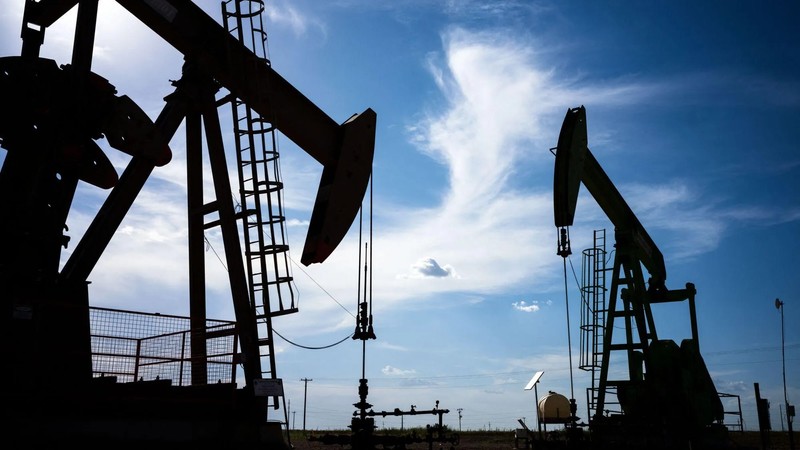
By Monday, Brent crude was trading at approximately US$83 per barrel, down nearly 13% from mid-week highs, after markets reopened following the weekend announcement. Oil futures had already declined around 4% in anticipation of the deal on Thursday and Friday.
Fiscal Relief or Structural Vulnerability? The Subsidy Question
For governments that have maintained fuel subsidies or price controls, the price drop offers temporary fiscal breathing room, but exposes a deeper governance failure. Ghana’s National Petroleum Authority operates an automatic pricing formula linked to global benchmarks, meaning lower crude prices should, in principle, mechanically reduce pump prices within the next pricing window.
In practice, however, currency depreciation frequently offsets commodity price gains. The Ghana Cedi’s sustained weakness against the US dollar, which oil is priced in globally, has historically absorbed much of the benefit from falling crude prices. The same dynamic applies in Sierra Leone, Liberia, and Guinea, where exchange rate instability routinely decouples domestic fuel prices from international market movements.
Nigeria presents a different institutional challenge. Following the removal of its decades-long petrol subsidy in 2023 under President Bola Tinubu, the country’s fuel pricing is now more directly exposed to global crude movements. A sustained oil price decline would reduce the Naira cost of imported refined products, providing relief to consumers still adjusting to post-subsidy price levels that have more than tripled since 2022.
Stephen Innes of SPI Asset Management noted that “oil down takes the inflation impulse down,” with lower energy costs reducing broader price pressures and easing expectations of interest rate increases in advanced economies. For West African central banks already managing elevated inflation, a reduction in the imported inflation component would provide additional monetary policy flexibility.
Supply Uncertainty Persists Despite the Announcement
The ceasefire framework carries significant verification risks that commodity markets are beginning to price. The formal signing ceremony is scheduled for 19 June in Switzerland, after which a 60-day window opens for negotiations on Iran’s nuclear programme. Failure to reach a nuclear agreement could, under the terms announced by President Trump, trigger a resumption of US military action.
The International Energy Agency warned in its May 2025 monthly report that global oil inventories declined at approximately 4 million barrels per day during March and April, and that the market will remain “severely undersupplied” through October 2025, even if the conflict ends immediately. Nearly 600 vessels remain stranded in the Persian Gulf awaiting passage through the strait, with hundreds more queued on the Arabian Sea side, according to vessel-tracking firm Kpler.
Mine clearance operations and the behaviour of regional actors, particularly Israel, represent additional variables that analysts are monitoring before declaring the supply disruption resolved. Innes characterised the current agreement as “an early framework for a ceasefire that postpones deeper unresolved issues, including Iranian compliance and the role of Hezbollah.”
For West African energy planners and finance ministries, this uncertainty argues against locking in budget assumptions based on current spot prices. The IEA’s undersupply projection through October suggests that even a partial reopening of the Strait may not immediately restore pre-conflict supply volumes.
Regional Integration and the Energy Governance Gap
The episode highlights a structural weakness in West Africa’s collective energy governance architecture. ECOWAS has no operational mechanism for coordinated petroleum procurement, price stabilisation, or strategic reserve management among its 15 member states. Each country negotiates import contracts independently, absorbs price shocks individually, and manages subsidy or deregulation policy without regional coordination.
By contrast, the West African Gas Pipeline, which connects Nigeria to Ghana, Benin, and Togo, offers a partial model of regional energy infrastructure cooperation, though chronic underutilisation and maintenance disputes have limited its impact. The ECOWAS Energy Protocol, which provides a framework for cross-border energy trade and investment, has not been ratified by all member states and lacks enforcement mechanisms comparable to those governing goods trade under AfCFTA.
Côte d’Ivoire has positioned itself as a regional refining hub, with the Société Ivoirienne de Raffinage supplying processed products to landlocked neighbours including Mali and Burkina Faso. A sustained reduction in crude input costs would improve Abidjan’s regional competitiveness and reduce the cost of petroleum product imports for Sahel countries already under severe fiscal stress from security expenditure.
Senegal, which began offshore oil production in early 2024 through the Sangomar field, is watching the global price environment closely. Lower Brent prices compress the fiscal returns on its nascent hydrocarbon sector, though Dakar has structured its production-sharing agreements to provide minimum revenue floors that limit downside exposure.
Policy Pathways: Converting Price Relief into Structural Reform
West African finance ministries face a recurring pattern: commodity price windfalls and relief periods are absorbed into general expenditure rather than used to reduce structural energy import dependency or build reserve buffers. The current price decline, if sustained, creates a narrow window for reform.
Ghana’s ongoing IMF programme, under which Accra received a US$3 billion Extended Credit Facility in 2023, includes conditions on energy sector fiscal management and subsidy rationalisation. Lower oil prices reduce the immediate political cost of completing that rationalisation, but the Bank of Ghana and Ministry of Finance will need to resist pressure to expand expenditure commitments on the assumption that low prices persist.
At the ECOWAS level, the price shock argues for accelerating discussions on a regional petroleum strategic reserve and joint procurement framework, proposals that have circulated within the Commission’s energy directorate but have not advanced to binding commitments. AfCFTA’s energy services protocols, still under negotiation, could provide a legal architecture for such cooperation if member states choose to prioritise it.
The US-Iran ceasefire has delivered an immediate commodity price signal that West African policymakers cannot afford to treat as a permanent condition. The IEA’s supply data, the verification risks in the ceasefire framework, and the region’s chronic currency vulnerabilities all counsel institutional caution. Converting a temporary price reprieve into durable energy security requires governance reform at the national level and integration architecture at the regional level, neither of which the market will supply on its own.