
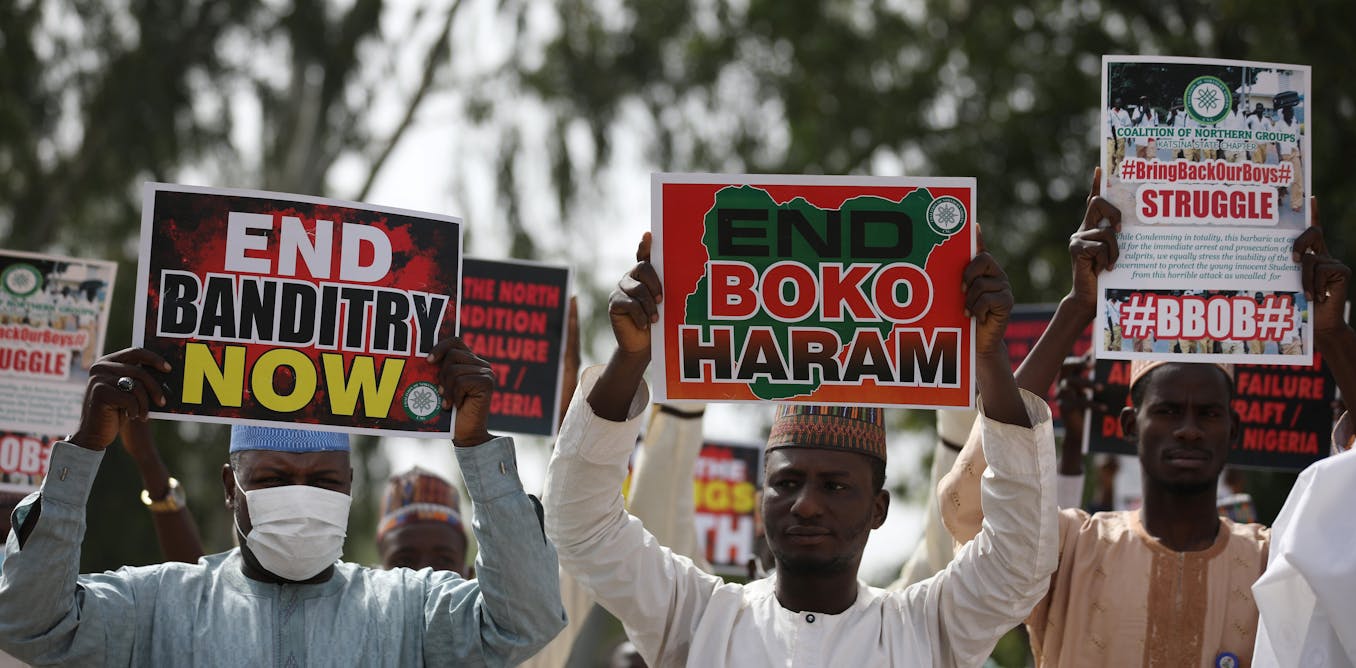
A Security Governance Deficit at Nigeria’s Rural Frontier
New sociological research documenting firsthand survivor accounts of banditry across four of Nigeria’s six geopolitical zones reveals a security governance architecture that is systematically failing rural populations. With 599 attacks and 2,742 casualties recorded in 2025 alone, up from 256 attacks and 1,585 deaths in 2024, the scale of the crisis demands institutional reckoning, not merely operational response.
The study, conducted through in-depth interviews and focus group discussions across 48 communities in Nigeria’s North-Central, North-West, South-West and South-East zones, offers granular evidence of how bandit networks operate, whom they target, and where formal security institutions are absent or inadequate. Its findings carry direct implications for Nigeria’s internal stability and, by extension, for ECOWAS-wide security cooperation frameworks.
The Anatomy of Organised Rural Violence
The research establishes that banditry in Nigeria is not opportunistic criminality but a structured, adaptive enterprise. Armed groups operate with tactical consistency: attacks are concentrated in the late-night and early-morning hours, timed to exploit community vulnerability. Operations frequently coincide with market days or Sundays, when populations are concentrated and movement predictable.
Participants across all four regions reported that bandits are equipped with AK-47s, G3 and K2 rifles, pump-action guns, machetes and incendiary materials used to burn entire villages. One traditional leader described the operational logic with precision: “They come even twice or even thrice in a week. I think their plan is to stop us from going to the farm. Whenever we go, they either kill us or others on the farm, or they wait until people are returning home then attack them on the road.”
Critically, the study identifies the role of insider collaboration. Although bandits were often strangers to attack locations, informants within targeted communities frequently facilitated operations. This finding points to a social fragmentation that purely military responses cannot address.
Gendered Violence and Differentiated Targeting as Governance Indicators
The research documents a structured pattern of gendered victimisation that reflects both the social organisation of bandit groups and the absence of protection mechanisms for rural women. Men are disproportionately killed, particularly those perceived as capable of resistance. Women are more frequently abducted and coerced into forced marriages with bandits.
“Whenever they come, they say ‘men come out’ but they only take women they find attractive and take them away, and make them their wives,” one participant reported. In other documented cases, women were subjected to rape, theft, and murder.
The downstream effects compound across generations. As men are killed, women become widows and children lose fathers. Some children are subsequently withdrawn from school. During attacks, men sometimes fled for personal safety, leaving families behind, while mothers, unable to abandon their children, remained exposed. These dynamics produce sustained household economic collapse that no short-term security intervention can reverse.
For high-value kidnapping operations, bandits demonstrate selective targeting: wealthy individuals and community figures whose families are presumed capable of raising ransoms. Bandit groups have also imposed levies on some communities, functioning as a parallel taxation system that signals territorial control rather than mere criminal opportunism.
State Institutional Failure and the Limits of Formal Security
A survivor in Plateau State captured the frequency of state failure in a single sentence: “A month will not go by without someone being killed in this village by bandits. That is how bad and frequent it is.” Another participant described a single attack that killed over 20 people, requiring a mass burial in one day.
The research exposes a fundamental misalignment between formal security architecture and rural threat environments. Nigeria’s security forces, including police, military and paramilitary units, are structurally oriented toward urban centres and conventional threats. Community vigilante organisations exist in many affected areas but operate without formal integration into state security chains of command, limiting their intelligence-sharing capacity and legal authority.
The study’s methodology, which paired community testimonies with key informant interviews from both security officials and traditional leaders, reveals that local knowledge about bandit movements, timing and insider networks exists but is not systematically captured or acted upon by state institutions. This is a governance failure of information management as much as of force deployment.
Nigeria’s federal structure further complicates response. Jurisdictional ambiguity between federal and state governments over security mandates has historically produced coordination gaps that armed groups exploit. The study explicitly calls for federal-state collaboration to locate and dismantle bandit hideouts, a recommendation that implies the current framework is insufficient.
Regional Security Implications for ECOWAS and West African Stability
Nigeria’s banditry crisis does not respect national borders. The documented expansion of bandit activity from the northwest into the southwest signals a geographic metastasis that threatens Nigeria’s economic heartland, including Lagos, the continent’s largest city and a critical node in the AfCFTA trade architecture.
Within the ECOWAS framework, Nigeria’s internal instability has measurable regional spillover effects. Armed groups operating in Nigeria’s northwest share porous borders with Niger, Benin and Burkina Faso, all of which are managing their own security crises. Niger’s suspension from ECOWAS following the July 2023 coup has already weakened the bloc’s collective security coordination. A Nigeria consumed by escalating internal banditry is a Nigeria with diminished capacity to anchor regional security institutions.
For investors assessing West African exposure, the data is unambiguous. Agricultural disruption in Nigeria’s farming communities, documented through farm invasions, destruction of crops and displacement of rural labour, directly affects food security metrics that ripple across the region. Nigeria is a net food importer; further agricultural disruption tightens supply chains that WAEMU countries and smaller West African economies depend upon.
Peer economies are watching. Côte d’Ivoire has invested heavily in rural security infrastructure as part of its post-2011 stabilisation strategy, and Senegal’s community-based security frameworks have drawn regional attention. Ghana, which shares a border with the increasingly volatile Sahel corridor, has maintained relative rural stability through decentralised district security councils, a model that Nigerian governance reformers have studied but not replicated at scale.
Policy Pathways: Institutional Integration and Intelligence Architecture
The study’s findings point toward three concrete institutional interventions that go beyond calls for more troops or higher defence budgets.
First, formal integration of community vigilante organisations into state security chains is essential. These groups possess localised intelligence that formal security services lack. Legal frameworks governing their authority, accountability and coordination with police and military units must be codified, not left to ad hoc arrangements.
Second, rural early-warning and reporting systems must be built into community governance structures. The research shows that attack patterns are predictable: timing, targets and methods follow identifiable logic. Communities equipped with structured reporting protocols and direct communication channels to security agencies can convert that knowledge into preventive action.
Third, federal-state security compacts with defined jurisdictional clarity are necessary to close the coordination gap that bandit networks currently exploit. Nigeria’s 2022 Terrorism Prevention and Prohibition Act expanded the legal definition of terrorism to include some banditry-related offences, but legislative reform without institutional coordination mechanisms produces limited operational change.
At the ECOWAS level, Nigeria’s crisis argues for renewed investment in the bloc’s Early Warning and Response Network, ECOWARN, which was designed precisely to aggregate cross-border security intelligence but has been chronically underfunded and operationally marginalised. A revitalised ECOWARN, with Nigeria as an active data contributor rather than a reluctant participant, would strengthen collective response capacity across the sub-region.
The evidence from 48 communities across Nigeria’s most affected zones is unambiguous: banditry has evolved into a governance challenge that security force deployment alone cannot resolve. Institutional design, intelligence integration and intergovernmental coordination are the variables that determine whether Nigeria’s rural populations remain perpetually exposed or gain meaningful protection.