Somaliland’s Jerusalem Embassy Tests African Union Sovereignty Norms and Regional Recognition Frameworks
Somaliland’s inauguration of an embassy in Jerusalem marks a calculated diplomatic pivot that simultaneously challenges two foundational principles of African Union governance: the inviolability of colonial-era borders and the continental consensus on Palestinian statehood.
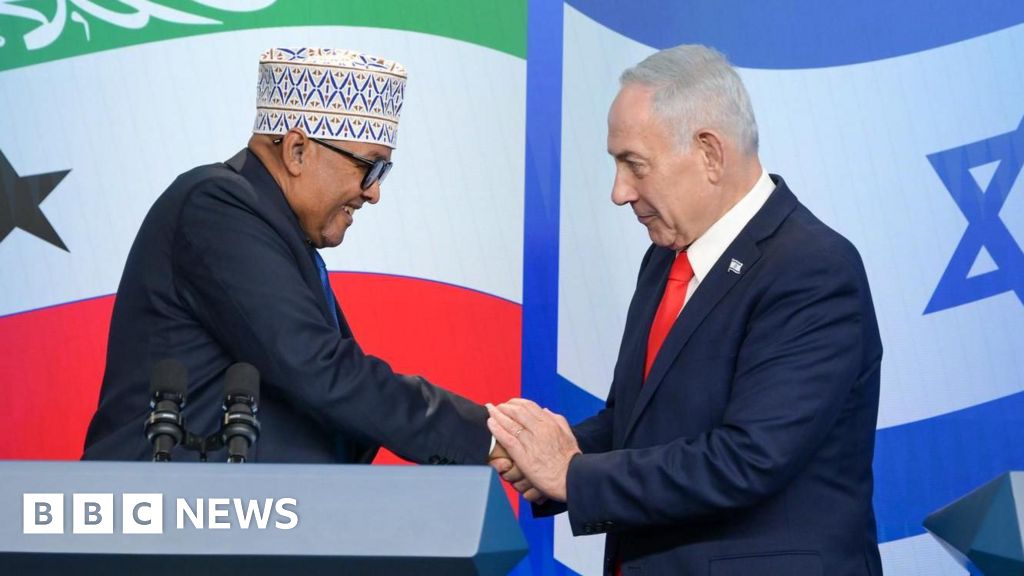
President Abdirahman Mohamed Abdullahi opened the mission at a technology park in West Jerusalem on an official visit to Israel, six months after Israel became the first state to formally recognise Somaliland’s independence from Somalia, declared in 1991.
A Recognition Architecture Built Outside AU Frameworks
Israel’s December 2024 recognition of Somaliland was the first breach in more than three decades of international non-recognition, and it arrived without AU endorsement or IGAD consultation. Dozens of governments and multilateral bodies, including China, Turkey, Saudi Arabia, and the African Union itself, rejected the declaration as destabilising.
The AU’s foundational principle, inherited from the Organisation of African Unity’s 1964 Cairo Resolution, holds that post-colonial borders are inviolable regardless of internal governance failures. Somaliland’s case tests that doctrine directly: the territory has maintained functioning elections, its own currency (the Somaliland shilling), and independent security forces since breaking from Mogadishu following the collapse of the Siad Barre government.
Somalia’s foreign ministry responded to the Jerusalem embassy opening by calling on “all international partners to uphold international law and condemn actions that undermine the unity and stability of the Somali state.” Mogadishu considers any engagement with Hargeisa a violation of its sovereignty.
The tension exposes a structural gap in African governance architecture: the AU possesses no formal mechanism to adjudicate competing sovereignty claims between a member state and a sub-state entity that has, by most functional measures, operated as an independent polity for 34 years.
Jerusalem Siting Compounds the Diplomatic Calculus
Somaliland’s decision to locate its mission in Jerusalem rather than Tel Aviv, where the overwhelming majority of foreign embassies remain, adds a second layer of diplomatic complexity. Israeli Prime Minister Benjamin Netanyahu praised the choice explicitly, drawing a parallel between Somaliland’s quest for recognition and Israel’s claim to Jerusalem as its “eternal and undivided” capital.
“Just as you expect nations to recognise your sovereignty, your identity, your own national rights,” Netanyahu said during talks with Abdullahi, “the same thing we have vis-à-vis our capital.”
Israel occupied East Jerusalem during the 1967 war and annexed it in 1980, a move rejected by most of the international community. The Palestinian Authority’s foreign ministry condemned the embassy opening as “a flagrant violation of international law,” describing Somaliland’s mission as an “alleged embassy” in an “occupied city.”
Only a handful of states, including Guatemala, Honduras, Kosovo, Paraguay, Papua New Guinea, and Fiji, maintain embassies in Jerusalem following the United States’ controversial relocation in 2018. Somaliland’s addition to that list places it in direct opposition to the AU’s longstanding support for a two-state solution and Palestinian sovereignty over East Jerusalem.
Strategic Geometry: Red Sea Access and Rare Earth Resources
Behind the diplomatic symbolism lies a concrete strategic exchange. President Abdullahi highlighted Somaliland’s coastline near the mouth of the Red Sea as “strategic” and pointed to untapped natural resource potential, including rare earth minerals and oil reserves, as areas for bilateral cooperation with Israel.
For Israel, the partnership offers a foothold in the Horn of Africa at a moment when Red Sea security has become a primary concern, following Houthi attacks on commercial shipping that have disrupted global trade routes through the Bab-el-Mandeb strait since late 2023. Somaliland’s port of Berbera, developed with UAE investment and a DP World concession, sits directly on that corridor.
Israeli Foreign Minister Gideon Saar’s official visit to Hargeisa earlier in 2025 signalled that the relationship has moved beyond symbolic recognition into operational partnership. The specific contours of any defence, intelligence, or resource-extraction agreements have not been publicly disclosed.
For Somaliland, the Israeli relationship offers what 34 years of democratic governance, relative stability, and repeated appeals to Western capitals have not: a formal seat at the table of international recognition, however contested.
Institutional Implications for IGAD, the AU, and African Diplomatic Coherence
The episode reveals three institutional fault lines with consequences beyond the Horn of Africa.
First, the AU’s silence on a mechanism for managing sub-state recognition claims leaves member states exposed to unilateral external interventions in their territorial disputes. Somaliland’s case is not unique: Ambazonia in Cameroon, Cabinda in Angola, and the Western Sahara all involve contested sovereignty with no AU adjudication pathway.
Second, African states’ ability to project a coherent position on the Israeli-Palestinian conflict is weakened when a territory seeking AU-adjacent legitimacy actively aligns with Israeli positions on Jerusalem. The Palestinian Authority’s condemnation of the embassy opening will reverberate in Arab League capitals that maintain economic relationships with AU member states.
Third, the Israel-Somaliland partnership illustrates how external powers can exploit governance gaps in African regional architecture to establish strategic presence. The pattern is not new: UAE, Turkish, and Chinese port and infrastructure investments across the Horn have each reshaped regional security geometries in ways that IGAD and the AU have struggled to coordinate responses to.
Somaliland’s governance record is, by regional standards, genuinely impressive. It has conducted multiple peaceful transfers of power, maintained macroeconomic stability without IMF programme support, and avoided the conflict that has consumed southern Somalia. The question is not whether Somaliland deserves recognition, but whether a bilateral deal with Israel, anchored in Jerusalem and framed outside African institutional processes, is the mechanism most likely to produce durable, regionally legitimate statehood.
AU member states, IGAD, and the broader international community now face a recognition architecture increasingly shaped by bilateral transactions rather than multilateral norms. Without a formal AU framework to assess sub-state governance and adjudicate independence claims, the precedent set by the Israel-Somaliland agreement will invite further circumvention of continental institutions by external actors pursuing strategic interests in Africa’s most contested territories.