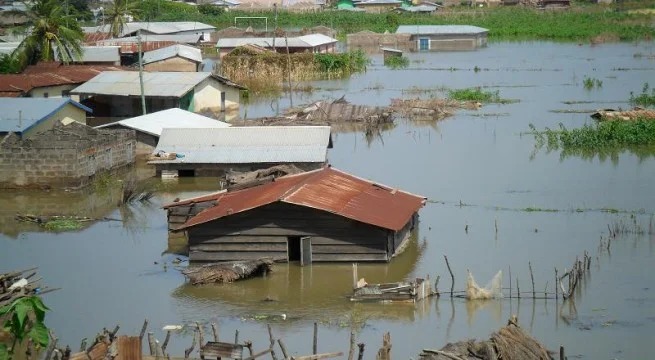
Every rainy season, communities along the White Volta in Ghana’s Upper East Region brace for a disaster they did not cause. When Burkina Faso’s Bagre Dam releases water upstream, the resulting floods inundate farmlands, collapse homes, wash out roads, and displace thousands of residents across northern Ghana. The damage is not incidental, not unpredictable, and not new. It is annual. And yet, no formal compensation mechanism has been triggered, no binding bilateral protocol has been enforced, and the affected communities have absorbed these losses largely in silence. Dr. Raymond Aitibasa Atanga, an environmental scientist at the University of Technology and Applied Sciences, argues that this silence has a cost Ghana can no longer afford to pay.
Dr. Atanga’s call for Ghana to pursue compensation from Burkina Faso through the Volta Basin Authority places a specific institutional question at the center of a long-running humanitarian grievance. The Volta Basin Authority, established in 2007 under a convention signed by Benin, Burkina Faso, Côte d’Ivoire, Ghana, Mali, and Togo, exists precisely to govern shared water resources through equitable, sustainable, and cooperative management. Its charter contains dispute resolution and compensation mechanisms. The question is not whether the legal architecture exists. It does. The question is why Ghana has not activated it.
The Bagre Dam, located in Burkina Faso’s Centre-Nord region, is a multipurpose reservoir managed primarily for irrigation and hydroelectric generation. Its spillage during peak rainfall is operationally predictable, yet downstream communities in Ghana’s Upper East and Northern regions consistently receive inadequate advance notice. Dr. Atanga has pointed to the absence of robust, real-time early warning systems as a structural failure compounding the damage. “The losses suffered by our farmers and communities cannot continue without appropriate remedies,” he told Citi News, framing the issue not as a natural disaster but as a governance failure with identifiable responsible parties.
The economic toll is substantial and cumulative. Farmlands destroyed by annual flooding represent not only immediate crop losses but the erosion of long-term agricultural capital in one of Ghana’s most food-insecure regions. The Upper East Region, where smallholder farmers cultivate staples such as rice, groundnuts, and sorghum, depends on the dry-season and early wet-season harvests that the floods routinely destroy. Infrastructure damage to rural roads and bridges imposes additional costs on supply chains that are already fragile, cutting off markets and delaying humanitarian response. When these losses are aggregated across multiple districts and multiple years, the macroeconomic impact on Ghana’s northern agricultural output becomes a legitimate national concern, not merely a local one.
Framing this as a bilateral dispute also requires acknowledging Burkina Faso’s own constraints. The country manages the Bagre Dam under competing domestic pressures, including irrigation demands from its own farming communities and electricity generation needs. Burkina Faso is itself among West Africa’s least-developed economies, and its technical capacity to implement sophisticated dam management reforms may be limited without external support. This does not dissolve its legal obligations under the Volta Basin Authority convention, but it does shape the kind of diplomatic engagement that is likely to produce durable results. Punitive compensation claims pursued through adversarial channels may harden positions; compensation frameworks embedded within cooperative dam management agreements are more likely to generate compliance and long-term behavioral change.
The regional institutional context matters here. ECOWAS, whose mandate includes the management of shared natural resources and conflict prevention among member states, has an interest in ensuring that transboundary water disputes do not escalate into political friction between Ghana and Burkina Faso. The two countries share not only the Volta Basin but also significant trade flows, migration corridors, and security interdependencies, particularly given the deteriorating security environment in Burkina Faso’s Sahel region. A governance framework that addresses the Bagre Dam spillage through structured compensation and joint management protocols would strengthen, rather than strain, that bilateral relationship.
Comparative practice from other transboundary river systems offers instructive precedents. The Senegal River Development Organization (OMVS), which governs the Senegal River shared by Senegal, Mali, Mauritania, and Guinea, has developed joint infrastructure management protocols and cost-sharing arrangements that distribute both benefits and liabilities among member states. The Niger Basin Authority, covering nine countries including Nigeria and Niger, similarly provides frameworks for coordinated water releases and downstream impact assessments. These institutions demonstrate that shared water governance can move beyond declaratory cooperation toward binding operational agreements with real accountability mechanisms. The Volta Basin Authority has the institutional mandate to do the same; what it requires is political will from its member governments to demand it.
Dr. Atanga’s recommendation that Ghana incorporate disaster resilience and climate adaptation into regional development planning adds a forward-looking dimension to what might otherwise appear to be a backward-looking compensation claim. Climate projections for the Sahel and West African savanna zones indicate increasing rainfall variability, with more intense wet seasons punctuated by longer dry periods. This means the Bagre Dam’s spillage events are likely to become more severe, not less, as upstream catchment rainfall intensifies. Building flood-resilient infrastructure in northern Ghana, developing climate-adaptive agricultural systems for affected communities, and establishing predictive hydrological monitoring across the Volta Basin are investments that serve both countries’ long-term interests.
The governance pathway Dr. Atanga outlines is, in essence, a test of whether West African multilateral institutions can translate their founding charters into operational accountability. Ghana holds a strong legal and moral position. Its communities have suffered documented, recurring, and quantifiable harm from a predictable upstream activity. The Volta Basin Authority provides the forum, the legal basis, and the procedural tools to address this. What Ghana’s Ministry of Foreign Affairs and Ministry of Environment, Science, Technology and Innovation must now do is build the evidentiary record, quantify the losses through systematic damage assessments, and present a formal compensation and joint management proposal to the Volta Basin Authority’s Council of Ministers. That is not an act of hostility toward Burkina Faso. It is an act of institutional seriousness, the kind that gives regional frameworks their credibility and gives affected communities their dignity.