Nigeria’s competition regulator has launched a formal investigation into Meta, Alphabet, X, and unnamed generative AI platforms, targeting what it describes as anti-competitive conduct and the unauthorised harvesting of Nigerian journalistic content — a move that positions Africa’s largest economy as a serious regulatory actor in a global dispute over who profits from the digital news ecosystem.
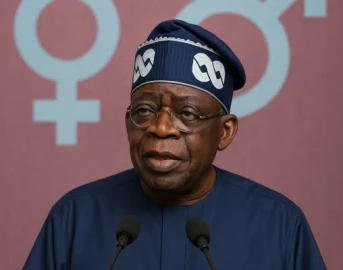
The Federal Competition and Consumer Protection Commission (FCCPC) announced the inquiry following a directive from President Bola Tinubu, himself responding to a joint petition filed by the Nigerian Press Organisation (NPO), an umbrella body representing journalists, newspaper proprietors, and online publishers. The FCCPC’s spokesman Ondaja Ijagwu confirmed the investigation would examine “market dominance and anti-competitive conduct,” as well as allegations that Nigerian media organisations have been systematically denied “meaningful opportunities to negotiate fair compensation or appropriate commercial arrangements for the use of their journalistic content.” The core institutional question is not merely whether laws were broken. It is whether Nigeria’s regulatory architecture is capable of enforcing them against some of the world’s most capitalised corporations.
The thesis here is straightforward: Nigeria is not acting in isolation, but it faces a structural enforcement deficit that will determine whether this probe produces binding remedies or dissolves into procedural noise. The FCCPC’s intervention reflects a legitimate governance challenge — one that Canada, Australia, and the European Union have each confronted with varying degrees of institutional authority and legislative muscle. Nigeria’s capacity to achieve comparable outcomes depends on the strength of its legal instruments, the political durability of regulatory independence, and whether West African peers coordinate rather than fragment their responses.
The underlying economics are well-documented. As news consumption migrated online, digital advertising revenue consolidated overwhelmingly within the platforms of Meta, Alphabet, and a handful of other technology conglomerates. A 2023 Reuters Institute report estimated that digital advertising revenues captured by platform intermediaries now represent more than 60% of total online ad spending in many markets, leaving publishers — particularly in lower-income economies — with diminishing margins and eroding editorial capacity. In Nigeria, with 154.7 million internet subscriptions recorded by the National Communications Commission as of April 2025, the scale of platform penetration is considerable. WhatsApp, Facebook, Instagram, and X collectively dominate social media usage. Nollywood, the country’s globally recognised film industry, has pivoted toward YouTube as Western streaming platforms retrench from commissioning new local productions. The platforms extract value; the question the FCCPC must answer is whether that extraction violated Nigerian competition law.
The AI dimension adds a distinct and more complex layer. Generative AI companies — which the FCCPC has not yet publicly named — are alleged to have used Nigerian journalistic content to train large language models without authorisation or compensation. This is not a peripheral concern. The global legal debate over AI training data is live in courts across the United States and Europe, with publishers including the New York Times and several major European news groups filing suits against OpenAI and others. Nigeria’s investigation inserts an African jurisdiction into that contested space. FCCPC Director Tunji Bello was careful to frame the inquiry as exploratory rather than accusatory, describing it as “an opportunity to carefully examine the facts, hear from all affected parties, and determine whether any conduct has resulted in anti-competitive outcomes or unfair business practices.” That measured language is appropriate for a regulator seeking to establish credibility, but it also signals the distance between an investigation and an enforceable remedy.
The regional and continental dimensions of this probe deserve explicit attention. Nigeria operates within ECOWAS, a 15-member bloc whose mandate includes the harmonisation of trade and economic regulation. No ECOWAS-wide framework currently governs platform liability or digital content compensation, leaving member states to act individually against corporations with vastly superior legal resources and lobbying capacity. WAEMU countries — Senegal, Côte d’Ivoire, Burkina Faso, and others — face structurally identical challenges: their media ecosystems are equally exposed to advertising revenue capture by global platforms, and their AI-generated content risks are no less real. A coordinated ECOWAS regulatory approach, modelled loosely on the EU’s Digital Markets Act or Australia’s News Media Bargaining Code, would substantially increase collective leverage. Individual national probes, however well-intentioned, risk being outmaneuvered or simply outlasted.
Australia’s experience is instructive. When the Australian Competition and Consumer Commission moved against Meta and Google in 2021 under the News Media Bargaining Code, it secured commercial agreements between platforms and Australian publishers worth an estimated AU$200 million annually — not because the law was perfect, but because the regulatory threat was credible and the political commitment was sustained. Meta initially blocked Australian news content entirely before reversing course under government pressure. Canada’s Online News Act, which came into force in 2023, produced a similar confrontation, with Meta withdrawing news links from Canadian users before eventually reaching negotiated arrangements. Nigeria’s FCCPC does not yet have a comparable legislative instrument specifically designed for platform-publisher relations, and that gap matters. The Federal Competition and Consumer Protection Act of 2018 provides a general antitrust framework, but its application to AI training data and digital advertising market dominance will require either creative legal interpretation or new sector-specific legislation.
For investors and multinationals operating in Nigeria and across West Africa, the probe sends a signal worth taking seriously. Nigeria is demonstrating regulatory ambition in the digital economy, and the FCCPC’s willingness to target Meta, Alphabet, and X simultaneously — companies that have routinely deflected regulatory scrutiny in smaller markets — reflects a calculated assertion of institutional authority. Whether that authority translates into durable policy outcomes depends on three things: the FCCPC’s access to technical expertise on AI systems and digital advertising mechanics; the Nigerian judiciary’s capacity to adjudicate complex technology disputes without undue delay; and the government’s ability to resist the lobbying pressure that invariably accompanies investigations of this scale. None of these conditions is guaranteed. All of them are governable.
The FCCPC’s investigation is, at its core, a test of whether African regulatory institutions can hold global technology firms to account within their own jurisdictions. That test will not be resolved by this probe alone. But its outcome will shape the expectations of media organisations, digital entrepreneurs, and policymakers across the continent for years to come.