Ghana’s headline inflation reached 5.3 percent in June 2026, its third consecutive monthly increase, and analysts at Databank Research now project it could retreat to between 4.6 percent and 5.0 percent in July. That forecast raises a sharper question than it answers: does a single month’s moderation signal durable price stability, or does it mask the structural vulnerabilities that have kept Ghana’s economy exposed to recurring inflationary cycles?
The distinction matters far beyond household budgets. Ghana is operating under an IMF-supported fiscal consolidation programme, and the Bank of Ghana’s credibility as an inflation-targeting institution depends on whether disinflation reflects genuine monetary transmission or simply seasonal arithmetic. Investors, regional peers, and ECOWAS monetary convergence monitors are all watching.
Databank’s analysts are explicit that the projected July easing is driven by month-specific factors, not a broad-based quarterly trend. Three forces converge in July: improved food supply conditions ahead of the August harvest season, softening petroleum prices on global markets, and a favourable base effect from July 2025, when consumer prices rose more sharply. Remove any one of those three, and the projection weakens considerably.
The base effect argument is particularly worth scrutinising. When inflation appears to fall because last year’s comparison period was unusually high, the statistical decline can create a misleading sense of progress. Ghana’s policymakers and the Bank of Ghana’s Monetary Policy Committee must distinguish between what the numbers show and what the underlying price dynamics actually are.
The June data already exposed a structural fault line. Non-food inflation accelerated from 4.1 percent to 6.3 percent year-on-year, a jump of 2.2 percentage points in a single month. Databank analysts attribute this primarily to persistent increases in petroleum prices and utility tariffs, rather than to food shortages alone. That distinction is critical. Food price volatility in West Africa is partly seasonal and partly addressable through regional trade facilitation. Services inflation, driven by energy costs and administered prices, is stickier and responds more slowly to monetary policy instruments.
Ghana’s utility tariff structure sits at the intersection of fiscal policy and regulatory governance. When the government adjusts energy subsidies or allows utility companies to pass costs through to consumers, the inflationary impact is direct and immediate. The Public Utilities Regulatory Commission’s pricing decisions are, in effect, monetary policy variables that the Bank of Ghana cannot control. This institutional fragmentation, where fiscal and regulatory choices override the central bank’s inflation management capacity, is a governance challenge that no interest rate decision alone can resolve.
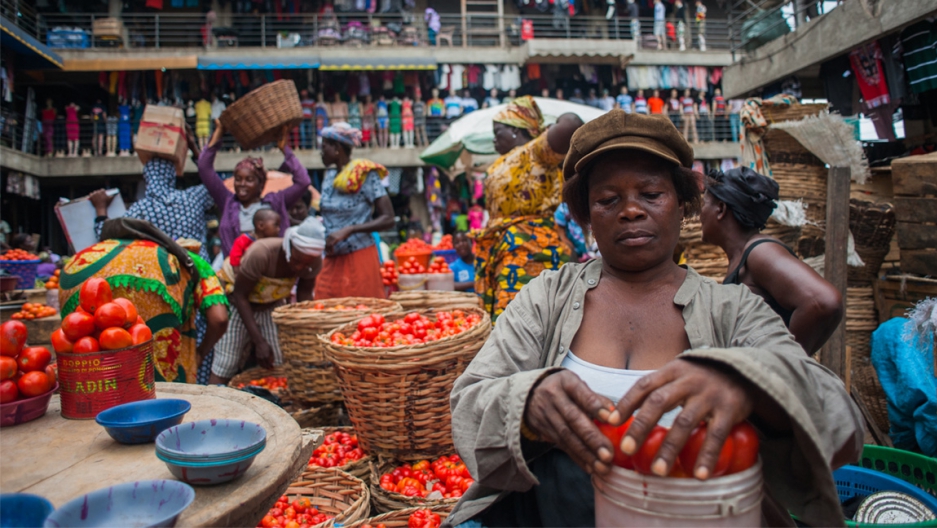
The food component tells a different but equally revealing story. Tomatoes and fresh fish, both cited in the June inflation data, are traded across West African borders. Ghana imports significant volumes of fish from Mauritania and Senegal, and tomato supply chains connect to Burkina Faso and other Sahelian producers. When regional supply chains are disrupted, whether by climate shocks, security conditions in the Sahel, or non-tariff barriers at border crossings, Ghanaian consumers absorb the cost. This is precisely the integration gap that AfCFTA is designed to close, but implementation of the agreement’s trade facilitation provisions across ECOWAS member states remains uneven.
For regional context, Ghana’s current inflation trajectory sits in sharp contrast to the experience of WAEMU countries. Côte d’Ivoire and Senegal, both anchored to the CFA franc and subject to BCEAO monetary policy, have maintained inflation closer to the WAEMU convergence ceiling of 3 percent. That monetary architecture, for all its political controversies around sovereignty, delivers price stability that Ghana’s independent monetary framework has struggled to match consistently. The comparison is not an argument for currency union, but it does highlight how monetary credibility is built through institutional constraints, not declarations.
Nigeria, Ghana’s largest regional neighbour, faces far more severe inflationary pressures, with headline rates that dwarf Ghana’s current figures. That comparison provides little comfort. Ghana’s inflation convergence with its own IMF programme targets, and with ECOWAS macroeconomic convergence criteria, is what determines the country’s standing as a governance benchmark in the sub-region.
The Bank of Ghana held its policy rate at 28 percent as of its last Monetary Policy Committee meeting, a level that reflects the scarring from the 2022-2023 inflation crisis, when prices peaked above 50 percent. The current 5.3 percent reading represents a dramatic improvement from that peak, and the central bank deserves credit for the disinflation achieved. But the speed of the June rebound from 3.7 percent to 5.3 percent in a single month suggests that the disinflationary process remains fragile, and that the transmission from monetary tightening to sustained price stability is incomplete.
What July’s data will actually test is whether Ghana’s price dynamics have genuinely stabilised at low single digits, or whether the 3.7 percent reading in May was itself a statistical trough before renewed structural pressures reasserted themselves. If the Databank projection holds and July prints below 5 percent, the Bank of Ghana gains room to consider further policy rate reductions without sacrificing its inflation-targeting credibility. A surprise to the upside, however, would complicate the monetary easing cycle and raise questions about fiscal dominance risks, particularly if utility tariff adjustments or fuel subsidy changes are scheduled for the second half of 2026.
For businesses operating across Ghana and the wider ECOWAS trade corridor, the immediate implication is clear: price planning for Q3 2026 should be built around a range, not a single forecast. The seasonal harvest effect is real, but it is also temporary. Durable price stability in Ghana will require regulatory coherence on energy pricing, deeper regional food trade integration under AfCFTA, and a fiscal framework that does not repeatedly force the central bank into a reactive posture. A single favourable July reading, if it materialises, will be welcome. It will not, by itself, settle the structural question.