Morocco’s elimination at the quarter-final stage of the 2026 FIFA World Cup, following a 2-0 defeat to France in Boston on 09 July, ended Africa’s representation in the tournament and reignited a familiar continental reckoning: how far can African football travel, and what structural conditions determine that ceiling?
The Atlas Lions had entered the match as the last of Africa’s five representatives still standing. Their predecessors at this tournament had each exited earlier, leaving Morocco to carry the weight of continental expectation into the knockout rounds, as they had done so memorably at the 2022 edition in Qatar, where they reached the semi-finals.
Boston’s Gillette Stadium hosted a first half defined by tactical discipline and a moment of fortune. France captain Kylian Mbappe stepped up to take a penalty and saw it saved. Morocco held. For forty-five minutes, the scoreline read goalless, and the possibility of an upset remained alive.
It did not survive the second half.
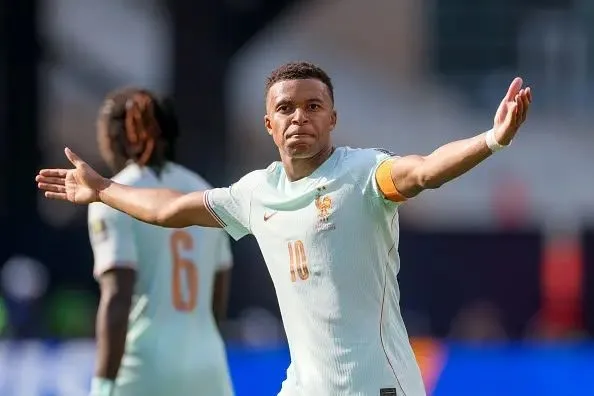
Mbappe converted in the 60th minute, erasing the memory of his earlier miss with a composed finish that put France ahead. Six minutes later, Ballon d’Or holder Ousmane Dembele doubled the lead. The match was settled. Morocco pressed but could not find a way through a French defensive structure that has conceded sparingly throughout the tournament.
Those two goals were France’s 15th and 16th of the competition, a tally that leads all remaining sides, though three quarter-finals were still to be played at the time of writing. Mbappe’s strike brought him to eight goals in the tournament, drawing level with Argentina’s Lionel Messi at the top of the scoring charts. He holds the edge in the Golden Boot race by virtue of a superior assist count. Dembele, meanwhile, reached five goals for the tournament, making France only the second team in fifty years to field two players with five or more goals at a single World Cup. The last side to achieve that was Brazil in 2002, when Ronaldo scored eight and Rivaldo five en route to the title.
For Morocco, the defeat was painful but not without context. Coach Walid Regragui had built a side capable of defending with extraordinary organization while posing genuine threats on the counter. That formula carried them past group-stage opponents and into the last eight. Against a French squad of this depth and firepower, the margin for error was always going to be narrow.
The broader question Morocco’s exit raises is not one of individual talent but of ecosystem. African football federations, operating under the jurisdiction of the Confederation of African Football and within the broader governance architecture of FIFA, continue to navigate chronic underfunding, infrastructure deficits, and the structural drain of player migration to European leagues. Morocco itself has invested heavily in football infrastructure over the past decade, and that investment is visible in the team’s tactical sophistication and physical conditioning. Yet the gap to the tournament’s final four remains real.
France, by contrast, arrive at this stage of the competition with what former international Patrick Vieira described as a generation of rare collective quality. Speaking on ITV Sport, Vieira, who played in France’s 3-0 World Cup final victory over Brazil in 1998, said of the current squad: “We’re talking about a generation of players and when you look at the squad and the attacking players, it is maybe one of the best, because you have so many players, it is so unbelievable.” Former Scotland striker Pat Nevin, analysing the match for BBC Radio 5 Live, was equally direct: “France are the best, most skilful, most dangerous attacking team in the tournament. They have more than one threat. They have two, three, four that are capable.”
Didier Deschamps, managing his final tournament before stepping down from the national team role, has constructed a squad with unusual attacking redundancy. The loss of any single player does not diminish France’s threat in the way it might destabilize other sides. That depth is a product of decades of youth development infrastructure, a domestic league that retains competitive intensity, and a pipeline of talent from French academies that remains unmatched in European football.
France now advance to a semifinal on Tuesday against the winner of the Spain versus Belgium quarter-final. Should they lift the trophy on 19 July, the case for this being the finest French generation in the sport’s history becomes difficult to contest. A second World Cup title, added to their 1998 triumph and two European Championship victories, would cement a legacy already being shaped by Mbappe and Dembele’s performances in this tournament.
For the continent Morocco represented in Boston, the post-tournament analysis will matter as much as the scoreline. African nations have now reached the quarter-finals of successive World Cups, a trajectory that points to genuine progress in player development and tactical preparation. The structural work of converting that progress into semifinal and final appearances runs through federation governance, investment in domestic leagues, and the negotiation of player welfare frameworks with European clubs that hold African internationals under contract during qualification campaigns. Morocco’s exit is not a failure. It is a marker on a longer journey whose pace is determined as much by institutional decisions as by what happens on the pitch.