Canada and Ghana marked a 56% surge in bilateral trade to US$752 million in 2025, with Ottawa signalling deeper private sector engagement across mining, renewable energy, and agribusiness at a moment when Accra’s position as host of the AfCFTA Secretariat gives the partnership an explicitly continental dimension. The announcement, made at Canada’s 159th National Day celebration in Accra on 1 July 2025, reframes a relationship historically defined by development assistance into one increasingly governed by commercial logic, investment governance standards, and market access strategy.
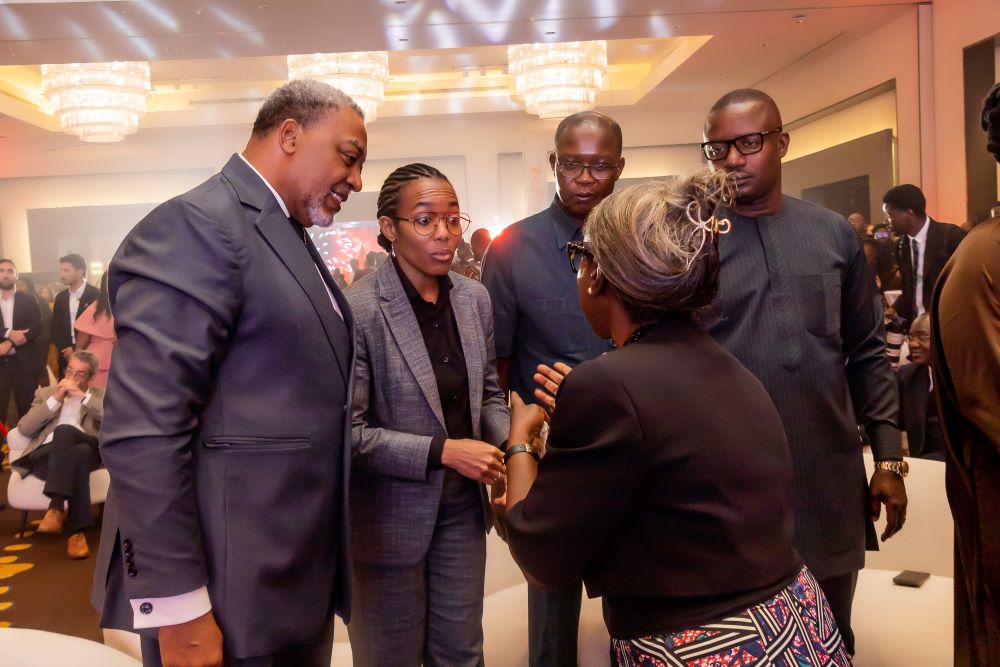
Canadian High Commissioner Myriam Montrat delivered the headline figure before an audience that included senior Ghanaian officials, business representatives, and members of the diplomatic corps. She positioned the trade milestone not as a statistical coincidence but as a structural signal: “The growth in bilateral trade reflects the expanding commercial relationship between Ghana and Canada and demonstrates the confidence Canadian businesses continue to have in Ghana’s economy.” That confidence, she argued, rests on a framework of responsible investment, defined by job creation, local capacity-building, and compliance with environmental and social governance standards, rather than on capital extraction alone.
Ghana’s Minister for Energy and Green Transition, Dr. John Abdulai Jinapor, sharpened the institutional argument by invoking AfCFTA directly. Ghana secured the AfCFTA Secretariat in Accra in 2020, a decision that positioned the country as the administrative nerve centre of a single market spanning 55 African Union member states and a combined GDP exceeding US$3.4 trillion. For Canadian investors, Dr. Jinapor framed this geography as a structural advantage: “As host of the AfCFTA Secretariat, Ghana offers Canadian investors unparalleled access to the African market, creating enormous opportunities for mutually beneficial economic growth.” The argument is commercially coherent. Firms establishing operations in Ghana can, in principle, leverage preferential tariff schedules under AfCFTA’s trade-in-goods protocol to serve markets across ECOWAS, the East African Community, and beyond, reducing the per-unit cost of continental market entry.
The mining sector remains the load-bearing pillar of Canadian economic engagement in Ghana, and the governance model applied there carries implications well beyond extraction revenues. Galiano Gold’s Asanko Gold Mine, situated in the Ashanti Region, has adopted a localisation strategy under which 99.9% of its workforce is Ghanaian, a figure that stands in sharp contrast to the enclave employment models that have historically characterised foreign-owned extractive operations across West Africa. The company runs graduate trainee and apprenticeship programmes, funds community infrastructure in education, health, water, and sanitation, and reports compliance with Ghana’s Minerals and Mining Act alongside its environmental obligations. Whether such commitments are verified independently or remain largely self-reported is a governance question that Ghanaian regulatory institutions, including the Minerals Commission and the Environmental Protection Agency, are equipped to adjudicate, and their capacity to do so consistently will determine whether the responsible mining narrative holds beyond the ceremonial.
The bilateral dynamic also reflects a broader competitive repositioning underway across West Africa. Côte d’Ivoire, Ghana’s principal regional rival for foreign direct investment, has aggressively courted French and multilateral capital in cocoa processing and infrastructure, while Senegal’s newly discovered offshore gas reserves have attracted a distinct investor profile oriented toward energy transition financing. Nigeria, the ECOWAS hegemon, continues to draw the largest absolute FDI volumes but suffers from regulatory unpredictability and foreign exchange illiquidity that have driven several multinationals to reduce exposure. Ghana, by contrast, has maintained relatively open capital account conditions and a functioning arbitration framework, making it a credible anchor for investors seeking West African exposure with manageable institutional risk, provided the Bank of Ghana and the Ministry of Finance sustain the fiscal consolidation path agreed with the International Monetary Fund under the 2023 programme.
Dr. Jinapor’s enumeration of priority sectors for Canadian capital, agribusiness, renewable energy, digital transformation, manufacturing, and infrastructure, maps closely onto the structural transformation agenda that Ghana’s government has articulated since the post-COVID recovery period. Renewable energy is particularly significant: Ghana has committed to a 10% renewable energy share in its electricity mix by 2030 under the Renewable Energy Act, and Canadian firms with expertise in solar, mini-grid, and storage technologies are well-positioned to compete, particularly as the government moves to restructure the Electricity Company of Ghana and address the chronic financial losses that have destabilised the power sector. Agribusiness investment, meanwhile, connects directly to AfCFTA’s trade-in-services and sanitary and phytosanitary protocols, where Ghana’s regulatory alignment with continental standards will determine whether locally processed agricultural goods can access duty-free corridors into Francophone West African markets.
The institutional framing of the Canada-Ghana partnership as one built on “shared values” and “responsible investment” carries weight only if the accountability mechanisms that give those terms meaning are functional. Ghana’s Public Interest and Accountability Committee, which oversees petroleum revenues under the Petroleum Revenue Management Act, offers one model of statutory oversight that the mining sector has not replicated with equal rigour. Extending comparable transparency and civil society oversight mechanisms to Canadian-linked mining operations would strengthen the governance case that both governments are making publicly, and would provide the kind of third-party verification that institutional investors and development finance institutions increasingly require before committing capital. Canada’s own Export Development Corporation and the International Finance Corporation, both active in Ghana, have environmental and social performance standards that could serve as a baseline for sector-wide benchmarking, if Ghanaian regulators choose to formalise that alignment.
With bilateral trade now at US$752 million and Canadian mining, energy, and agribusiness firms signalling expanded appetite, the structural question is whether Ghana’s regulatory institutions can absorb and govern that investment at scale, and whether AfCFTA’s operational protocols will mature quickly enough to make the continental market access argument commercially real rather than rhetorically convenient. The Secretariat in Accra has made progress on the trade-in-goods protocol but faces persistent delays on services liberalisation and investment rules, two areas directly relevant to the sectors Canada is prioritising. Ghana’s ability to translate its host-country status into tangible first-mover advantages for its investment partners, and for its own industrialisation agenda, will be the measure by which this diplomatic milestone is eventually judged.