The Tema Oil Refinery’s receipt of one million barrels of Jubilee Medium Sweet Crude on 15 July 2026 poses a precise governance question: can Ghana’s sole state-owned refinery convert consistent upstream supply into a structurally competitive downstream operation, or will institutional and infrastructural constraints limit what should be a strategic regional asset?
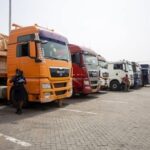
The cargo, transported aboard the MT Apache, represents the second consignment of domestically sourced crude delivered to TOR under the Mahama administration, and the third million-barrel delivery within three months. Since May 2026, the refinery has received separate consignments of Bonga, Baleine, and now Jubilee Medium Sweet Crude. That pace of supply is notable. It signals a deliberate policy shift toward activating the upstream-downstream linkage that Ghana’s petroleum governance frameworks have long identified as a value-capture priority but rarely executed at scale.
TOR’s management stated that these supplies “have enabled the Refinery to continue producing petroleum products for both the domestic and regional markets, advancing Ghana’s energy security while promoting industrialisation and value addition.” The language is institutional and measured. What it does not yet answer is whether the refinery’s processing capacity, technical condition, and commercial structure are adequate to transform supply momentum into durable output. TOR has historically operated well below its nameplate capacity of 45,000 barrels per day, constrained by deferred maintenance, working capital shortfalls, and debt accumulated over years of operational irregularity. Three consignments in three months improve the supply picture. They do not, by themselves, resolve the structural deficit.
The regional context sharpens the stakes considerably. West Africa’s refining landscape is undergoing a significant reconfiguration, anchored most visibly by Nigeria’s Dangote Refinery, which at full capacity would process 650,000 barrels per day and fundamentally alter import dependency across the sub-region. Ivory Coast’s Société Ivoirienne de Raffinage operates with greater consistency than TOR and serves as a regional supplier to landlocked WAEMU member states. Senegal, now an emerging oil producer following the Sangomar field’s first production in 2024, is developing its own downstream ambitions. Ghana’s window to position TOR as a competitive regional refining hub is real, but it is not indefinitely open. The competitive pressure from Dangote alone will reshape the economics of refined product distribution across ECOWAS member states within the next 24 to 36 months.
For Ghana, the upstream-downstream integration question carries direct implications for AfCFTA participation. The continental free trade framework creates preferential conditions for intra-African trade in goods, including refined petroleum products. A TOR operating at meaningful capacity could supply refined products to Burkina Faso, Mali, and Niger under AfCFTA terms, generating foreign exchange, deepening regional trade ties, and reducing those landlocked economies’ dependence on longer, costlier supply chains. That opportunity requires not just crude supply but a refinery capable of consistent, cost-competitive throughput, and a commercial and regulatory framework that allows TOR to operate as a market participant rather than a patronage instrument.
The Ministry of Energy and Green Transition’s role in restoring refining operations, as acknowledged in TOR’s statement crediting Minister John Abdulai Jinapor’s “strategic oversight,” points to the degree of political direction currently animating the refinery’s revival. Political commitment to TOR’s rehabilitation is necessary. It is not sufficient. The governance architecture around TOR, including its debt resolution framework, its pricing arrangements with the National Petroleum Authority, and its relationship with Ghana National Petroleum Corporation for upstream crude allocation, will determine whether this supply momentum translates into institutional transformation or remains a politically managed operation that functions only when ministerial attention is sustained.
Investor confidence in Ghana’s downstream sector, still fragile after years of fiscal instability and the 2022 sovereign debt crisis, will track institutional signals more closely than supply announcements. The Bank of Ghana’s ongoing engagement with the IMF under the Extended Credit Facility program has stabilised the macroeconomic environment, but downstream energy investment requires regulatory predictability, transparent pricing mechanisms, and credible offtake arrangements. None of those conditions are yet fully established at TOR. Ghana’s peers offer instructive contrasts: Ivory Coast’s refining sector benefits from a clearer regulatory compact between the state and private operators, while Nigeria’s experience demonstrates both the risks of prolonged state dominance in refining and the transformative potential of private capital when the regulatory environment permits it.
Three million-barrel consignments in three months represent a genuine operational inflection point for TOR, and the policy intent behind them is coherent. Refining indigenous crude locally captures value that would otherwise leave Ghana as export revenue and return as import expenditure on refined products, a structural drain that has long weakened the current account. The Jubilee field’s Medium Sweet Crude is well-suited to TOR’s processing configuration, which reduces the technical risk of this particular supply chain. What the refinery’s leadership, the Ministry of Energy, and the broader governance architecture around Ghana’s petroleum sector must now demonstrate is that this supply cadence can be institutionalised, commercially structured, and insulated from the political cycles that have historically interrupted TOR’s operations. That is the test the next twelve months will apply.