Ghana’s government has initiated procurement procedures for consultancy and feasibility studies on a proposed Green Digital City, a planned urban development intended to redistribute administrative and economic functions away from Accra. The central question this project raises is not whether a new city is desirable, but whether Ghana’s planning institutions possess the regulatory depth, fiscal discipline, and cross-agency coordination to execute a project of this scale without repeating the governance failures that have historically stalled comparable African infrastructure ambitions.
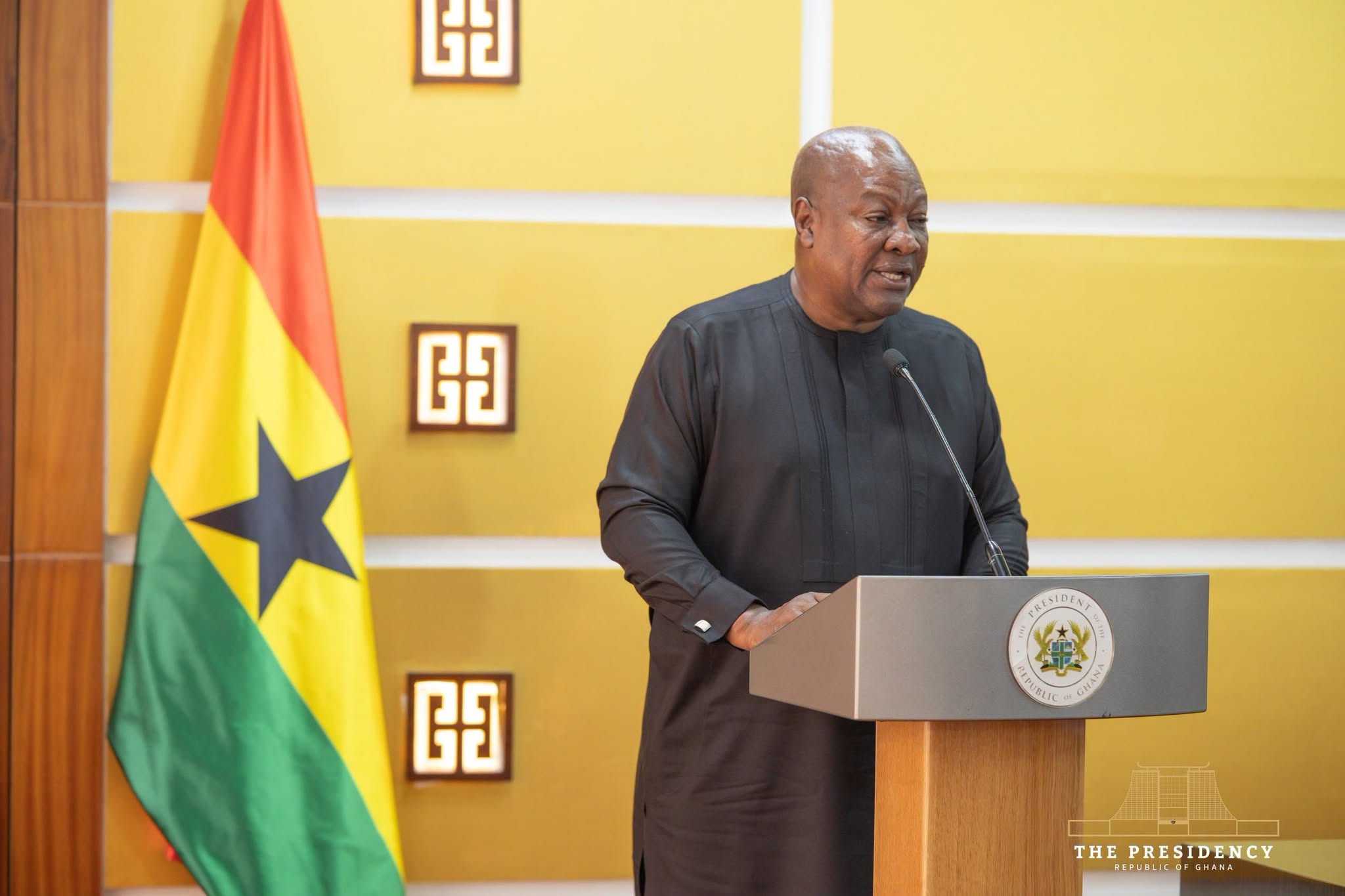
President John Dramani Mahama confirmed on 21 July 2025, during a courtesy call at Jubilee House with the Greater Accra Regional House of Chiefs and Members of Parliament from the region, that he had received the procurement report authorising the start of consultancy work. The proposed city would extend across the Accra Plains into parts of the Eastern and Volta Regions, with the stated objective of relieving Accra’s chronic infrastructure pressure and establishing an alternative hub for government offices and agencies.
The diagnosis driving the project is accurate and well-documented. Accra accommodates an estimated four million residents within the Greater Accra Region, which contributes roughly 40 percent of Ghana’s GDP while covering less than two percent of the country’s land area. Traffic congestion, housing deficits, and strained public services are structural features of that concentration, not cyclical anomalies. Decentralising administrative functions is a rational policy response. The governance question is whether the institutional architecture exists to make it work.
The Institutional Gap Between Vision and Execution
Ghana’s urban planning record offers sobering context. The Ghana National Spatial Development Framework, adopted over a decade ago, identified satellite city development as a national priority, yet implementation remained fragmentary, largely because land administration reform, infrastructure financing, and inter-ministerial coordination were never synchronised. The Lands Commission, the Town and Country Planning Department, and the Ministry of Works and Housing have each operated with overlapping mandates and insufficient budgetary authority to drive large-scale spatial projects. A Green Digital City that spans three administrative regions compounds that coordination challenge considerably.
The procurement report received by President Mahama represents an early procedural step, not a commitment of capital. Feasibility studies for projects of this complexity typically take 18 to 24 months and require credible environmental impact assessments, land tenure surveys, and demand modelling for public services. Ghana’s Public Procurement Authority has the legal framework to govern this process, but its enforcement record on major infrastructure contracts has attracted scrutiny from civil society groups and the Auditor-General’s office alike. Ensuring that the consultancy selection process is transparent and competitively tendered will be the first institutional test the project faces.
Comparative experience from the continent is instructive. Egypt’s New Administrative Capital, Nigeria’s Abuja, and Senegal’s Diamniadio satellite city each pursued urban decongestion through planned city development, with sharply divergent outcomes. Abuja succeeded in relocating federal administrative functions but failed to arrest Lagos’s dominance as an economic centre, demonstrating that administrative relocation alone does not redistribute economic gravity. Diamniadio, developed with Chinese and French capital near Dakar, has attracted investment but faces persistent questions about affordability and whether it serves Senegal’s urban poor or primarily its professional class. Ghana’s planners would benefit from engaging directly with those institutional post-mortems before finalising the design framework.
Regional Integration and the Smart City Governance Standard
The “digital” dimension of the project carries specific governance implications within the West African regional context. ECOWAS has advanced a Digital Transformation Strategy that envisions harmonised data governance, cross-border digital infrastructure, and interoperable e-government systems across member states. A purpose-built digital city in Ghana, if designed with open standards and interoperability in mind, could serve as a regional demonstration project, attracting investment and talent from across the ECOWAS zone. If designed as a proprietary enclave, it risks creating a governance island disconnected from both national systems and regional frameworks.
The AfCFTA Single Digital Market Protocol, currently under negotiation, makes this question more than theoretical. Ghana’s positioning as a regional fintech and technology hub, reinforced by the Ghana Investment Promotion Centre’s active outreach to diaspora and foreign investors, depends on regulatory credibility. A digital city governed by ad hoc arrangements, unclear land tenure, or opaque procurement would undermine that positioning directly. The Bank of Ghana and the Ghana Revenue Authority would need early involvement to establish the fiscal and financial regulatory framework applicable within the new city, particularly if it is intended to attract foreign direct investment under special economic zone conditions.
Investor confidence in the project will also hinge on how the government resolves the land question. The proposed footprint across the Accra Plains and into the Eastern and Volta Regions encompasses customary land governed by stool and family land arrangements, administered partly through the Lands Commission and partly through traditional authority structures. The presence of the Greater Accra Regional House of Chiefs at the Jubilee House meeting where the project was discussed is politically significant: traditional authorities hold real veto power over land access in Ghana, and their early incorporation into the planning process is a prerequisite for avoiding the land disputes that have derailed infrastructure projects elsewhere in the country.
What the Green Digital City project ultimately requires is not just a feasibility study but a governance architecture built before the first foundation is laid. That means a dedicated statutory body with cross-ministerial authority, a transparent land acquisition framework with community compensation mechanisms, a financing structure that does not depend entirely on sovereign borrowing at a moment when Ghana is still navigating the terms of its IMF programme, and a digital governance framework aligned with ECOWAS standards. Ghana has the institutional components to assemble that architecture. Whether the political will exists to do so before procurement decisions lock in the project’s structural parameters is the test that matters most.