A single public statement from a presidential candidate cannot halt a criminal prosecution in Ghana. That is the institutional reality at the centre of a case that has drawn unexpected attention to the boundaries between political will and prosecutorial independence in the country’s justice system.
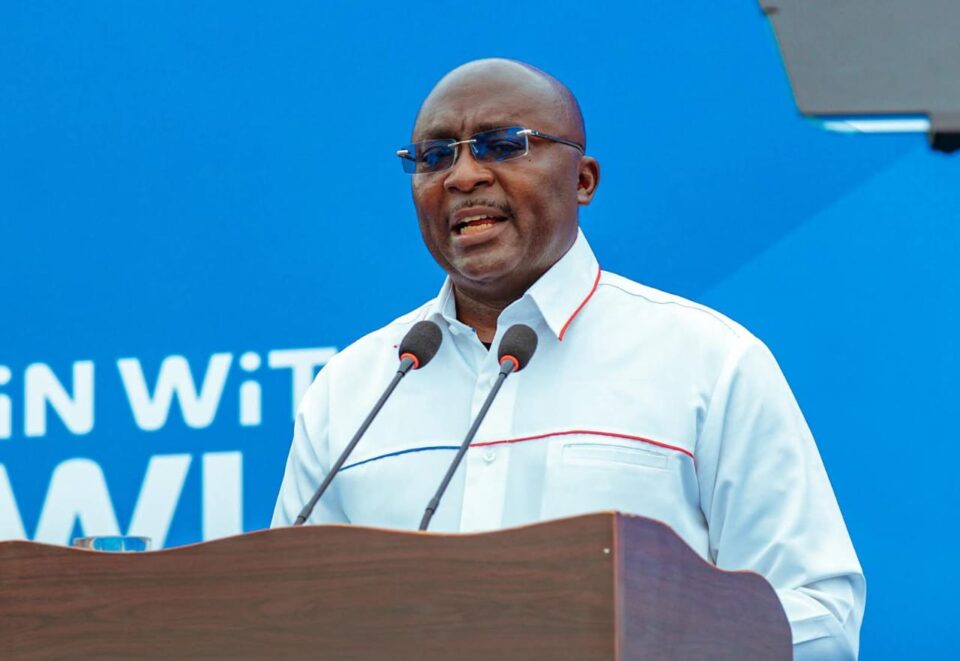
When Dr. Mahamudu Bawumia, flagbearer of the New Patriotic Party (NPP), publicly called on the Ghana Police Service and the Attorney-General to discontinue the prosecution of an Agona West organiser of the National Democratic Congress (NDC) on 22 July 2024, his appeal was widely read as a gesture of democratic generosity. The organiser faces charges of publishing false news and making offensive comments directed at Dr. Bawumia himself. The former Vice President stated clearly that he had neither filed a complaint nor authorised the arrest, and that he had forgiven the accused. By any measure, it was an unusual intervention in Ghanaian political life, where targeted prosecutions of opposition figures have historically generated accusations of institutional capture.
Yet private legal practitioner Justice Abdulai, speaking to Citi News, drew a firm line between the political symbolism of Dr. Bawumia’s statement and its legal weight. “Dr. Bawumia per se does not have control over the case to determine whether the case proceeds or not,” Abdulai said. His reasoning cuts to a foundational principle of criminal law in common-law jurisdictions: once the state has gathered sufficient evidence to support a prosecution, the complainant becomes, at most, a witness. The machinery of justice does not pause because the individual who triggered an investigation withdraws their personal interest. If investigators hold evidence of a crime, the public interest in prosecution can stand entirely independent of the private wishes of any individual, including the subject of the alleged offence.
This distinction matters well beyond the specific facts of the Agona West case. Ghana’s legal architecture, inherited from British common law and shaped by successive constitutional reforms since 1992, vests prosecutorial authority in the Attorney-General under Article 88 of the Constitution. That office holds the power to initiate, continue, or discontinue criminal proceedings, and it does so in the name of the Republic, not in the name of any private citizen or political actor. The Attorney-General’s discretion is not unlimited, but it is also not subject to the preferences of witnesses or complainants. This design is intentional: it insulates the prosecution function from private pressure, whether that pressure comes from a victim seeking revenge or, as in this case, a victim seeking mercy.
What makes the Bawumia intervention genuinely notable is not its legal effect, which Abdulai correctly identifies as limited, but its political and normative signal. Ghana’s democratic record within the ECOWAS region is comparatively strong. The country has conducted eight successive peaceful elections and maintains a functioning multi-party system that regional peers, from Guinea to Mali, have struggled to replicate. But the credibility of that democratic architecture depends, in part, on public confidence that state institutions, including the police and the prosecutorial service, do not function as instruments of partisan competition. Accusations that security forces are deployed to harass opposition figures are a recurring feature of Ghanaian electoral cycles, and they erode exactly the kind of institutional trust that underpins investor confidence and regional credibility.
Dr. Bawumia’s statement, whatever its legal limitations, addressed that credibility deficit directly. By publicly disavowing any role in the arrest and calling for the prosecution to be dropped, he drew a visible line between his personal political interests and the conduct of state institutions operating in his name. He framed the matter in explicitly democratic terms, arguing that Ghanaian democracy is strengthened when citizens, including political opponents, can express their views without fear of arrest. That framing aligns with the normative standards embedded in the ECOWAS Protocol on Democracy and Good Governance, which commits member states to protecting freedom of expression and ensuring that security forces remain subordinate to civilian constitutional authority.
The gap between that normative commitment and institutional practice is where governance analysis must focus. Ghana’s Attorney-General and the Ghana Police Service now face a decision that is simultaneously legal and political. Legally, they may continue the prosecution if evidence supports it. Politically, continuing a case that the alleged victim has publicly and formally asked to be dropped, in the context of a presidential election campaign, risks reinforcing the perception that the prosecution was politically motivated from the outset. That perception, whether accurate or not, carries real costs. It feeds narratives of institutional partisanship that weaken public confidence in the rule of law, and it complicates Ghana’s positioning as a governance benchmark within West Africa at a moment when the region’s democratic credentials are under acute pressure.
Regional context sharpens the stakes. Across ECOWAS, the period since 2020 has seen four military coups in Burkina Faso, Guinea, Mali, and Niger, each justified in part by civilian governments’ failures to maintain institutional integrity and public trust. Ghana has been held up, including by the African Union and by development finance institutions, as evidence that democratic governance and economic reform can coexist in West Africa. That reputation carries tangible value: it influences sovereign credit ratings, attracts foreign direct investment, and shapes Ghana’s leverage in multilateral negotiations, including those surrounding the AfCFTA, where Accra has sought to position itself as a continental trade hub. Governance backsliding, even in the form of perception rather than proven fact, erodes that leverage.
Justice Abdulai’s legal analysis is correct and important. Dr. Bawumia’s request does not, and cannot, automatically end the prosecution. The state’s authority to pursue criminal cases rests on evidence and public interest, not on the preferences of individuals. But the more consequential question is whether Ghana’s prosecutorial institutions will exercise their independent discretion in a way that reinforces or undermines public confidence in their neutrality. The Attorney-General’s office has the constitutional authority to discontinue proceedings where it judges that doing so serves the public interest. Whether that judgment is made transparently, on articulable legal grounds, and free from partisan calculation will say more about the health of Ghana’s institutions than any single political statement ever could. That is the governance test the Agona West case now poses, and it is one Ghana’s institutions should meet with the same clarity the law demands of them.