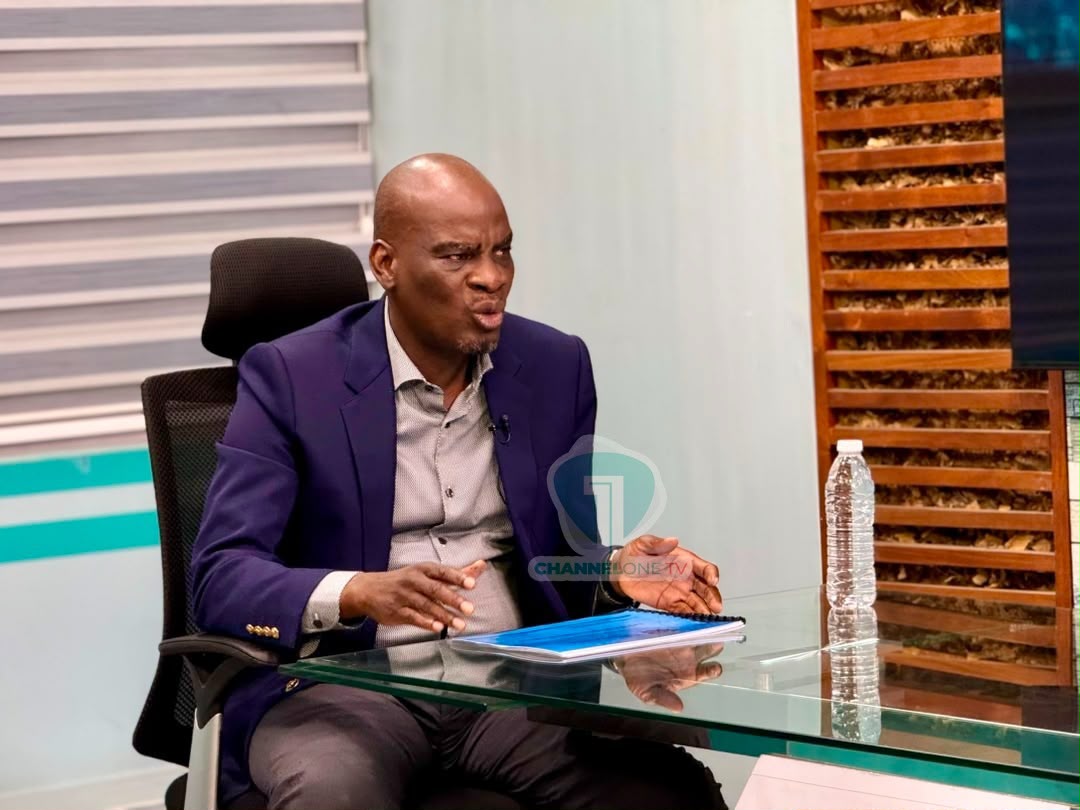
Ghana’s Minister of Education, Haruna Iddrisu, has staked out a governance position on artificial intelligence in the country’s classrooms, arguing that the technology must be subordinated to pedagogical goals rather than permitted to reshape learning outcomes by default. His remarks, delivered during an interview on Channel One TV’s The Point of View on 28 July 2025, arrive at a moment when educational ministries across West Africa are navigating the absence of regional policy frameworks capable of governing AI adoption at scale.
The core institutional question Iddrisu raised is not whether AI belongs in schools, but who controls the terms of its integration, and whether existing curricula, teacher-training infrastructure, and digital-safety regulations are adequate to the task. “AI is the future, but we shouldn’t allow AI to define the tomorrow of our learners,” he said, framing the technology as a tool of support rather than a determinant of educational outcomes. The distinction matters: it signals that the Ministry of Education intends to assert regulatory authority over AI adoption rather than defer to market-driven diffusion, a posture that will require institutional follow-through to be credible.
Ghana’s position within West Africa gives this debate regional weight. As one of ECOWAS’s more digitally advanced economies, with a relatively developed tertiary sector and an active EdTech market, Ghana’s policy choices on AI in education carry demonstration value for peer states. Senegal has invested in digital learning infrastructure through its Programme Sénégal Numérique, while Nigeria’s Federal Ministry of Education has piloted AI-assisted learning tools in select states. Côte d’Ivoire, Ghana’s closest regional competitor in terms of economic profile, has moved to embed digital skills into its secondary curriculum under its Plan Numérique. Against this backdrop, a clear Ghanaian governance framework could anchor a broader ECOWAS-level conversation, or, in its absence, leave each member state to improvise independently.
What Iddrisu’s remarks notably lacked was the institutional specificity that would allow observers to assess whether the Ministry’s position translates into enforceable policy. Calling for ethical and responsible use of AI is a necessary starting point; converting that call into curriculum standards, teacher-competency benchmarks, and school-level accountability mechanisms is the harder institutional work. The Ghana Education Service and the National Council for Curriculum and Assessment would need to operationalise any ministerial directive, and neither body has publicly released a dedicated AI-in-education framework to date.
The governance stakes extend beyond pedagogy into questions of data sovereignty and academic integrity that have direct implications for Ghana’s investment climate in the EdTech sector. AI tools deployed in classrooms generate significant volumes of student data, and without a regulatory architecture specifying ownership, storage, and usage rights, Ghana risks replicating the data-governance gaps that have drawn criticism in other markets. The Data Protection Act, 2012 (Act 843) provides a baseline, but its provisions predate the current generation of generative AI tools and were not designed with minors’ educational data in mind. Updating that framework to reflect contemporary realities would be a concrete institutional step consistent with the minister’s stated principles.
There is also a skills-supply dimension that connects directly to Ghana’s AfCFTA commitments and regional labour-market integration. The African Continental Free Trade Area protocol on trade in services, once fully operationalised, will intensify competition for digitally literate workers across the continent. A Ghanaian graduate cohort equipped with both AI literacy and the critical-thinking skills to deploy it judiciously will be better positioned to compete and contribute within that integrated market than one that has either been shielded from the technology entirely or exposed to it without structured guidance. The ministry’s framing of AI as a complement to, rather than a replacement for, critical thinking and creativity is therefore not merely a pedagogical preference; it is a human-capital strategy with direct relevance to Ghana’s long-term competitiveness within the continental economy.
Drawing the policy implications together, several concrete institutional actions follow from the position Iddrisu has articulated.
Iddrisu’s intervention is most usefully read as an opening position in what must become a structured policy process. The institutional credibility of Ghana’s Ministry of Education, and by extension its capacity to shape regional norms, will ultimately rest not on the minister’s television appearances but on whether the regulatory architecture his remarks imply is actually constructed, resourced, and enforced.