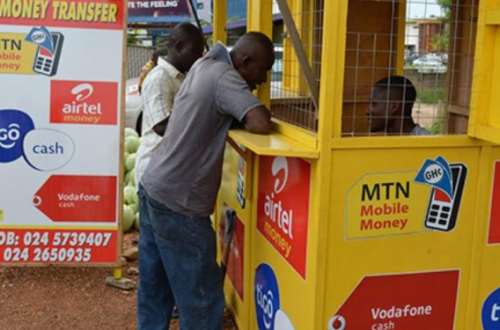
On a humid morning in Accra’s Makola Market, a fabric trader named Abena settles a bulk order from a supplier in Kumasi without touching a single banknote. The transaction clears in seconds, logged across a network that now holds GH¢40 billion in aggregate float balances — a record figure that, quietly and without fanfare, signals one of the most consequential shifts in West African financial architecture since the introduction of mobile banking.
Data released by the Bank of Ghana in July 2026 confirmed that mobile money wallet balances rose from GH¢28.9 billion in June 2025 to GH¢40 billion in June 2026, a year-on-year increase of 38.4%. That figure is not merely a headline statistic. It encodes a structural transformation in how Ghanaian households, informal traders and small enterprises store, move and access value — and it raises substantive questions about regulatory readiness, monetary policy transmission and the governance frameworks that will determine whether this growth serves broad development goals or concentrates benefit within a narrow segment of the digital economy.
The numbers behind the headline tell a richer story. Registered mobile money accounts reached 84.6 million in June 2026, up from 76.4 million a year earlier. Active accounts stood at 26.4 million. During June alone, platforms processed 954 million transactions with a combined value of GH¢492.9 billion — a volume that dwarfs many conventional banking metrics and positions mobile money not as a supplement to Ghana’s financial system, but as its operational spine. The agent network crossed the one-million threshold for the first time, reaching 1.016 million registered agents, with 546,000 active, extending the infrastructure into communities where brick-and-mortar banking has never reached.
What makes the GH¢40 billion float figure analytically significant is what it reveals about behavioral change. Mobile wallets were initially designed as conduits — instruments for moving money rather than holding it. The sharp rise in stored balances suggests that a growing share of Ghanaians now treat their mobile wallet as a primary financial repository, not a transactional intermediary. Households are retaining funds digitally for daily purchases, business operations and emergency expenditure rather than withdrawing cash upon receipt. This behavioral shift carries governance implications that extend well beyond consumer convenience.
When significant monetary value sits in mobile wallet float accounts rather than conventional bank deposits, it interacts differently with the Bank of Ghana’s monetary policy instruments. Reserve requirements, interest rate transmission and liquidity management tools are calibrated for a banking system architecture that mobile money increasingly circumvents. Ghana’s central bank has moved to address this through e-money issuer regulations and mandatory trust account requirements, but the pace of regulatory adaptation has not uniformly matched the pace of market expansion. The GH¢40 billion milestone makes that regulatory gap harder to ignore.
Ghana’s trajectory here is not unique within West Africa, but it is instructive. Across the region, mobile money penetration varies sharply along institutional and regulatory lines. WAEMU countries — Senegal, Côte d’Ivoire, Burkina Faso and their monetary union partners — operate under a harmonized regulatory framework administered by the Banque Centrale des États de l’Afrique de l’Ouest (BCEAO), which has progressively tightened e-money governance standards, including interoperability mandates and float investment rules. Ghana, operating under its own monetary sovereignty, has pursued a parallel path — one that has delivered impressive market outcomes but without the multilateral accountability architecture that WAEMU membership imposes.
Nigeria, West Africa’s dominant economy, presents a contrasting case. The Central Bank of Nigeria’s aggressive cashless policy push and its licensing of mobile money operators has generated scale, but regulatory friction — including controversial restrictions on fintech operations in 2021 and 2022 — demonstrated how quickly governance uncertainty can suppress innovation. Ghana has largely avoided that pattern, maintaining a more enabling regulatory posture, and the 38% float growth suggests the market has responded accordingly. The question is whether that posture can evolve into something more structurally robust as the system’s systemic importance grows.
Interoperability data adds another layer of governance relevance. Ghanaian users conducted 33 million cross-network transactions worth GH¢6.2 billion during June 2026 alone, moving funds seamlessly between competing mobile money providers. This level of interoperability — achieved through the Ghana Interbank Payment and Settlement Systems (GhIPSS) framework — is a genuine institutional achievement. Several larger African markets, including Nigeria, have struggled to implement comparable cross-platform functionality at scale. For regional integration purposes, this matters: ECOWAS has long identified payment system harmonization as a precondition for deeper intra-regional trade under the bloc’s trade facilitation agenda, and Ghana’s interoperability model offers a replicable governance template.
The AfCFTA dimension is worth examining directly. The African Continental Free Trade Area Secretariat has identified digital payments infrastructure as a critical enabler of intra-African trade, particularly for small and medium enterprises that lack access to correspondent banking relationships. Ghana’s mobile money ecosystem — with its one-million-strong agent network and near-universal SIM-linked account registration — positions the country as a potential hub for regional digital commerce, provided that cross-border payment interoperability with neighboring markets is formalized. Bilateral arrangements with Côte d’Ivoire and Nigeria remain underdeveloped relative to the trade volumes those corridors represent.
There is also a financial inclusion dimension that resists easy triumphalism. The gap between 84.6 million registered accounts and 26.4 million active accounts — a ratio of roughly 3:1 — indicates that account registration has significantly outpaced meaningful usage. Structural barriers including digital literacy, smartphone access costs, network reliability in rural areas and the informal economy’s persistent cash dependency continue to limit the depth of inclusion that headline account numbers imply. The expansion of the agent network to over one million is a necessary condition for closing that gap, but it is not sufficient without complementary investments in financial literacy and infrastructure.
For investors and development finance institutions assessing Ghana’s financial sector, the GH¢40 billion figure carries both opportunity and governance risk signals. The market’s growth trajectory is compelling. But the concentration of float value within a small number of dominant operators — MTN Mobile Money and Vodafone Cash command the largest market shares — raises legitimate questions about competitive dynamics, consumer protection and the systemic risk implications of operator-level distress. Regulatory frameworks that adequately address these concentrations, while preserving the innovation environment that has driven growth, represent the central institutional design challenge for the Bank of Ghana in the period ahead.
Back in Makola Market, Abena completes her transaction and returns to her stall. She does not think about monetary policy transmission or ECOWAS payment harmonization. She thinks about whether her supplier received the funds, whether her float will cover tomorrow’s orders, and whether the network will hold. Those immediate concerns are, in their aggregate, precisely the governance questions that institutions in Accra, Abuja, Dakar and Addis Ababa must now answer with greater precision — because the system that serves her has become too large, and too consequential, to govern by improvisation alone.