Africa’s hunger rate dropped for the first time in nearly a decade. That is not a minor statistical footnote — it is a signal that deliberate institutional investment, sustained over years, can bend a stubborn curve.
According to data from the UN Food and Agriculture Organisation (FAO), the share of Africans facing hunger fell from 20.3 percent in 2024 to 20 percent in 2025. Moderate or severe food insecurity declined from 58.5 to 56.6 percent, representing 8.6 million fewer people. Child stunting rates are falling. Severe food insecurity also retreated. After nearly a decade of uninterrupted deterioration since 2017, the architecture of food security — agricultural research, rural infrastructure, market linkages, household survey systems — has demonstrated measurable returns.
The West African dimension of this shift is particularly instructive. Senegal reduced its hunger prevalence from 15.8 to 5.3 percent over two decades. Ghana moved from 11.1 to 6.4 percent. Côte d’Ivoire from 17.6 to 11.4 percent. Togo from 24.6 to 10.2 percent. These are not accidents of geography or commodity windfalls — they reflect sustained policy choices across agricultural extension services, veterinary networks, rural roads, and data infrastructure, maintained through price shocks and a global pandemic.
The Structural Constraint That One Good Year Cannot Resolve
Progress on hunger, however welcome, does not resolve the deeper governance and market failure at the center of African food systems: two in three Africans cannot afford a healthy diet, and that share is still rising even as it falls in other regions of the world.
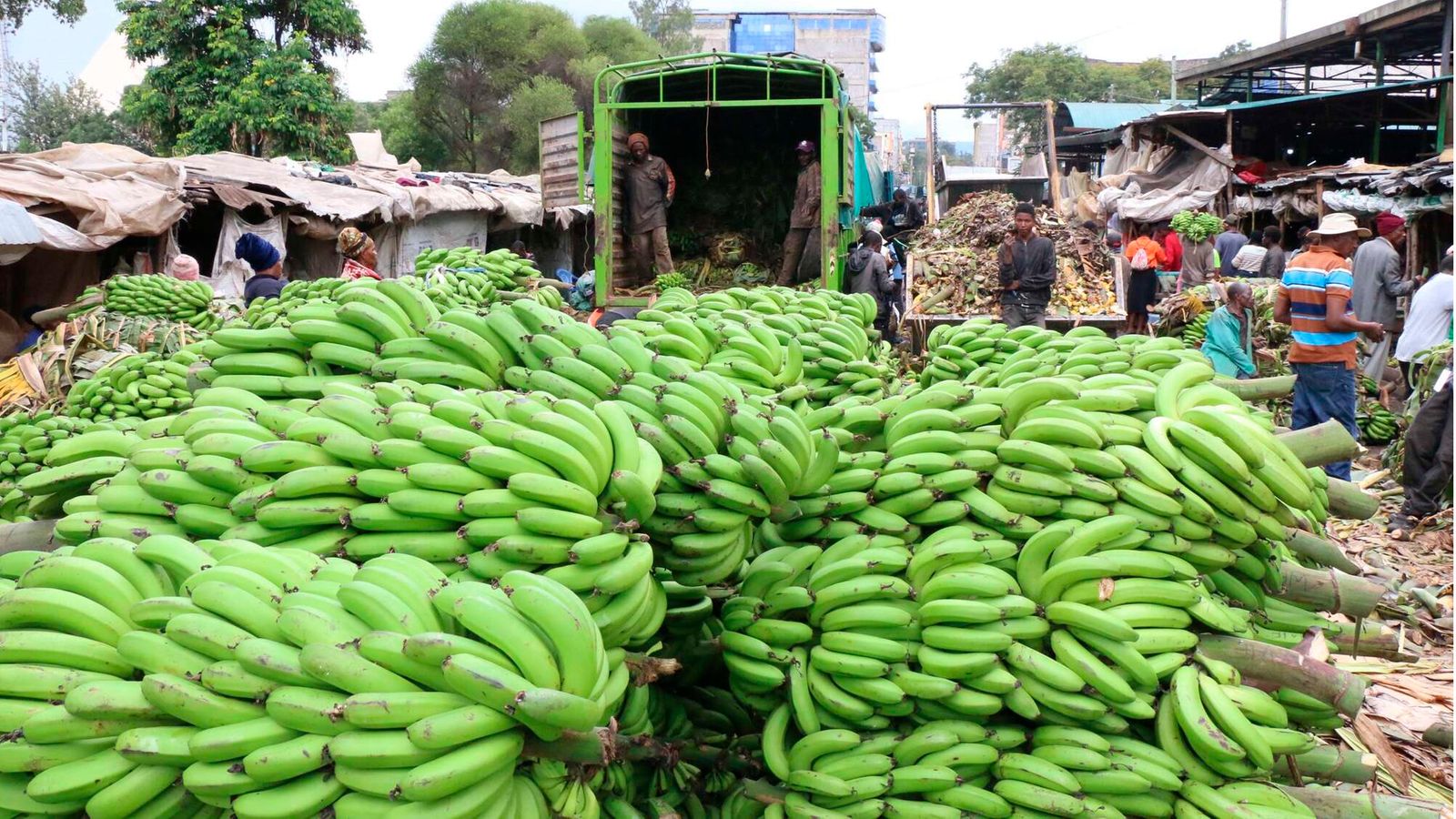
The obstacle is not caloric adequacy. Starchy staples have grown cheaper across much of the continent. The problem is the price of the foods that convert a filling meal into a nutritious one — milk, eggs, fish, meat, fruits, vegetables, and legumes. Animal-source foods represent the highest-cost food group in Africa; 69 percent of African countries rank in the highest-cost global tercile for this category, according to FAO analysis. The cost structure that prices most Africans out of nutritious diets is built long before food reaches a market stall, through animal disease burden, absent cold chains, degraded rural roads, high energy costs, and thin local markets that cannot generate competitive pricing.
This is a governance and infrastructure problem as much as an agricultural one. The price of a nutritious diet in Africa reflects accumulated failures of public investment, regulatory capacity, and regional market integration. Addressing it requires a second-order policy shift — from emergency hunger reduction toward the structural determinants of diet quality.
Africa still carries the heaviest food insecurity burden on the planet. The continent accounts for 309 million hungry people. By 2030, it will be home to 56 percent of all people facing hunger globally. One year of improved data does not alter that trajectory without deliberate institutional follow-through.
Subsidy Architecture, Regional Markets, and the ECOWAS Policy Dimension
African governments already spend significant public resources on agricultural subsidies. The policy question is not the volume of spending but its direction. FAO modelling shows that a blanket 10 percent production subsidy reduces the cost of a healthy diet by approximately four percent in Africa — roughly half the return generated by the same fiscal outlay in Latin America. The differential reflects how those subsidies are structured and where they are aimed.
Redirecting existing agricultural budget lines toward animal health systems, livestock breeding programs, aquaculture development, cold chain infrastructure, rural electrification, and research into fruits, vegetables, and legumes would begin to move the cost structure that currently excludes the majority of African households from nutritious diets. These are not new expenditure demands — they are reallocation decisions within existing fiscal envelopes, with compounding returns across the supply chain.
The ECOWAS framework provides an underutilized mechanism here. The Economic Community of West African States has long-standing mandates on agricultural policy harmonization and food security under its Agricultural Policy (ECOWAP), aligned with the AU’s Comprehensive Africa Agriculture Development Programme (CAADP). Regional coordination on animal health protocols, cold chain standards, and cross-border trade facilitation for perishables would reduce per-unit costs across member states by expanding effective market size. Ghana, Côte d’Ivoire, and Senegal — the region’s relative performers on hunger reduction — have the institutional track records to lead that coordination rather than wait for it.
The AfCFTA adds a further dimension. Intra-African trade in agricultural products remains far below potential, partly because non-tariff barriers, sanitary and phytosanitary standard divergences, and infrastructure gaps fragment what should be a continental market. Reducing the cost of nutritious foods in West Africa is partly a trade governance problem, solvable through regulatory alignment that the AfCFTA Secretariat has the mandate to drive.
The external financing environment complicates this moment. Aid flows to conflict-affected food crisis countries remain essential — the states dragging continental averages are overwhelmingly those experiencing active conflict or institutional collapse, where domestic policy tools have limited reach. The statistical infrastructure that made these gains visible also depends on funding now under pressure from shifting donor priorities. FAO Chief Economist Maximo Torero has noted directly that current estimates describe conditions before the full impact of those financing cuts arrived.
That context makes the governance imperative sharper, not softer. West African governments that have built functional agricultural institutions over two decades now face a structural test: whether they can sustain and deepen those systems using domestic fiscal capacity and regional cooperation, rather than treating external aid as a permanent operational subsidy. The countries that resolve that question in favor of institutional self-sufficiency will be the ones that convert a single good year into a durable trend. The ones that do not will find themselves revisiting the same data in five years, explaining why the turning point did not turn.