A Structural Shift in African Payment Architecture
The People’s Bank of China’s decision to designate Standard Bank Group and the Industrial and Commercial Bank of China (ICBC) as operators of Africa’s first Renminbi clearing hub is not merely a bilateral banking arrangement. It is a direct challenge to the dollar-denominated infrastructure that has governed African trade finance for decades, and its implications extend well beyond Kenya into the monetary architectures of West Africa, where currency fragility and import-dependency make the cost of dollar intermediation a persistent drag on competitiveness.
The thesis is straightforward: Africa’s reliance on the US dollar as a settlement currency for China-Africa trade imposes a structural tax on African businesses. The new RMB clearing mechanism, operating across the 19 African markets where Standard Bank holds a presence, offers a partial remedy. Whether it translates into genuine macroeconomic relief, however, depends on governance decisions that African institutions, not Beijing, must make.
The Dollar Intermediation Problem
When a Ghanaian importer purchases machinery from Guangzhou, the transaction does not settle in cedis or yuan. It routes through the US dollar, typically via a correspondent bank in New York or London, accruing fees, exchange rate spreads, and processing delays at each node. The same dynamic applies to a Senegalese trader buying electronics, a Nigerian manufacturer sourcing components, or an Ivorian cocoa processor importing packaging materials. Across West Africa, this dollar dependency inflates the real cost of China-sourced inputs, which now constitute the dominant import category for most economies in the sub-region.
Standard Bank’s Richard de Roos framed the new arrangement as delivering “transparent, efficient and cost-effective payment solutions between China and Africa.” The operational mechanics support that claim. By allowing businesses to settle transactions directly in RMB, the hub eliminates at least one currency conversion leg and the correspondent banking fees attached to it. For high-volume importers, the savings are material. For small and medium enterprises operating on thin margins, they can be the difference between viability and closure.
Kenya’s trade data illustrates the scale of the opportunity. According to the Kenya National Bureau of Statistics, Kenyan businesses imported goods worth KES 642.9 billion from China in 2024, against exports of just KES 32.8 billion. The asymmetry is pronounced, and the dollar-routing cost sits on top of an already unfavorable terms-of-trade position. Across West Africa, the structural imbalance is comparable: Ghana, Nigeria, and Côte d’Ivoire each run significant trade deficits with China, and each pays a dollar intermediation premium on every transaction.
West African Monetary Architecture and the WAEMU Dimension
The clearing hub’s governance implications are particularly acute for WAEMU member states, whose eight economies share the CFA franc, pegged to the euro and managed through France’s Treasury. For Senegal, Mali, Burkina Faso, and their neighbors, any China-denominated settlement arrangement introduces a triangular currency relationship: CFA to RMB, without a natural bilateral market between them. The practical result is that WAEMU businesses will still require an intermediary conversion, likely through the euro or the dollar, unless the hub develops direct CFA-RMB liquidity pools.
This is where institutional design matters. The West African Economic and Monetary Union’s central bank, the BCEAO, has not publicly indicated whether it intends to develop bilateral swap arrangements with the People’s Bank of China analogous to those China has established with the South African Reserve Bank or the Central Bank of Nigeria. Nigeria, operating outside the CFA zone with its own naira, is better positioned to benefit directly from the RMB clearing infrastructure, provided the Central Bank of Nigeria maintains a coherent foreign exchange policy, a condition that has proven elusive in recent years.
Ghana sits in a different position still. The Bank of Ghana, operating an independent but heavily pressured cedi, concluded an IMF-supported debt restructuring program in 2023 and has since worked to rebuild foreign reserve buffers. Access to RMB-denominated settlement for China-sourced imports could reduce demand pressure on Ghana’s dollar reserves, offering a marginal but meaningful contribution to external balance management. The question is whether Ghanaian commercial banks, most of which lack the correspondent relationships with ICBC that Standard Bank possesses, can access the hub’s services at competitive rates.
ECOWAS, AfCFTA, and the Regional Payment Dimension
The Standard Bank-ICBC hub operates across 19 African markets, but its architecture is bilateral: Africa to China, China to Africa. It does not, by design, facilitate intra-African trade settlement. This distinction matters enormously in the context of the African Continental Free Trade Area, whose ambition of integrating 54 national markets depends critically on reducing the cost and friction of cross-border payments within Africa itself.
The Pan-African Payment and Settlement System, developed under the auspices of the African Export-Import Bank and formally launched in 2022, was designed precisely to address intra-African payment inefficiencies. PAPSS allows member central banks to net cross-border transactions in local currencies, bypassing the dollar entirely for intra-continental trade. Its uptake has been gradual, and West African participation remains uneven, with ECOWAS member states at different stages of integration into the system.
The RMB clearing hub and PAPSS are not competing instruments; they address different trade corridors. But their simultaneous development signals a broader structural trend: the dollar’s role as Africa’s universal settlement currency is being contested from multiple directions at once. For West African finance ministries and central banks, the strategic question is how to sequence participation in these emerging architectures in ways that maximize policy autonomy rather than simply substituting one external dependency for another.
That last point deserves emphasis. An Africa that settles China-Africa trade in RMB while remaining unable to settle intra-African trade without dollar intermediation has not achieved monetary sovereignty. It has diversified its dependency. The governance imperative is to build the institutional capacity, within the Bank of Ghana, the BCEAO, the Central Bank of Nigeria, and the ECOWAS Monetary Cooperation Programme, to use instruments like the Standard Bank hub as leverage for deeper regional monetary integration, not as a substitute for it.
Ownership, Benefit Distribution, and the Standard Bank Question
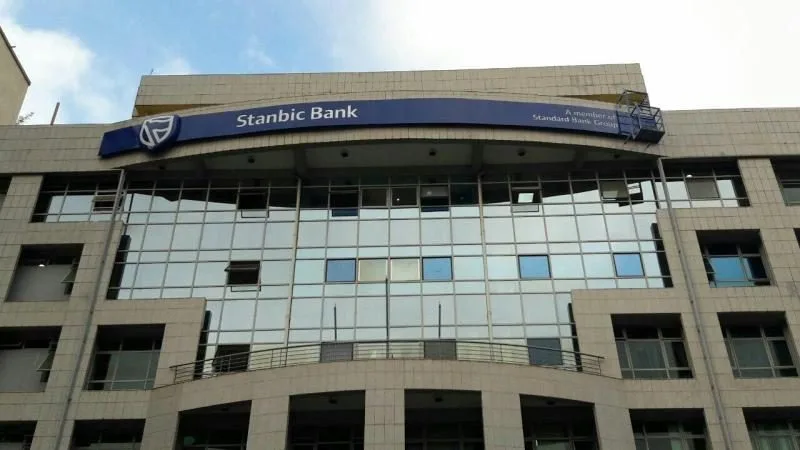
Standard Bank Group, headquartered in Johannesburg, is Africa’s largest bank by assets. ICBC holds a 20.1 percent stake in Standard Bank, making China’s largest state-owned lender a significant shareholder in the institution now designated to process RMB payments across the continent. That ownership structure is not incidental. It means the fee income, data flows, and client relationships generated by the clearing hub will accrue substantially to an entity in which Chinese state capital holds a material interest.
This does not render the arrangement harmful. Standard Bank’s pan-African network and institutional credibility are genuine assets, and the hub’s operational benefits for African businesses are real. But West African regulators, trade ministries, and development finance institutions should examine the terms of access carefully. Who sets the fee structure? What data-sharing obligations attach to RMB clearing transactions? Do African central banks retain visibility over the settlement flows passing through the hub? These are governance questions, and they require answers before the hub’s scale expands.
For Ghana, Nigeria, and Senegal, the immediate policy pathway is clear: engage Standard Bank and the Bank of Ghana, the Central Bank of Nigeria, and the BCEAO respectively in negotiations over access terms, reserve treatment of RMB balances, and integration with PAPSS. The RMB clearing hub is a tool. African institutions must decide what they build with it.