A Continental Listing With Structural Implications
Dangote Petroleum Refinery and Petrochemicals FZE, the Lagos-based refinery that has already reshaped Nigeria’s position in regional fuel markets, is preparing what would be Africa’s largest-ever initial public offering, targeting $5 billion in fresh equity and a primary listing on the Nigerian Stock Exchange as early as October 2026, according to sources with direct knowledge of the transaction.
The deal is not merely a capital-raising exercise. It represents a live test of whether Africa’s fragmented capital markets can coordinate around a single continental asset, and whether the institutional architecture connecting Abuja, Nairobi, Accra, Cairo, Johannesburg and Kigali is mature enough to absorb a transaction of this scale.
What the Numbers Reveal
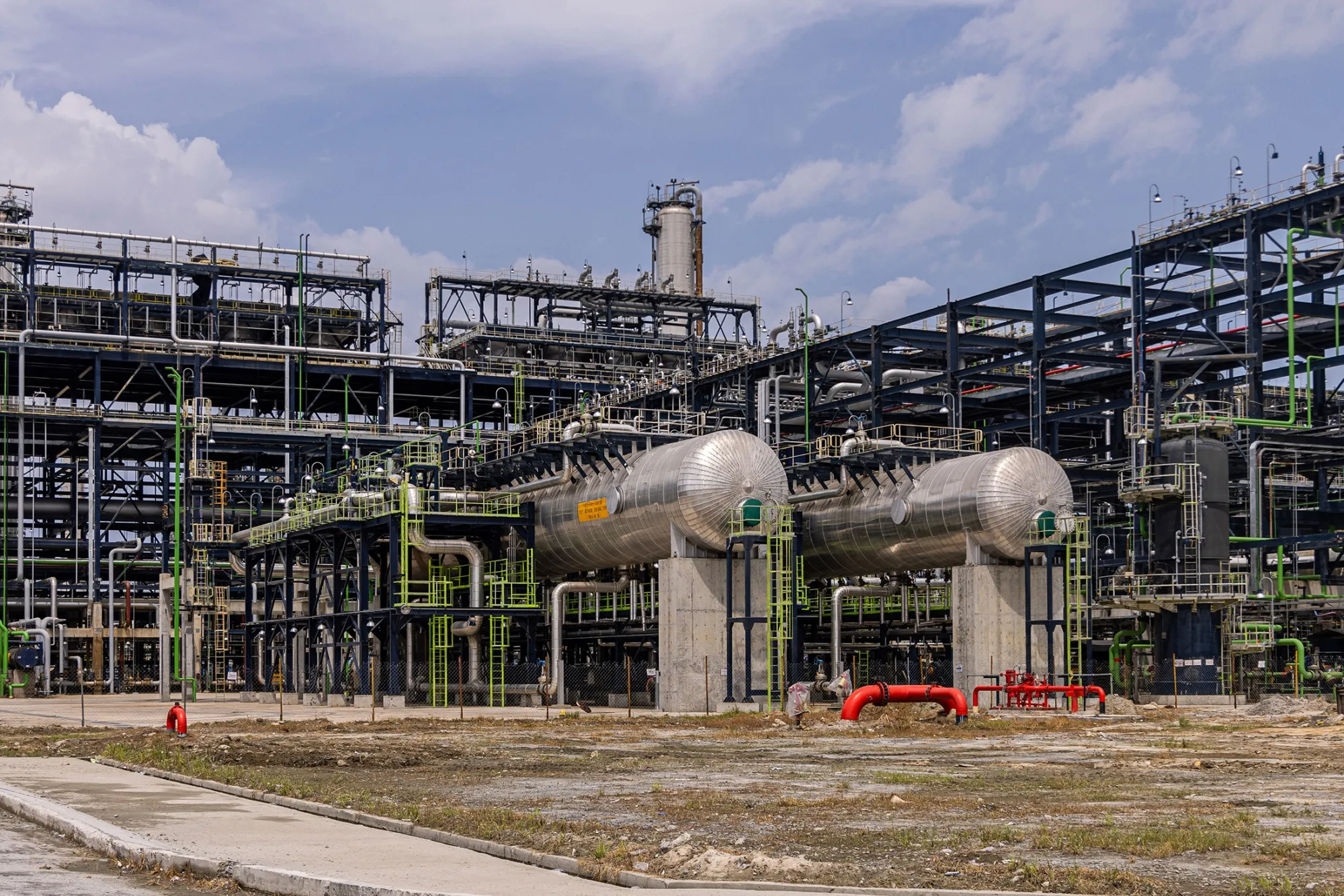
The refinery, which began production in 2024 on the outskirts of Lagos, already operates at 650,000 barrels per day, making it the largest single-train refining facility on the continent. It has converted Nigeria from a chronic net importer of refined petroleum products into an exporter of diesel, jet fuel and naphtha, a structural reversal with direct consequences for fuel pricing across West Africa.
The IPO proceeds are earmarked to more than double processing capacity, from 650,000 to 1.4 million barrels per day by 2028, which would position the plant among the world’s largest refining operations. A 10 percent equity stake is expected to be offered to the public. Analyst and company valuations for the eventual listing have ranged as high as $50 billion, implying a transaction that would account for just over 4 percent of Nigeria’s All Share Index, currently capitalised at $116 billion.
Pre-IPO momentum is already substantial. A private placement completed at 3.7 times oversubscription raised $2.5 billion, the largest disclosed primary equity placement in African history, drawing sovereign-linked funds, development finance institutions and strategic investors including Africa Finance Corporation and India Infra Buildco, a vehicle arranged through the African Export-Import Bank. An additional $750 million in debt was raised earlier this year.
Multi-Exchange Architecture and the Integration Question
Stock exchanges in Nigeria, South Africa, Kenya, Egypt, Ghana and Rwanda have each held working sessions with the refinery’s advisers in recent months to negotiate participation structures in the listing. The architecture being discussed would allow investors across multiple jurisdictions to access the same underlying asset through their domestic exchanges, a model that, if executed successfully, would mark a significant step toward the kind of cross-border capital market integration that ECOWAS and the African Union have long advocated in policy frameworks but rarely operationalised at scale.
Kenya’s capital markets alone could absorb as much as $500 million of the total offering, driven largely by pension fund appetite, according to one source. That figure reflects both the depth of Nairobi’s institutional investor base and the degree to which East African capital is now actively seeking exposure to West African industrial assets, a dynamic that AfCFTA’s financial services provisions are designed to facilitate but have not yet meaningfully enabled in practice.
The advisory syndicate reflects the transaction’s ambitions. Stanbic IBTC Capital is leading international book-building, Vetiva is managing retail distribution within Nigeria, and FirstCap is handling institutional placements. Nigeria’s Securities and Exchange Commission has received the IPO application and is expected to grant approval within weeks, with a prospectus publication targeted for September.
Governance and Regulatory Scrutiny
The Nigerian SEC’s role here carries weight beyond routine approval. A $5 billion listing with multi-exchange participation requires regulatory coordination across at least six jurisdictions, each with its own disclosure standards, investor protection rules and foreign ownership thresholds. The absence of a harmonised pan-African securities regulatory framework, a gap that the African Securities Exchanges Association has repeatedly flagged, means that much of this coordination will depend on bilateral arrangements negotiated deal by deal.
Ownership transparency is a related concern. Aliko Dangote holds a majority stake in the refinery, and the IPO is structured to sell roughly 10 percent of equity. The governance architecture governing minority shareholder rights, board composition, dividend policy and related-party transactions will face close examination from institutional investors, particularly development finance institutions with environmental, social and governance mandates. How those protections are structured in the prospectus will significantly influence whether the listing achieves its valuation ceiling or settles at a discount.
Dangote has publicly framed the listing as a mechanism to broaden African ownership of a continental industrial asset, rather than simply a fundraising vehicle. That framing carries political resonance, but it also creates accountability obligations. Retail investors in Accra, Nairobi or Kigali purchasing shares through their local exchanges will need enforceable protections under Nigerian corporate law and, ideally, under the laws of their own jurisdictions.
Regional Energy Economics and West African Market Dynamics
The refinery’s operational record since 2024 already illustrates its structural impact on West African fuel markets. Nigeria’s transition to net exporter status in diesel, jet fuel and naphtha has altered import dependency calculations for neighbouring states, including Ghana, which has historically sourced a significant share of its refined product imports from European and Asian suppliers.
If expansion to 1.4 million barrels per day is completed by 2028, the refinery’s output would substantially exceed Nigeria’s domestic consumption, making West Africa a potential net exporter of refined fuels to global markets. That outcome would represent a fundamental shift in the region’s position within global energy trade, reducing the foreign exchange drain that fuel imports have historically imposed on ECOWAS member states.
The proposed Kenya replication facility adds a further dimension. A second large-scale refinery in East Africa, financed partly through IPO proceeds, would extend the model’s logic to a different regional economic community, raising questions about how COMESA and the East African Community would interact with an asset majority-owned by a West African private actor.
What Institutions Must Now Deliver
The Nigerian SEC’s approval timeline, expected before September, will determine whether the October listing target holds. Any delay or material condition attached to the approval could compress the book-building window and reduce participation from non-Nigerian exchanges, whose own regulatory processes require lead time.
For ECOWAS and the African Union’s capital markets development agenda, the Dangote IPO is both an opportunity and a stress test. Success would provide a replicable template for future pan-African listings, establishing precedents for cross-border prospectus recognition, investor protection equivalence and settlement interoperability. Failure, or a listing that falls materially short of its stated ambitions, would expose the institutional gaps that have prevented African capital markets from scaling to match the continent’s investment needs.
The Bank of Ghana, the Capital Markets Authority of Kenya and the Financial Sector Conduct Authority of South Africa each have a direct institutional interest in how their domestic markets participate in this transaction. Their coordination, or lack of it, over the coming weeks will say as much about African financial integration as the IPO itself.