
When the Northern Corridor Transit and Transport Coordination Authority (NCTTCA) signed a fresh funding agreement with the United Nations Environment Programme (UNEP) in late June 2025, the ceremony marked more than a financial transaction. It signalled a deliberate institutional pivot: one of Africa’s most critical trade arteries is now formally repositioning itself around environmental governance, and the question is whether the regulatory architecture and investment pipeline can keep pace with that ambition.
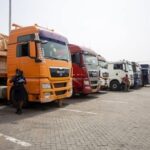
The Northern Corridor stretches from the Port of Mombasa through Kenya, Uganda, Rwanda, Burundi, South Sudan, and the Democratic Republic of Congo, with service extensions into Ethiopia and Somalia. It moves an estimated 75,000 tonnes of cargo daily, carried by between 2,000 and 3,000 trucks, making it the principal logistics spine of East Africa and one of the continent’s most heavily trafficked freight networks. That volume, which reflects decades of deepening regional integration, also generates a substantial and largely unmeasured greenhouse gas burden.
UNEP’s latest contribution amounts to approximately US$200,000, a modest figure by infrastructure standards. Yet it sits atop a broader mobilisation effort that has already assembled roughly US$1.6 million from development partners including Germany’s GIZ and the Kühne Climate Centre. The NCTTCA frames this accumulation as a catalytic stack, designed to unlock further capital rather than constitute a standalone programme. Whether that logic holds will depend heavily on how effectively the authority converts data and feasibility studies into bankable investment proposals.
The funding will support three distinct workstreams under the Northern Corridor Green Freight Strategy 2030. The first involves systematic greenhouse gas emissions tracking across member states, beginning with Kenya, Uganda, and Rwanda, where baseline data will be updated, and extending emissions studies to Burundi, the DRC, and South Sudan, where comparable datasets do not yet exist. The second is a feasibility study on electrifying truck movements and cargo-handling equipment within the Port of Mombasa. The third establishes a gender inclusion framework to identify structural barriers limiting women’s access to opportunities within the freight and logistics sector.
The Port of Mombasa component carries particular strategic weight. UNEP’s transport programme coordinator Rob de Jong described the port as an ideal electrification entry point precisely because of its operational geography. “Ports offer what we call a captured fleet,” he said. “These vehicles operate within the port, making them among the first candidates for electrification.” The bounded operating environment simplifies the deployment of charging infrastructure, reduces range-anxiety constraints that complicate long-haul electrification, and allows for tighter emissions monitoring. If the feasibility study confirms commercial viability, Mombasa could serve as the demonstration case that attracts private investment into the broader corridor.
NCTTCA Executive Secretary John Deng was candid about where the programme currently stands. Only eight heavy-duty electric trucks are operating as pilot vehicles along the corridor, a figure that underlines the distance between strategic intent and operational reality. “We are still at the pilot stage,” Deng acknowledged. “The technology is promising, but commercialisation has to make economic sense. The data we are collecting will guide future investment and help determine how quickly we can scale up.” That framing, grounded in evidence rather than projection, reflects an institutional maturity that investors and development partners will scrutinise carefully.
The Strategy 2030 sets out a sequenced ambition: make the regional freight sector electric vehicle-ready by 2030, achieve net-zero emissions by 2050, and reduce freight-related emissions by 10 percent annually through improved monitoring, cleaner technologies, and policy reform. Those targets are credible only if they rest on reliable emissions data, which is precisely why the baseline studies across six member states are foundational rather than supplementary. Without harmonised measurement, the corridor cannot credibly report progress to investors, climate finance mechanisms, or the African Development Bank, which has increasingly conditioned infrastructure lending on environmental performance standards.
The governance dimension extends beyond environmental metrics. The NCTTCA’s mandate has historically centred on trade facilitation, coordinating customs procedures, axle-load regulations, and transit documentation across a multi-state corridor. Adding environmental governance to that institutional remit is not a cosmetic adjustment. It requires the authority to develop new technical competencies, build regulatory coherence across six sovereign governments with divergent fiscal capacities, and maintain credibility with a more diverse set of stakeholders including climate finance institutions, private logistics operators, and civil society organisations working on gender equity in transport.
Deng framed this evolution in explicitly intergenerational terms. “For more than 40 years, the Northern Corridor has facilitated trade and logistics across the region. But with growing economies has come increased transport activity, and today thousands of trucks use the corridor every day, emitting greenhouse gases into the atmosphere,” he said. “Climate change is real, and we have to protect future generations by laying the institutional and knowledge foundations that will safeguard our environment, our businesses and our economies.” The language reflects a governance philosophy that positions environmental stewardship not as a constraint on growth but as a condition for its durability.
The gender inclusion component deserves more analytical attention than it typically receives in freight sector coverage. Women remain structurally marginalised across logistics value chains in East Africa, concentrated in informal trade and excluded from higher-value roles in trucking, port operations, and freight brokerage. A framework that merely identifies barriers without binding policy commitments or enforcement mechanisms will produce limited change. The NCTTCA’s ability to translate the framework into enforceable standards across member states, and to link compliance to corridor access or preferential treatment in public procurement, will determine whether this workstream generates measurable outcomes or remains aspirational.
From a regional integration standpoint, the Green Freight Strategy engages directly with the African Continental Free Trade Area’s (AfCFTA) infrastructure and services protocols, which explicitly recognise sustainable logistics as a competitiveness variable. A corridor that can credibly demonstrate lower emissions intensity and stronger governance standards will carry negotiating leverage in AfCFTA services negotiations and in bilateral trade agreements where European partners increasingly attach environmental conditionality. The NCTTCA’s data infrastructure, once built, positions the corridor to participate in carbon credit markets, access concessional climate finance, and benchmark against comparable freight corridors in Southern and West Africa.
The competitive pressure is real. The Dar es Salaam Corridor, serving Tanzania, Zambia, Malawi, and the DRC’s Katanga region, is investing in its own modernisation agenda. The Lobito Corridor, backed by significant US and European capital, is being repositioned as a strategic minerals export route with green infrastructure components. The Northern Corridor cannot afford to treat environmental governance as a secondary priority if it intends to retain its position as the continent’s leading freight artery and attract the next generation of logistics investment.
Rob de Jong articulated the strategic stakes with precision. “We want to make sure East Africa is part of that transition rather than following it,” he said. That framing captures the core institutional challenge facing the NCTTCA: the window to shape the green freight transition on East African terms, rather than absorb standards and technologies designed elsewhere, is open now. The US$1.8 million mobilised to date is not sufficient to close it. But if the feasibility studies are rigorous, the emissions data harmonised, and the gender framework operationalised, the authority will have built the evidentiary foundation on which a much larger investment case can stand.