A Warning From Civil Society
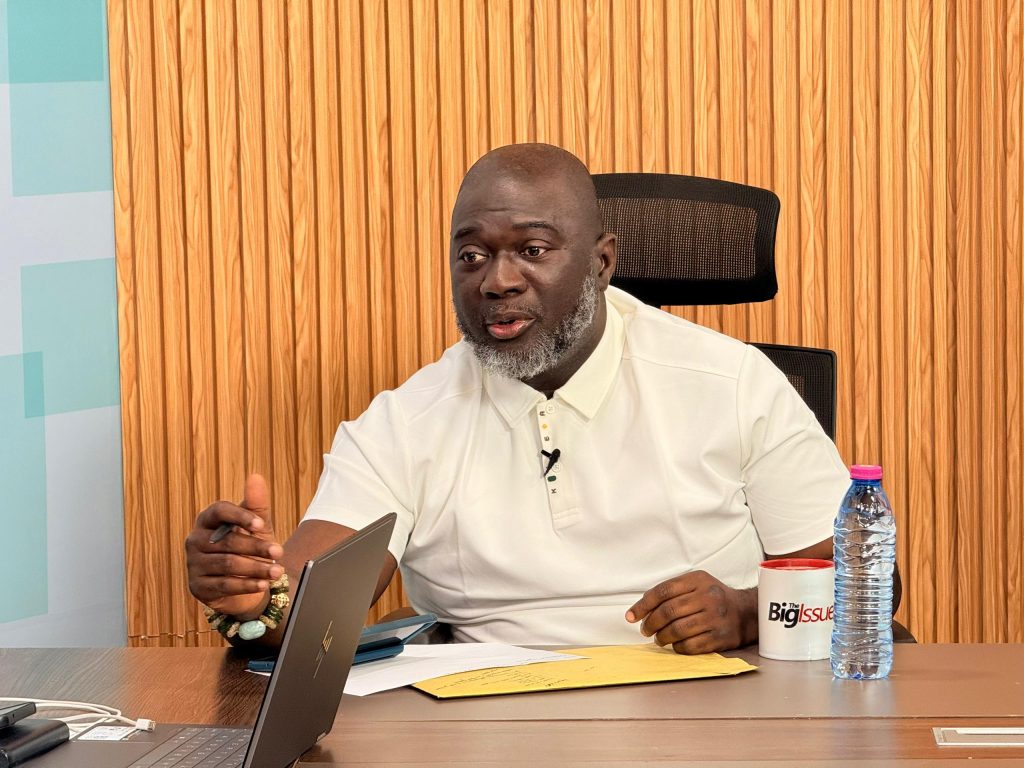
On 6 August 2026, the New Patriotic Party marched through Accra under the banner of “Democracy Under Attack,” rallying supporters against what the opposition described as political persecution by the incumbent administration. The demonstration was loud, visible, and politically charged. But for Duncan Amoah, Executive Secretary of the Chamber of Petroleum Consumers (COPEC), the more serious democratic hazard was not the grievance being protested — it was the language being used to articulate it. Specifically, the casual deployment of retaliatory threats: the promise, issued from political platforms and by party functionaries alike, that “the tables will turn.”
Amoah’s intervention cuts to a structural tension that Ghana’s democratic institutions have long struggled to resolve: the boundary between legitimate political opposition and the weaponisation of impunity. When political actors signal that accountability measures targeting their members constitute grounds for future retaliation, they are not merely engaging in partisan posturing. They are, whether deliberately or not, eroding the normative foundation upon which prosecutorial independence, public financial oversight, and institutional credibility all depend.
Impunity as Political Doctrine
The logic embedded in “tables will turn” rhetoric is worth unpacking precisely because it operates through implication rather than explicit statement. As Amoah framed it, the message being transmitted is this: “Even if we did wrong, or adverse findings are made against us, do not go after us because someday you may not be in power.” Read in institutional terms, this is an argument for conditional accountability — scrutiny applied or withheld based on the political identity of the subject rather than the evidence against them. It is a doctrine that, if normalised, would render Ghana’s anti-corruption architecture functionally inoperable.
Ghana’s accountability institutions — the Office of the Special Prosecutor, the Auditor-General, the Commission on Human Rights and Administrative Justice — were designed with a degree of insulation from the electoral cycle precisely to prevent this outcome. Their credibility rests on the perception that investigations follow evidence, not political affiliation. When senior opposition figures publicly threaten reciprocal action should they return to power, they undermine that perception, regardless of whether any individual investigation is justified. The chilling effect is institutional, not merely personal.
This dynamic is not unique to Ghana. Across West Africa, the cyclical pattern of incoming administrations prosecuting predecessors — selectively and theatrically — has hollowed out prosecutorial credibility in several ECOWAS member states. In Nigeria, successive administrations have deployed the Economic and Financial Crimes Commission as an instrument of political management as much as genuine anti-corruption enforcement, a pattern that has drawn sustained criticism from civil society and international observers. Senegal witnessed acute tensions between the Faye administration and its predecessors over politically sensitive prosecutions. Ghana has historically distinguished itself by the relative resilience of its institutions, and that distinction is worth protecting.
Accountability, Not Persecution: Drawing the Institutional Line
Amoah was direct in rejecting the conflation of accountability with democratic backsliding. “Touching a member of a political party is not the same as attacking democracy,” he stated, drawing a distinction that should be elementary but has become genuinely contested in Ghana’s current political climate. The distinction matters because the conflation serves a specific political interest: it transforms accountability into a partisan act, making any investigation of an opposition figure legible as an attack on the opposition itself, and by extension on democratic pluralism.
Genuine democratic erosion carries a recognisable institutional signature. It involves the suppression of political opponents through extra-legal means, the restriction of press freedom, the subordination of judicial independence to executive preference, or the manipulation of electoral processes. By contrast, the investigation of former public officials for alleged misappropriation of public funds — assuming due process is observed — is precisely what democratic accountability mechanisms exist to do. Amoah’s position was unambiguous: “People who have held public funds running away from accountability, hiding behind NPP and NDC to say that if you go after people for having misappropriated funds, the tables will turn — I don’t think this is what democracy should mean.”
The governance stakes here extend well beyond partisan competition. Ghana’s public financial management record directly shapes its sovereign credit ratings, its terms of engagement with the International Monetary Fund — with whom Accra concluded a US$3 billion Extended Credit Facility arrangement in 2023 — and its attractiveness to the foreign direct investment that structural economic transformation requires. Investors and multilateral creditors do not simply assess macroeconomic indicators; they assess institutional quality, and institutional quality is degraded when accountability is perceived as politically negotiable.
Regional Governance Standards and the ECOWAS Benchmark
Within the ECOWAS framework, Ghana has long occupied a stabilising role, serving as a reference point for democratic consolidation in a sub-region where civilian governance remains fragile. The ECOWAS Protocol on Democracy and Good Governance, adopted in 2001, commits member states to the separation of powers, judicial independence, and the subordination of armed forces and security services to civilian authority. Its provisions explicitly address the protection of institutions from political manipulation — a commitment that extends logically to prosecutorial and financial oversight bodies.
The protocol’s enforcement mechanisms remain weak, as the sub-region’s experience with unconstitutional changes of government in Mali, Burkina Faso, Guinea, and Niger has demonstrated with painful clarity. But Ghana’s value to regional stability has always derived less from ECOWAS’s enforcement capacity than from the country’s own institutional culture. A Ghana in which accountability is openly traded as a political commodity would represent a qualitative shift in that culture — one with implications for how ECOWAS’s democratic norms are perceived and practiced across the bloc.
For the African Continental Free Trade Area to function as its architects intend, it requires member states with governance environments capable of enforcing contracts, protecting property rights, and maintaining regulatory predictability. Ghana, as one of the AfCFTA Secretariat’s host countries, carries a particular symbolic and practical weight in demonstrating that African governance can meet those standards. Retaliatory rhetoric that normalises selective accountability sends a signal — to investors, to trading partners, to regional peers — that institutional quality in Accra is more contingent than it appears.
The Citizen Cost of Political Impunity
Amoah grounded his analysis in a point that is often obscured by the partisan framing of these debates: the primary victims of governance failure are not political parties, but citizens. “If we allow this country to be governed that way, it is not the NPP or NDC that suffers; it is the people,” he said. This observation carries specific weight in the context of Ghana’s recent economic trajectory. The country’s debt restructuring process, initiated in late 2022 and still working through its domestic bond exchange components, imposed significant costs on pension funds, retail investors, and households dependent on government services. The fiscal mismanagement that contributed to that crisis did not occur in a governance vacuum; it occurred in an environment where accountability mechanisms were either absent, delayed, or politically complicated.
When public officials who managed state resources during a period of documented fiscal deterioration resist scrutiny by framing investigations as partisan attacks, they are not defending democracy. They are defending a system in which the consequences of governance failure are borne by citizens while the authors of that failure retain political protection. That is precisely the inversion of accountability that democratic institutions are designed to prevent. Amoah’s call is not for political persecution; it is for the consistent application of the rules that Ghana’s own legal and institutional framework already provides.
The path forward runs through institutional reinforcement rather than rhetorical escalation. Ghana’s Special Prosecutor, Auditor-General, and parliamentary oversight committees require not only legal mandate but political culture — a broad, cross-partisan consensus that accountability applies uniformly, that due process protections are real and respected, and that the outcome of investigations is determined by evidence rather than electoral calendars. Building that culture requires political actors, civil society voices like Amoah’s, and the media to consistently refuse the framing that equates accountability with persecution. It is a demanding standard. But it is the standard that distinguishes functioning democratic governance from its simulation.