
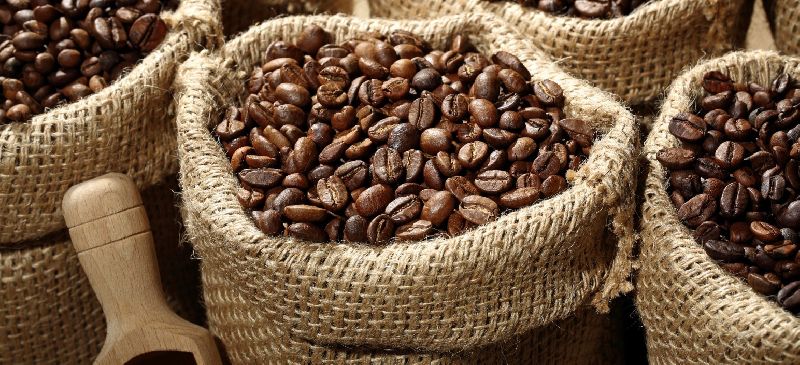
Ghana’s cocoa regulator has moved to close a structural gap that has quietly undermined the sector’s supply chain for years. The Ghana Cocoa Board (COCOBOD) has formally prohibited Licensed Buying Companies (LBCs) from purchasing cocoa beans from farmers on credit, threatening license revocation for any company that breaches the directive. The ban is the most visible signal yet of a broader institutional overhaul that includes a new financing model and the Ghana Cocoa Board Bill 2026 — together, the most consequential legislative and regulatory changes to the sector since 1984.
The Credit Purchase Problem: A Systemic Risk Hidden in the Supply Chain
Credit-based cocoa purchases may appear routine, but they represent a material governance failure in a tightly regulated commodity chain. When LBCs acquire beans from farmers without immediate payment, they expose themselves to liquidity shortfalls, accumulate liabilities to commercial banks, and create payment delays that ripple backward to farmers who depend on prompt income to manage seasonal costs.
COCOBOD’s Chief Executive Officer, Dr. Randy Abbey, addressed the issue directly at the launch of the Chamber of Cocoa Marketers, making clear that the regulator had already communicated the prohibition to LBCs. “We have met as part of our stakeholder engagements. I have told them you are not supposed to buy cocoa on credit from farmers. We have all decided that we will go and sin no more,” Dr. Abbey stated.
The directive also targets the demand side of the transaction. COCOBOD has informed farmers that they should refuse to hand over cocoa to purchasing clerks on credit terms — a necessary step, since the practice has persisted partly because farmers, under financial pressure, have sometimes accepted deferred payment arrangements that left them exposed.
The enforcement mechanism — written warnings with a clear escalation path to license revocation — marks a shift from the informal stakeholder engagement that previously characterized COCOBOD’s compliance culture.
A New Financing Architecture for the 2026/27 Crop Year
The credit ban would carry limited weight without a corresponding solution to the liquidity gap that made deferred payments attractive in the first place. COCOBOD has signaled that a new funding model, expected to take effect from the 2026/27 crop year, will provide year-round liquidity for cocoa purchases and related operations — directly addressing what Dr. Abbey described as “the bane of LBCs since 2020”: delays in the payment of cocoa-taking-over receipts.
The architecture of this new model has not been fully disclosed publicly, but its stated objectives are precise. It aims to eliminate payment delays after LBCs assume custody of cocoa from farmers, accelerate the purchase cycle across the supply chain, and reduce the proportion of the crop that must be collateralized to secure financing. That last point carries significant downstream consequences for Ghana’s processing ambitions.
Unlocking Domestic Processing Capacity
Under the previous financing structure, a substantial share of Ghana’s cocoa crop was pledged as collateral for syndicated loans used to fund the purchase season. This arrangement, while functional as a financing mechanism, effectively ring-fenced raw beans away from domestic processors, who could not access sufficient volumes to operate at scale. Ghana currently processes roughly 30 to 35 percent of its cocoa domestically — a figure that has stagnated despite repeated policy commitments to value addition.
Dr. Abbey framed the financing reform as directly linked to this processing constraint: the new mechanism is intended to provide procurement liquidity while simultaneously freeing up raw material access for local grinders and manufacturers. If the model delivers, it could shift Ghana’s position in the global cocoa value chain from primary exporter toward a more integrated processing economy — a goal consistent with AfCFTA’s emphasis on intra-African value addition and reduced commodity dependence.
The Ghana Cocoa Board Bill 2026: Resetting the Legislative Framework
Underpinning both the credit ban and the financing reform is a new legislative instrument. The Ghana Cocoa Board Bill 2026, currently before Parliament, replaces a regulatory framework that dates to 1984 — a statute conceived in a different macroeconomic era, before Ghana’s democratic consolidation, before ECOWAS deepened its trade integration agenda, and before cocoa became central to West Africa’s negotiations over agricultural value chains under the African Union’s Agenda 2063.
The bill introduces a guaranteed farmer price floor of 70 percent of gross free-on-board (FOB) value, with provisions allowing producer prices to be adjusted during the season in response to market indicators. This represents a structural improvement over fixed-price regimes that left farmers exposed when world cocoa prices rose sharply mid-season — as occurred dramatically between 2023 and 2024, when cocoa futures reached historic highs above US$10,000 per tonne on the Intercontinental Exchange.
Dr. Abbey described the combined effect of the bill and the operational reforms as a reset: “These measures and the new bill constitute the most significant reforms to our industry since 1984. These reforms are resetting the cocoa sector for growth and industrialisation.”
Regional and Investor Implications
Ghana and Côte d’Ivoire together account for approximately 60 percent of global cocoa supply, and the two countries have pursued coordinated pricing strategies through the Côte d’Ivoire-Ghana Cocoa Initiative (CIGCI), including the Living Income Differential — a US$400 per tonne premium on cocoa contracts intended to raise farmer incomes. COCOBOD’s domestic reforms carry regional significance precisely because Ghana’s supply chain integrity affects the credibility of joint pricing mechanisms. An LBC sector weakened by liquidity crises and deferred payment practices undermines Ghana’s ability to enforce production-side discipline in that bilateral framework.
For investors and trading houses operating in the Ghanaian market, the reforms signal a regulatory environment moving toward greater transparency and payment discipline. The license revocation threat for credit purchases introduces a compliance cost, but it also reduces counterparty risk in a supply chain where informal arrangements have historically made it difficult to audit payment flows. International cocoa buyers and sustainability certification bodies — whose due diligence requirements now extend to farmer payment practices under frameworks like the EU Deforestation Regulation — will watch the implementation closely.
The critical question is not whether these reforms are directionally sound — they are — but whether COCOBOD has the institutional capacity to enforce them consistently across a supply chain that involves thousands of purchasing clerks operating in remote growing regions. The 2026/27 crop year will be the first real test of whether the new financing model delivers the liquidity it promises, and whether the credit ban holds beyond the initial period of regulatory attention.