What is the core governance problem Ghana’s mining sector faces?
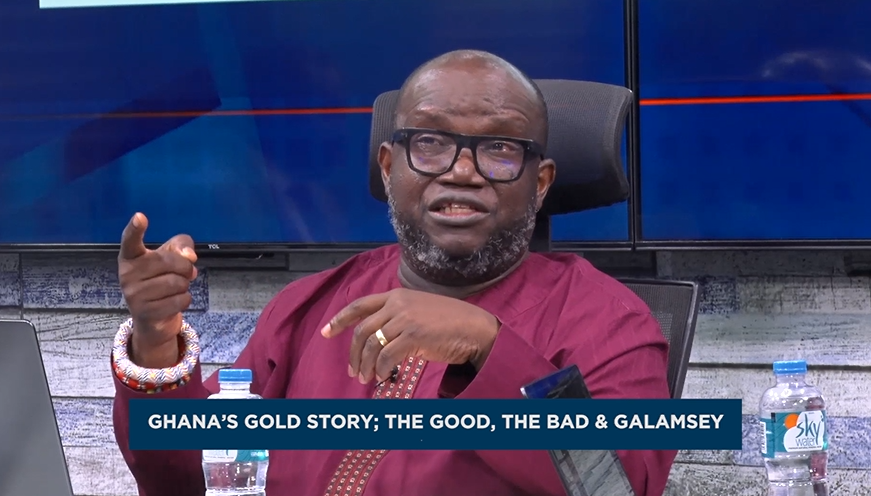
The Ghana Chamber of Mines has issued a pointed warning: frequent, unpredictable shifts in fiscal policy are directly raising the cost of capital for mining projects across the country. Kenneth Ashigbey, the Chamber’s Chief Executive Officer, stated on Channel One TV’s The Point of View on 17 August that investors cannot accurately model returns when the regulatory ground keeps shifting beneath them. This is not an abstract complaint. It is a structural governance failure with measurable consequences for project financing.
The mechanism is straightforward. Mining projects demand enormous upfront capital, often exceeding US$1 billion before a single ounce of gold is extracted, as Ashigbey illustrated with a Newmont project operating in Ghana. Lenders and equity investors price risk into their required returns. When fiscal rules are unstable, that risk premium rises. Higher financing costs reduce project viability, delay final investment decisions, and ultimately shrink the pool of capital available to Ghana’s extractive sector.
Why does fiscal unpredictability hit mining harder than other sectors?
Mining operates on a fundamentally different time horizon than most industries. A typical large-scale gold mine carries a development cycle of five to ten years before commercial production, and a productive life that can extend two to three decades beyond that. Tax rates, royalty structures, and stability agreements negotiated at the point of project approval can look very different from the fiscal environment a company encounters at first production or at peak revenue generation.
Ashigbey was explicit: investors can absorb Ghana’s existing tax rates. They can model royalties, corporate income tax, and windfall levies into their financial projections. What they cannot absorb is the uncertainty of what those rates will be in year seven or year fifteen. “They don’t know what numbers to use at a particular point,” he said. “And you’re going to take this money, people’s money. So you need to be able to guarantee them a return for investment.”
This dynamic is not unique to Ghana. Across West Africa, resource-rich states struggle to balance sovereign fiscal interests against the long-horizon certainty that capital markets demand. The governance question is not whether Ghana should tax its mineral wealth, but how it structures and signals those obligations over time.
How does Ghana’s position compare within the West African investment landscape?
Ghana competes directly with Côte d’Ivoire, Burkina Faso, and Mali for mining capital in the West African gold belt. Côte d’Ivoire, which has pursued aggressive regulatory reform under its Mining Code, has attracted growing interest from mid-tier producers looking for stable, predictable fiscal frameworks. Burkina Faso and Mali, despite significant gold endowments, have seen investor confidence eroded by security instability and, more recently, by sovereign resource nationalism under military governments that have unilaterally revised mining contracts.
Ghana’s democratic institutions and rule of law have historically been its competitive advantage in this landscape. The country’s track record of peaceful electoral transitions and an independent judiciary gave it a credibility premium that translated into lower financing costs relative to regional peers. Fiscal policy volatility risks eroding precisely that premium. When international capital markets perceive Ghana’s regulatory environment as unpredictable, the country loses the governance dividend it has built over decades.
Within the ECOWAS framework, member states have committed to principles of investment facilitation and regulatory harmonisation. The ECOWAS Common Investment Market framework, alongside the African Continental Free Trade Area’s investment protocol, creates an architecture within which Ghana’s domestic mining governance choices carry regional signal value. A Ghana that demonstrates stable, rules-based fiscal management strengthens the credibility of regional investment frameworks. A Ghana that revises mining terms reactively and frequently does the opposite.
What is the specific institutional mechanism that Ashigbey proposes?
The Chamber of Mines CEO did not call for blanket, open-ended fiscal freezes. His proposal is more precisely calibrated. Ashigbey argued for structured stability agreements tied to clear investment milestones and defined conditions, rather than either unconstrained policy flexibility or indefinite fiscal locks. The logic is that both extremes fail. Unlimited government discretion destroys investor confidence. Unconditional long-term stability agreements, on the other hand, can prevent the state from capturing fair value when commodity prices surge.
The middle path, as Ashigbey framed it, is a contractual framework that specifies when fiscal terms apply, under what conditions they may be reviewed, and what investment thresholds trigger eligibility for stability protections. This is essentially a governance design question: how do you write rules that are credible enough to lower financing costs while remaining flexible enough to protect public revenue in commodity boom cycles?
Several jurisdictions have developed workable models. Botswana’s diamond sector agreements with De Beers, renegotiated periodically but within a stable institutional framework, are frequently cited as a reference. Chile’s copper royalty legislation, revised in 2023 after extended parliamentary deliberation, demonstrates how resource-rich states can update fiscal terms through transparent, rules-based processes without triggering capital flight. Ghana’s institutions, including the Minerals Commission and the Ministry of Finance, have the technical capacity to design comparable frameworks. The political will to do so consistently is the variable.
What are the implications for Ghana’s fiscal credibility and regional standing?
Ghana’s mining sector contributed approximately 48 percent of the country’s total export earnings in 2023, according to Bank of Ghana data, with gold accounting for the dominant share. The sector’s fiscal contribution, through royalties, corporate taxes, and dividends from state participation via the Ghana National Petroleum Corporation and the Minerals Income Investment Fund, is material to budget stability. Undermining investor confidence in that sector does not only affect mining companies. It affects Ghana’s external account, its debt serviceability, and its capacity to fund public services.
For regional investors and ECOWAS partners monitoring Ghana’s post-IMF programme trajectory, fiscal policy coherence in the extractive sector is a leading indicator of broader governance quality. Ghana concluded a US$3 billion Extended Credit Facility programme with the IMF in 2023 following a sovereign debt crisis. Restoring investor confidence, including in mining, is structurally linked to the country’s fiscal consolidation path.
Ashigbey’s warning deserves to be read as institutional feedback, not sectoral lobbying. The Chamber of Mines is identifying a governance gap: the absence of a durable, rules-based framework for fiscal stability in mining. Closing that gap requires the Ministry of Finance and the Minerals Commission to codify stability agreement criteria in legislation, not leave them to ad hoc negotiation. It requires parliamentary oversight of any significant revision to mining fiscal terms. And it requires Ghana’s institutions to treat regulatory predictability as a public good, one that generates returns through lower financing costs, higher investment volumes, and a stronger competitive position within West Africa’s contested resource investment market.