
Kenya’s pension sector executed a significant portfolio reallocation in the first half of 2026, shifting Sh130.51 billion from government securities into quoted equities on the Nairobi Securities Exchange as falling bond yields and a sustained stock market rally reshaped the risk-return calculus for fund managers across the country.
Fresh data published by the Retirement Benefits Authority shows that pension schemes’ holdings of quoted equities rose 41.72 percent to Sh443.35 billion in the six months to June 2026, up from Sh312.84 billion at the end of December 2025. The allocation now represents 14.37 percent of total pension assets, the highest share recorded in five years and a sharp climb from 11.13 percent at the close of last year. The last time equities commanded a larger share of pension portfolios was December 2021, when they accounted for 16.45 percent of total holdings.
Government Securities Lose Ground in Pension Portfolios
The rotation out of fixed income was equally pronounced. Holdings of government securities fell Sh35.14 billion, or 2.4 percent, to Sh1.43 trillion from Sh1.47 trillion, reducing the share of government paper in pension portfolios to 46.35 percent, a four-year low, compared with 52.14 percent in December 2025. Fixed deposits saw a 15 percent contraction to Sh48.02 billion from Sh56.5 billion over the same period, as the lower interest-rate environment squeezed returns across traditional fixed-income instruments.
The RBA attributed the reallocation directly to monetary policy easing by the Central Bank of Kenya, whose indicative Central Bank Rate dropped from 9 percent in January to 8.75 percent in February and held at that level through June. “For pension schemes, this lower-interest-rate environment continues to exert downward pressure on yields on new government debt and fixed deposits,” the RBA stated, adding that “this dynamic is accelerating the reallocation of capital away from traditional fixed income instruments toward higher-yielding equities and alternative asset classes.”
NSE Rally Provides the Entry Point
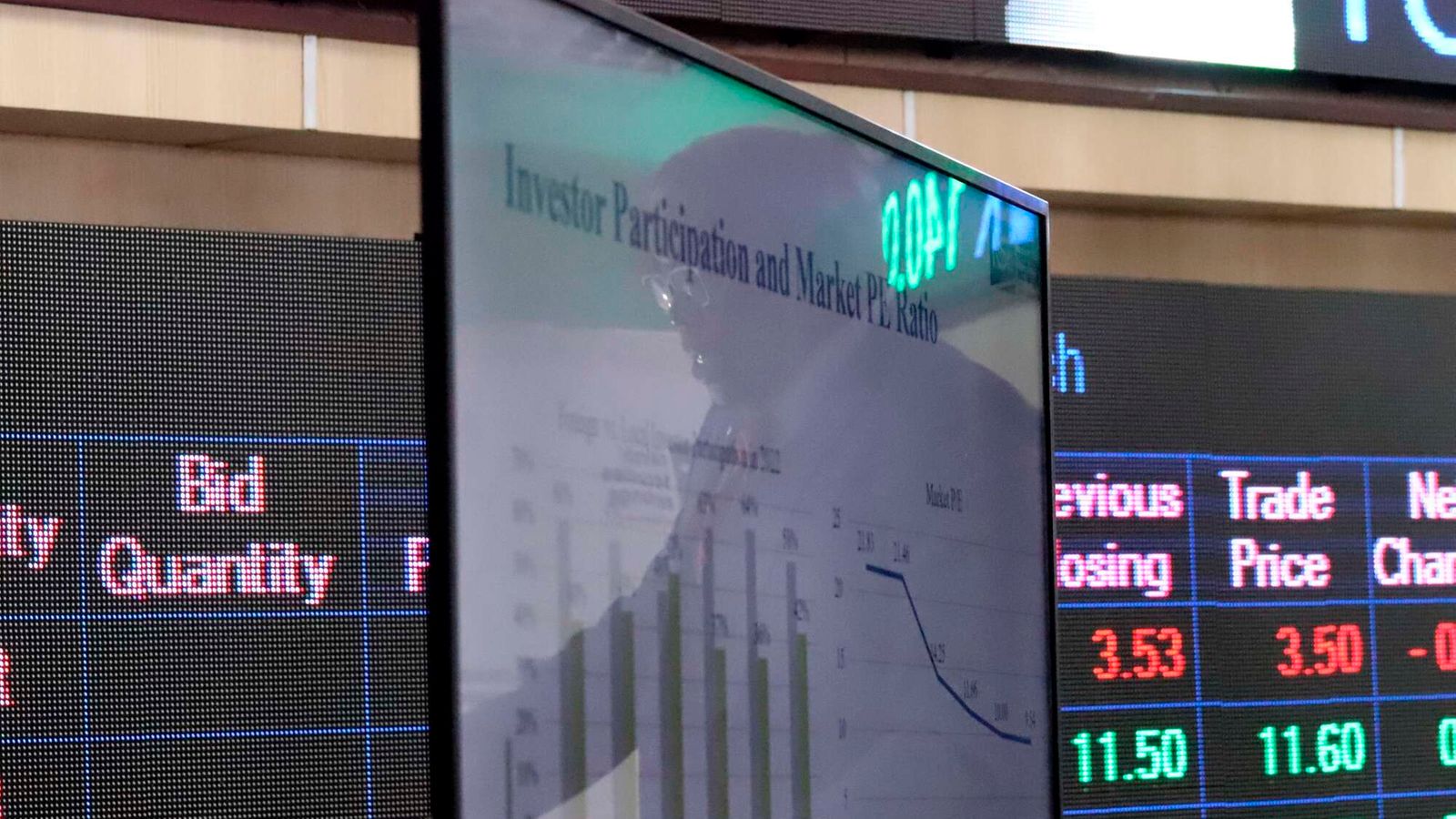
The reallocation did not occur in a vacuum. Kenya’s equities market staged a robust recovery in the first half of 2026, with the NSE 20-Share Index and the Nairobi All Share Index each gaining approximately 20 percent, reaching 3,755.44 points and 224.15 points respectively. Market capitalisation expanded 28 percent to Sh3.76 trillion over the period, driven by improved corporate earnings, dividend distributions, and renewed retail and institutional investor confidence. The listing of Family Bank in June, following the Kenya Pipeline Company’s initial public offering in March, injected additional liquidity and broadened market participation, creating conditions that made large-scale institutional entry more viable.
The RBA noted that sustained price rallies in key blue-chip counters enabled equities to absorb the capital rotated from lower-yielding fixed-income assets. “Building on a 41.72 percent growth in the first half of 2026, this 12-month period reflects market trajectory, strong confidence and sustained rallies in key blue-chip counters, allowing equities to absorb much of the capital rotated out of lower-yielding fixed-income assets,” the authority said. On a 12-month basis, the Sh443.35 billion equity allocation represents a 73.8 percent increase from Sh255.2 billion in June 2025, confirming that the shift was not a short-term repositioning but a sustained directional move spanning at least a full year.
Sectoral Concentration Raises Portfolio Risk Questions
Despite the scale of the reallocation, pension funds’ equity exposure remains heavily concentrated in three sectors. Banking alone accounts for 47.04 percent of the Sh443.35 billion equity portfolio, followed by telecommunications and technology at 31.26 percent and energy and petroleum at 15.1 percent. Together, these three sectors represent 93.41 percent of pension schemes’ quoted equity holdings, a concentration level that leaves retirement savings structurally exposed to sector-specific shocks, particularly in banking, where regulatory and credit cycle risks can move sharply.
The broader portfolio, however, shows signs of incremental diversification. The four largest asset classes, namely government securities, guaranteed funds, quoted equities, and property, accounted for 88.04 percent of total assets in June, down from 90.43 percent in December 2025. Guaranteed funds grew 14.29 percent during the six months to Sh597.07 billion, while offshore investments rose 24 percent to Sh105.69 billion, suggesting that fund managers are also exploring cross-border opportunities as domestic fixed-income returns compress.
Regional and Governance Implications for Retirement Capital
The structural shift in Kenya’s pension allocation carries implications that extend beyond Nairobi’s trading floors. Within the East African Community and the broader context of African capital market development, the mobilisation of long-term institutional capital toward domestic equities represents a meaningful deepening of Kenya’s financial markets, which in turn supports the productive capacity of listed firms and improves price discovery. For regional peers, including Uganda, Tanzania, and Rwanda, whose pension sectors remain smaller and less diversified, Kenya’s experience offers a governance and regulatory reference point: the RBA’s active data publication and its public attribution of market dynamics to monetary policy signals a level of institutional transparency that underpins investor confidence.
For the pension funds themselves, the central governance question now is whether fiduciary frameworks are sufficiently robust to manage the higher volatility that equity-heavy portfolios introduce relative to the steady, if compressed, returns of government paper. As monetary policy normalises and bond yields eventually recover, fund managers will face a structural decision about whether the current equity overweight reflects a durable strategic conviction or a yield-chase that warrants rebalancing. The RBA’s data, released with granular sectoral breakdowns, provides the transparency infrastructure for that debate to proceed on an evidence-based footing.