Ghana’s Ministry of Roads and Highways has declared the Accra-Kumasi Expressway a flagship infrastructure priority of the Mahama administration, following the completion of right-of-way clearing along the full corridor by Ghana Armed Forces engineers. What comes next, the detailed design phase and open contractor procurement, will determine whether this project delivers on its stated ambitions or joins a long list of announced-but-stalled West African corridor investments.
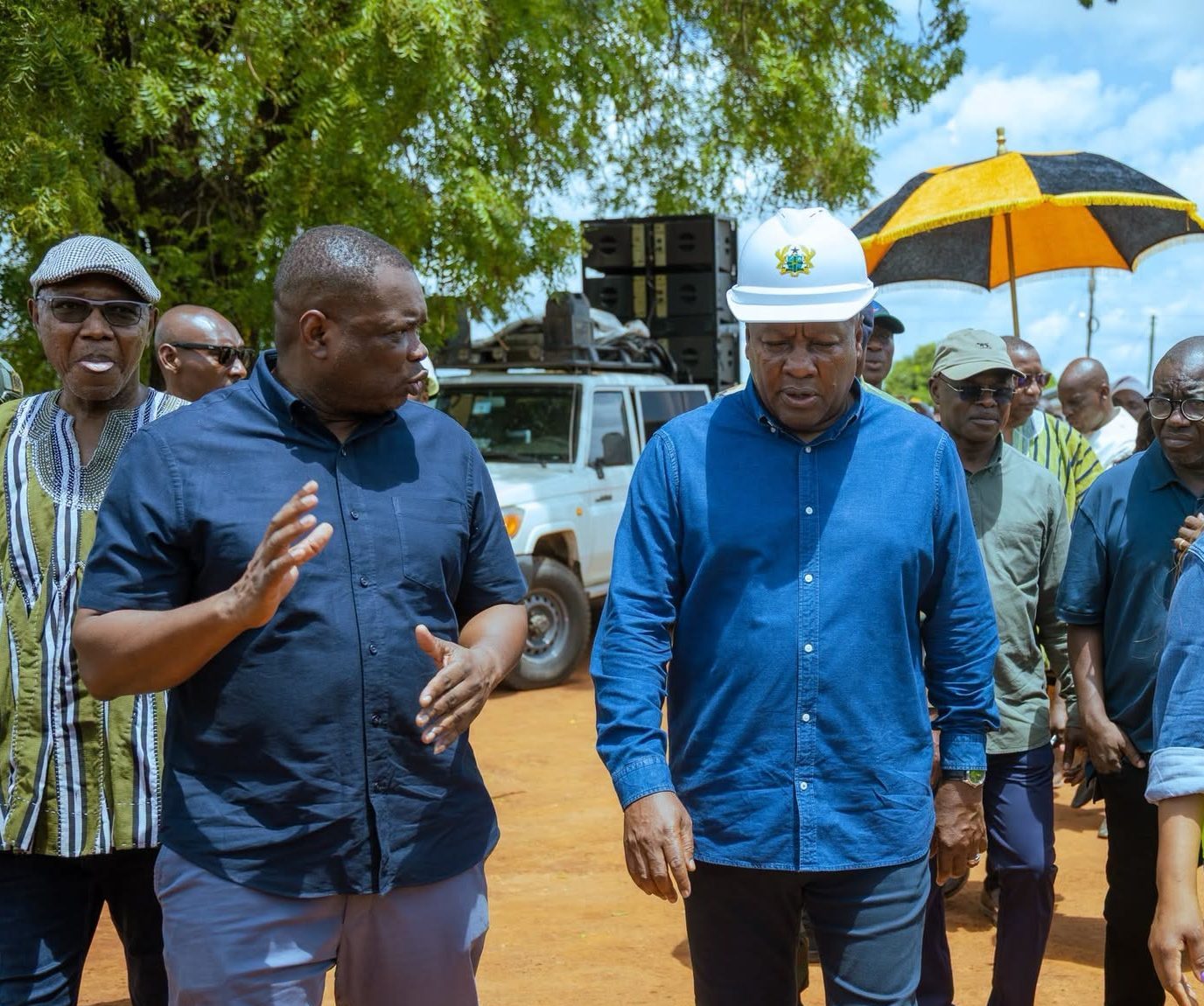
Roads Minister Governs Kwame Agbodza framed the expressway in explicitly historical terms. “Dr Nkrumah and others did other things: they did the Tema Motorway, they did the port, and other things. We also must do something to hold our place in history on behalf of our people,” he told Citi News. The rhetorical weight is significant. Invoking Nkrumah’s foundational infrastructure legacy sets a benchmark that procurement timelines, financing structures, and contractor selection processes will either validate or undercut.
A Corridor With Continental Stakes
The Accra-Kumasi route is not merely a domestic road. It forms a critical segment of the Trans-West African Coastal Highway, a corridor that ECOWAS has long identified as essential to deepening intra-regional trade under its transport facilitation protocols. Ghana’s ability to move goods efficiently between its commercial capital and its second city, a distance of roughly 250 kilometres, directly affects the country’s competitiveness as a transit hub for landlocked neighbours including Burkina Faso and Mali, both of which rely on Ghanaian ports for a substantial share of their import-export flows.
Under the African Continental Free Trade Area (AfCFTA), headquartered in Accra, reducing non-tariff barriers includes improving physical logistics infrastructure. A modern, high-capacity expressway on this corridor would cut transit times, lower freight costs, and strengthen Ghana’s positioning as AfCFTA’s host nation, a symbolic and functional role the country has struggled to fully operationalise given persistent infrastructure gaps.
Côte d’Ivoire, Ghana’s most direct regional competitor for transit trade and foreign direct investment, has aggressively upgraded its own corridor infrastructure over the past decade, including the Abidjan-Bouaké highway. Senegal has advanced its Dakar-Diamniadio toll road and the broader Dakar-Bamako corridor. Ghana’s expressway, if delivered on schedule and to specification, would restore some competitive parity. If it stalls, the gap widens.
Procurement Integrity and the Design-to-Build Gap
The right-of-way clearance, executed by military engineers, is a preparatory step. It is not construction. The distance between cleared land and a functioning expressway runs through some of Ghana’s most historically contested institutional terrain: public procurement.
Ghana’s Public Procurement Authority operates under a legal framework that requires competitive tendering for infrastructure contracts of this scale. The minister confirmed that the government will now advance the detailed design before opening the procurement process. That sequence matters. Detailed design must precede procurement to ensure that contractors bid against defined specifications, not vague scope documents that invite cost overruns and variation orders, two mechanisms through which large Ghanaian infrastructure contracts have historically inflated beyond original estimates.
The financing architecture has not been publicly disclosed in detail. That is a governance gap worth noting. Large corridor projects in West Africa have been financed through a range of instruments: sovereign bonds, bilateral loans, public-private partnership concessions, and blended finance structures combining development finance institution capital with commercial debt. Each carries different implications for ownership, debt sustainability, and long-term fiscal exposure. Ghana, which completed an IMF-supported debt restructuring programme in 2023, carries a constrained fiscal envelope. Any financing arrangement for the expressway will require scrutiny against debt sustainability thresholds.
Chinese state-backed financing, which has funded major road projects across the region, typically attaches conditions around contractor nationality that can limit local content and technology transfer. Western development finance, including from the US International Development Finance Corporation or the European Investment Bank, tends to impose stronger governance and environmental standards but moves more slowly. A transparent public disclosure of the financing model, before procurement launches, would allow Parliament, civil society, and regional partners to assess the terms Ghana is accepting.
The ministry should also clarify the role of the Ghana Armed Forces engineers beyond the clearance phase. Military involvement in civilian infrastructure delivery has precedents in the region, but it raises questions about accountability structures, cost transparency, and the application of standard procurement rules to uniformed institutions.
Three governance mechanisms will determine whether the Accra-Kumasi Expressway becomes a genuine institutional achievement or a recurring budget line:
Minister Agbodza’s Nkrumah comparison is instructive in a way he may not have intended. The Tema Motorway, built in the early 1960s, was delivered through a centralised, state-directed model with limited institutional accountability. Six decades later, Ghana’s governance architecture is different, and so are the expectations. The Bank of Ghana, the Public Procurement Authority, Parliament, and an active civil society all constitute checks that did not exist in Nkrumah’s era. Using them is not a constraint on legacy. It is the condition for one.
For regional investors and ECOWAS partners tracking Ghana’s infrastructure pipeline, the expressway’s credibility will be established not by the cleared corridor, but by the quality of the procurement documents, the transparency of the financing terms, and the rigour of the environmental and social impact assessments. Those documents, when published, will say more about institutional capacity than any ministerial statement.