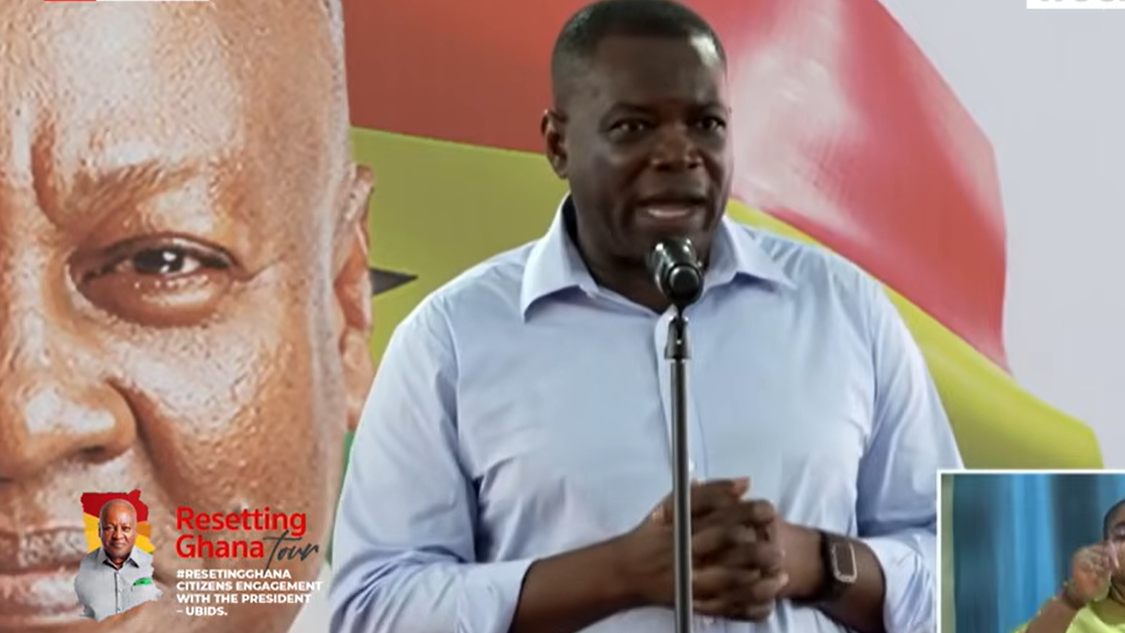
Ghana’s Minister for Roads and Highways, Governs Kwame Agbodza, declared on 13 September 2025 that the country is executing what the government describes as the single largest road infrastructure programme on the African continent at any given point in time. The claim, made before citizens at the University of Business and Integrated Development Studies in the Upper West Region, raises an immediate and consequential governance question: by what metrics, under what procurement framework, and through which accountability mechanisms does Ghana intend to substantiate that assertion — and deliver on it?
The programme, branded the “Big Push,” was a central electoral commitment made by President John Dramani Mahama during the 2024 general election campaign. According to Agbodza, deteriorating road conditions emerged as the dominant citizen grievance across constituencies, cutting across regional and socioeconomic lines. That political signal translated into a fiscal commitment: Mahama pledged an investment in road infrastructure at a scale Ghana had not previously attempted. The government now faces the harder task of converting a campaign mandate into measurable, auditable outcomes.
The political origins of the Big Push matter for governance analysis. Infrastructure promises are among the most instrumentalised tools in West African electoral politics, from Nigeria’s repeated highway pledges to Senegal’s contentious autoroute concession debates. What distinguishes durable programmes from cyclical announcements is institutional architecture: independent project monitoring, transparent procurement, and multi-year budget commitments insulated from electoral cycles. Ghana’s Public Procurement Authority and the Ghana Audit Service will be central actors in determining whether the Big Push clears that bar.
Agbodza offered no specific figures on total programme cost, financing structure, or the number of kilometres targeted. That absence is significant. For a programme claiming continental scale, the lack of publicly disclosed aggregate data limits independent verification and suppresses investor confidence. Ghana’s road sector has historically struggled with contractor arrears, stalled projects, and politically motivated allocation of works — problems that any credible infrastructure drive must structurally address, not merely rhetorically supersede.
The regional integration dimension is not peripheral here. Ghana sits at a geographic and commercial nexus within the ECOWAS transport corridor architecture. The Abidjan-Lagos corridor, which passes through Ghana, is one of the most economically significant road arteries in West Africa, handling an estimated 75 percent of regional trade volume along the Gulf of Guinea coastline. Road quality within Ghana directly affects the cost of moving goods under the African Continental Free Trade Area (AfCFTA), whose Secretariat is headquartered in Accra — an institutional irony that sharpens the accountability stakes. If Ghana cannot demonstrate credible infrastructure delivery at home, its positioning as AfCFTA’s host nation carries diminishing symbolic weight.
Côte d’Ivoire provides a relevant comparator. Abidjan has systematically invested in road and port infrastructure through a combination of sovereign bonds, public-private partnerships, and concessional financing from the African Development Bank, executing projects with relatively consistent delivery timelines. Senegal’s Plan Sénégal Émergent similarly embedded road infrastructure within a multi-year fiscal framework, with projects tied to measurable corridor development targets. Ghana’s Big Push, as currently communicated, lacks that structural transparency — a gap that Accra’s Ministry of Finance and the Roads Ministry must close if the programme is to attract the institutional capital its scale implies.
Financing architecture remains the critical unknown. Ghana completed an IMF Extended Credit Facility programme in 2023 following a severe debt restructuring exercise, and its fiscal space remains constrained. Large-scale infrastructure spending in this environment requires either concessional multilateral financing, domestic bond issuance, or private capital mobilisation through PPP frameworks. Each carries distinct governance implications. Concessional loans demand environmental and social safeguard compliance. Domestic bonds compete with private sector credit. PPP structures require a regulatory environment that Ghana’s infrastructure concession history has not consistently provided.
The Upper West Region, where Agbodza made his remarks, is among Ghana’s least connected areas by road density. That the minister chose this venue signals political intent to address equity in infrastructure allocation — a genuine governance priority in a country where road investment has historically concentrated in the south. Whether the Big Push’s project pipeline reflects a deliberate spatial equity framework, or whether northern regions are receiving rhetorical attention while southern commercial corridors absorb the bulk of capital, is a question the Ministry should answer with published project-level data.
For investors and regional partners watching Ghana’s trajectory, the Big Push represents both an opportunity and a test. Ghana’s construction sector, dominated by a mix of local firms and Chinese contractors, has the capacity to absorb significant works. But absorptive capacity without governance discipline produces cost overruns, quality deficits, and the contractor arrear cycles that have repeatedly stalled Ghanaian road projects. The Bank of Ghana’s monetary policy posture, the Ministry of Finance’s fiscal consolidation targets, and the Roads Ministry’s procurement calendar must align if the programme is to proceed without reigniting the debt distress Ghana spent the past two years unwinding.
The claim of continental scale demands continental scrutiny. Africa’s infrastructure deficit is documented: the African Development Bank estimates the continent requires between US$130 billion and US$170 billion annually in infrastructure investment, facing a financing gap of approximately US$68 billion to US$108 billion. Ghana’s Big Push, whatever its final cost envelope, operates within that structural reality. A programme that genuinely advances road connectivity, strengthens ECOWAS corridor links, and demonstrates accountable public investment management would constitute a meaningful contribution to closing that gap — and a model with real replicability across the region. A programme that delivers ministerial rhetoric without auditable project data would be a missed opportunity of precisely the scale its architects are claiming.
The government’s next obligation is disclosure: total programme value, financing sources, procurement outcomes, contractor identities, project timelines, and independent monitoring arrangements. Until that information is public, the Big Push remains a political declaration rather than a governance programme. Ghana’s institutions — parliament, the audit service, civil society, and the press — have both the mandate and the responsibility to demand it.