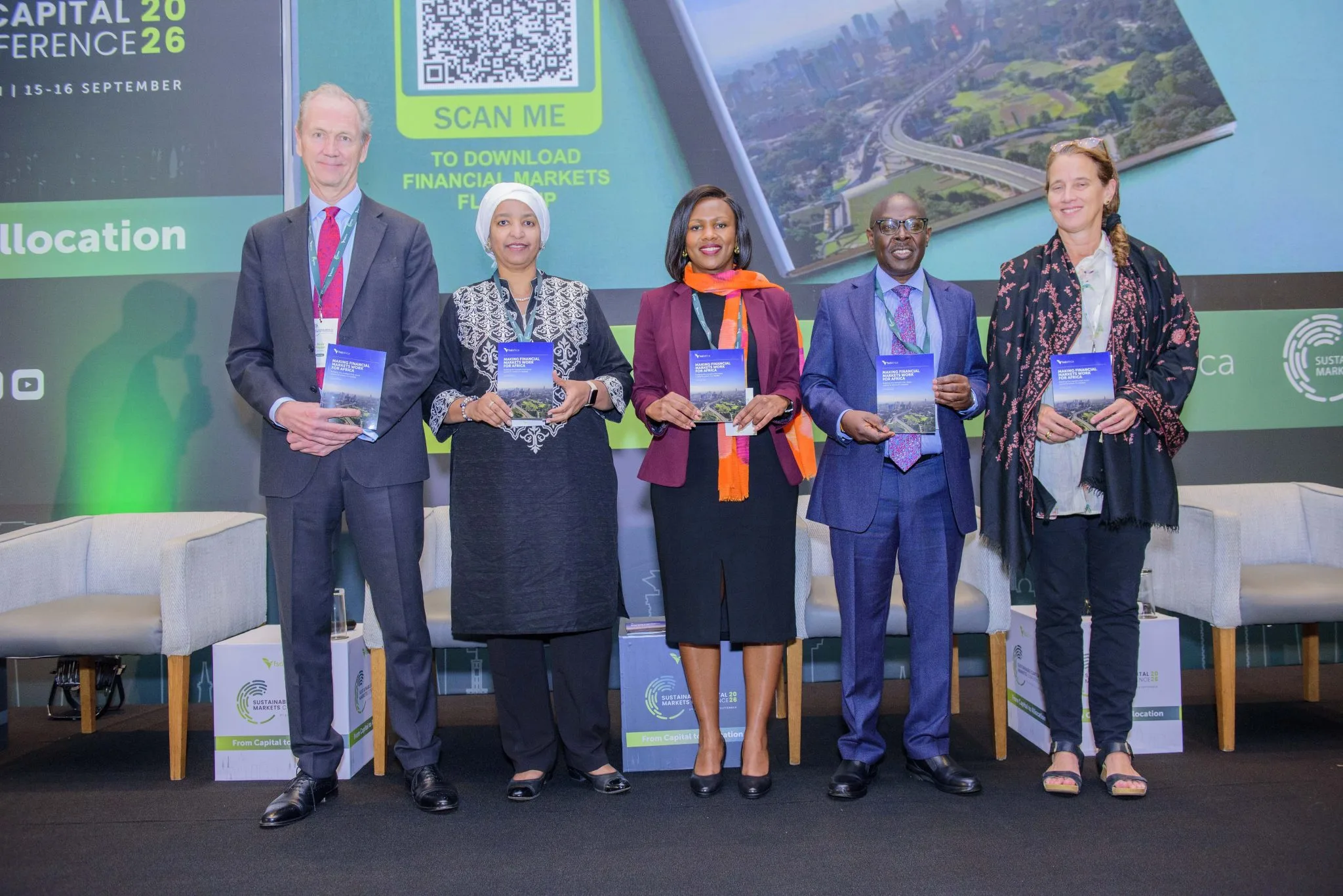
In Nairobi on 15 September, more than 300 policymakers, regulators, and development finance leaders from over 20 African countries gathered around a single, uncomfortable arithmetic: African institutional investors collectively manage an estimated US$4 trillion, yet only 2.7% of those assets flow into infrastructure and productive sectors. The third Sustainable Capital Markets Conference, organised by FSD Africa and its partners, made that gap its central subject. The figure is not merely a data point. It is a governance indictment.
The question animating Nairobi was precise: what regulatory architecture, what institutional mandate, what financing instrument keeps African pension funds, insurers, sovereign wealth funds, and banks from deploying capital into the very economies that generate their contributors’ livelihoods? That question carries particular weight for West Africa, where ECOWAS member states are simultaneously navigating rising sovereign debt costs, slowing foreign direct investment, and the structural obligations of the African Continental Free Trade Area.
African domestic equity markets have expanded dramatically, growing 27-fold since 2000 to reach US$561 billion in total capitalisation, according to FSD Africa data. Yet the continent’s share of global capital market activity has declined over the same period. Growth in market size has not translated into market depth or institutional participation. Fewer than half of African countries have seen a domestic company issue a corporate bond since 2000. That statistic alone reveals a structural failure: the pipeline between institutional savings and productive investment is blocked, not by a shortage of capital, but by regulatory fragmentation, thin secondary markets, and risk-pricing frameworks imported wholesale from contexts that bear little resemblance to Accra, Lagos, or Dakar.
For West Africa specifically, the regional dimension of this failure deserves direct scrutiny. The West African Economic and Monetary Union, WAEMU, operates a regional bourse, the Bourse Régionale des Valeurs Mobilières, headquartered in Abidjan, covering eight francophone member states with a combined population exceeding 130 million. Its market capitalisation remains a fraction of what regional pension assets could theoretically support. Ghana’s Ghana Stock Exchange and Nigeria’s NGX operate as largely national instruments, with cross-listing mechanisms that function poorly in practice. ECOWAS has articulated financial integration as a treaty objective for decades. The Nairobi conference’s proposed Africa Capital Markets Roadmap will need to reckon with why regional integration frameworks have not produced integrated capital markets to match.
The corporate bond market failure is particularly consequential. Bonds are the instrument through which governments and companies fund long-horizon projects: roads, energy grids, climate-resilient agriculture, the kind of infrastructure that makes AfCFTA trade corridors function. When fewer than half of African countries have a domestic corporate bond issuance on record since 2000, it signals that the legal infrastructure for creditor rights, the rating agency ecosystem, and the regulatory incentives for institutional participation are all underdeveloped simultaneously. Ghana’s own experience is instructive: its 2023 domestic debt exchange programme, which restructured GHS 87.8 billion in domestic bonds, demonstrated both the latent depth of the local bond market and its acute vulnerability to fiscal mismanagement. Institutional investors absorbed the restructuring’s costs. The episode will shape how Ghanaian pension funds price sovereign risk for a generation.
Nigeria, as ECOWAS’s largest economy, presents a different but equally instructive case. The Nigerian Pension Commission oversees assets exceeding US$25 billion, yet infrastructure allocation within those portfolios remains constrained by regulatory ceilings and a shortage of bankable projects structured to pension-fund risk tolerances. Senegal, which has positioned itself as a regional governance model through successive peaceful democratic transitions, is now navigating the fiscal and reputational consequences of newly discovered oil and gas revenues. How Dakar structures sovereign wealth management around those receipts will determine whether West Africa gains a credible new institutional investor or repeats the resource-curse patterns documented elsewhere on the continent.
The Nairobi conference’s focus on blended finance and public-private partnerships reflects an acknowledgment that no single instrument resolves the allocation gap. Blended finance, which uses concessional public capital to de-risk private investment, has demonstrated measurable results in specific infrastructure corridors, but its scale remains inadequate relative to need, and its governance structures have attracted legitimate criticism regarding transparency and local ownership. The proposed roadmap on mobilising domestic capital through regulatory reform and new investment vehicles points toward a more durable solution: changing the rules under which institutional capital operates, rather than layering concessional subsidies onto a dysfunctional system.
Regulatory reform in this context means concrete, specifiable changes. It means revising prudential investment guidelines that currently restrict pension funds to sovereign debt allocations, introducing standardised project bond frameworks that allow infrastructure assets to be securitised and traded, and building regional credit enhancement facilities that can price risk across ECOWAS borders rather than country by country. The African Development Bank’s Affirmative Finance Action for Women in Africa and its broader infrastructure financing windows offer partial models. The AfCFTA Secretariat’s investment protocol, still under negotiation, could embed capital market harmonisation as a treaty obligation rather than a voluntary aspiration.
What Nairobi ultimately surfaces is a governance question about who controls the design of African capital markets and in whose interest. For decades, the dominant frameworks have been shaped by Washington-based multilaterals, rating agencies headquartered in New York and London, and foreign portfolio investors whose holding periods rarely extend beyond a sovereign bond’s maturity. African institutional investors, the pension contributors of Kumasi, Lagos, and Abidjan, have funded those markets without directing them. The 2.7% infrastructure allocation figure is the arithmetic consequence of that power imbalance. The Africa Capital Markets Roadmap, if it is to carry institutional weight rather than become another conference communiqué, must be anchored in ECOWAS and AU regulatory authority, not donor preference. African central banks, securities commissions, and pension regulators have the legal mandate and, increasingly, the technical capacity to rewrite those rules. Nairobi’s value will be measured by whether it produces binding regulatory commitments, not aspirational frameworks, from the institutions that actually govern where the US$4 trillion flows.