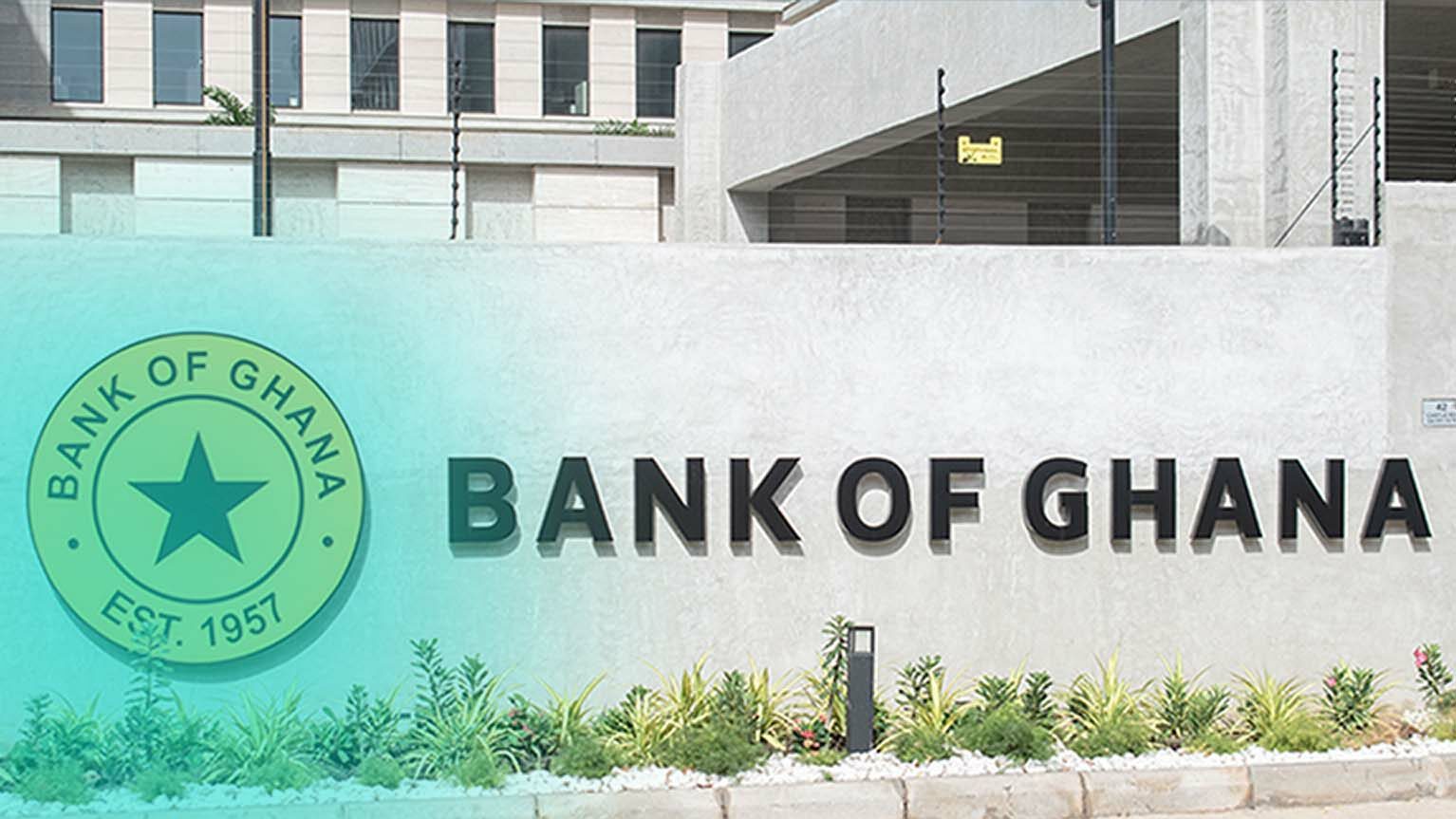
On a quiet Monday morning in Accra, the Bank of Ghana quietly but decisively pulled GH¢13.71 billion out of the financial system through a tender of 14-day Bills, accepting every cedi offered by participating banks at an interest rate of 10.5%. Two days later, a second operation absorbed a further GH¢7.7 billion at the same rate. In the span of a single week, Ghana’s central bank had sterilised GH¢21.41 billion in excess liquidity, a figure that, in its sheer scale, tells a story not just about monetary mechanics but about the institutional pressures bearing down on one of West Africa’s most closely watched central banks as it prepares for its 132nd Monetary Policy Committee session, scheduled from 22 to 24 September.
The instrument at the centre of this operation, the short-term Bank of Ghana Bill with a 14-day maturity, is a standard tool in any central bank’s liquidity management toolkit. Its logic is straightforward: by temporarily withdrawing excess reserves from commercial banks and other financial institutions, the Bank of Ghana reduces the volume of money circulating in the short-term interbank market, thereby exerting upward pressure on money-market rates and, through the transmission mechanism, influencing broader credit conditions. When the bills mature, the funds re-enter the system, giving the central bank the flexibility to calibrate its interventions with relative precision. What makes this week’s operations notable is not the instrument itself, but the volume deployed and the timing of its deployment, just days before a policy rate announcement that markets and investors across the region are watching with considerable attention.
Ghana’s monetary policy environment has been defined, over the past two years, by the twin imperatives of taming inflation and restoring macroeconomic credibility following the country’s sovereign debt restructuring under the IMF-supported programme that began in 2023. The Bank of Ghana has, in that context, consistently positioned liquidity sterilisation not as a peripheral tool but as a central pillar of its strategy to anchor inflation expectations. Its most recent monetary policy report explicitly identifies sterilisation efforts among the measures supporting the inflation outlook, a framing that signals to markets that the central bank views excess liquidity not as a neutral phenomenon but as a potential threat to the disinflation trajectory it has worked to establish.
That trajectory matters enormously, not only for Ghana’s domestic economy but for its standing within the West African monetary architecture. Ghana is not a member of the West African Economic and Monetary Union, the franc-zone bloc whose eight member states share a common currency managed by the Banque Centrale des États de l’Afrique de l’Ouest. But Ghana sits at the heart of ECOWAS’s long-delayed monetary convergence agenda, which has for decades envisioned a single currency, the Eco, for the entire fifteen-member bloc. For that project to have any institutional credibility, Ghana’s monetary policy framework must demonstrate the kind of discipline and transparency that convergence criteria demand: low and stable inflation, exchange rate stability, and a central bank capable of operating independently of fiscal pressures. The GH¢21.41 billion sterilisation operation, read through that lens, is as much a signal of institutional intent as it is a technical liquidity adjustment.
The regional comparison is instructive. Côte d’Ivoire, Ghana’s most direct economic competitor in the sub-region and a WAEMU member, operates within a monetary framework where the BCEAO manages liquidity centrally, with convergence criteria enforced through supranational discipline. Nigeria, the ECOWAS hegemon, faces its own acute liquidity management challenges as the Central Bank of Nigeria navigates a post-unification exchange rate environment and persistent inflationary pressures. Senegal, another WAEMU peer, benefits from the franc zone’s structural credibility but sacrifices monetary autonomy in return. Ghana, by contrast, retains full monetary sovereignty, which means the Bank of Ghana bears the full institutional weight of credibility-building on its own. Each MPC decision, and each liquidity management operation preceding it, is a data point in that ongoing credibility exercise.
For commercial banks and money-market participants in Accra, the immediate consequences of this week’s operations are concrete. The absorption of GH¢21.41 billion in short-term liquidity tightens the available pool of funds in the interbank market, which tends to push short-term rates upward and can increase funding costs for institutions that rely on overnight or short-term borrowing to manage their balance sheets. Depending on how individual banks adjust their positions in the days before the MPC meeting, this could translate into tighter credit conditions for corporate borrowers, higher yields on short-dated government securities, or simply a recalibration of bank treasury strategies ahead of the policy announcement. The 14-day maturity of the bills means that the funds will flow back into the system shortly after the MPC decision is published, giving the central bank the ability to assess the market’s reaction before the next sterilisation cycle.
Investors tracking Ghana’s macroeconomic recovery will read these operations as a measure of the Bank of Ghana’s commitment to maintaining what it describes as the “appropriate monetary policy stance,” language that has consistently signalled a bias toward restraint over accommodation. The IMF programme, which has provided the fiscal anchor for Ghana’s debt restructuring, requires the Bank of Ghana to avoid monetary financing of the fiscal deficit, a constraint that makes disciplined liquidity management both a policy necessity and a compliance obligation. In that sense, the sterilisation operations are not merely a technical exercise; they are part of the institutional performance that Ghana must sustain to retain programme support and, with it, the access to external financing that underpins the broader recovery.
What the MPC will announce on 24 September remains, at this stage, a matter of informed speculation. The central bank has held its policy rate at levels designed to sustain the disinflation momentum, and the scale of this week’s sterilisation suggests no appetite for a loosening of monetary conditions ahead of the meeting. Whether the committee opts to hold, tighten further, or signal a shift in its forward guidance will depend on the inflation data, exchange rate dynamics, and the fiscal position entering the final quarter of the year. What is already clear, from the GH¢21.41 billion absorbed in two quiet tenders, is that the Bank of Ghana intends to arrive at that meeting with the financial system’s liquidity firmly under its control.
For Ghana, and for the West African monetary integration project of which it is a reluctant but unavoidable anchor, that discipline is not incidental. It is the foundation on which any credible regional monetary architecture must eventually be built.