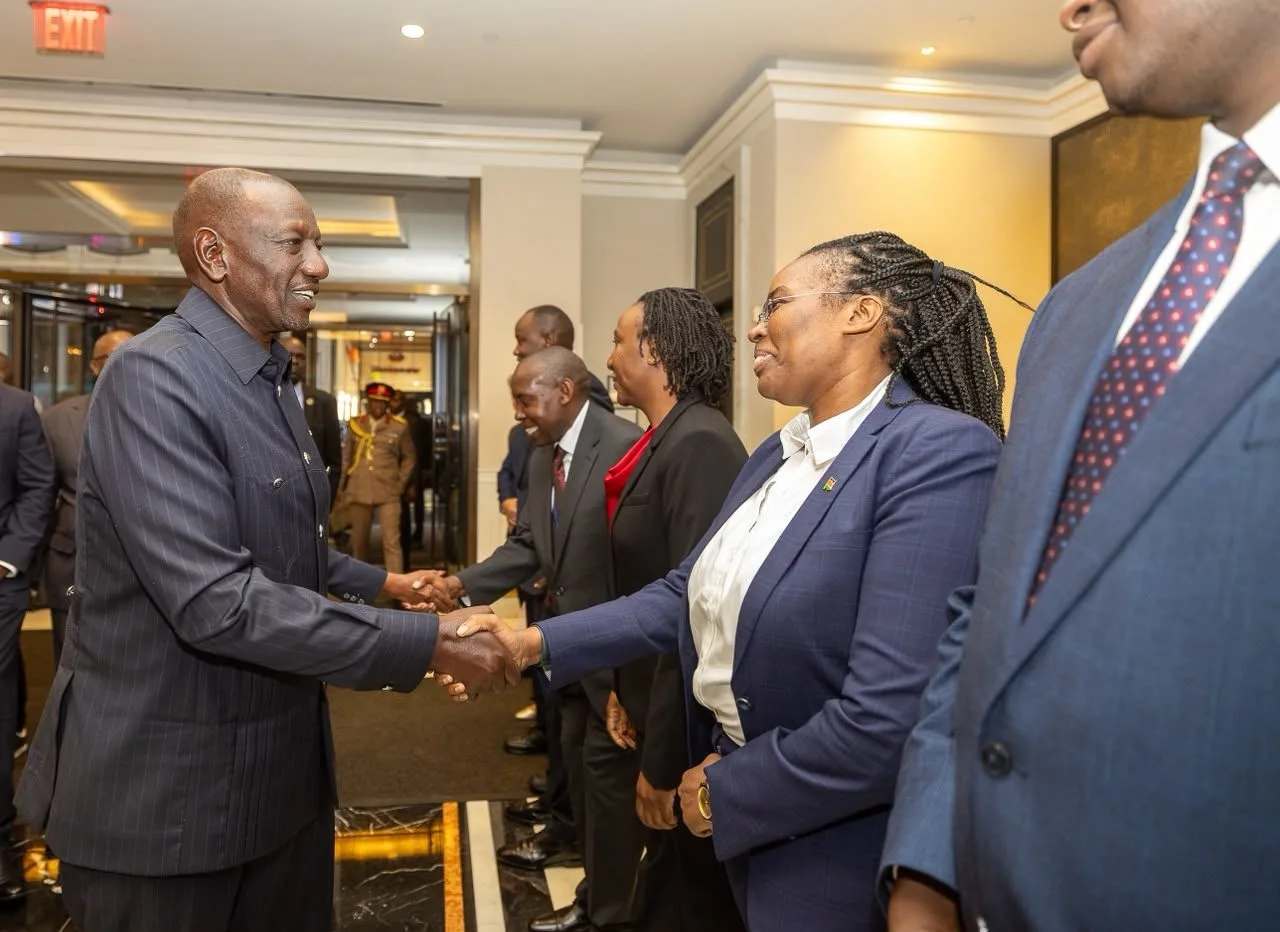
New York, 21 September 2024 — President William Ruto arrived in New York on Sunday alongside First Lady Rachel Ruto and a Kenyan government delegation, opening a week of high-level engagements at the 81st United Nations General Assembly (UNGA 81) centered on attracting foreign capital into Kenya, reforming global development finance, and securing Africa’s place in the emerging artificial intelligence economy.
The Assembly convenes under the theme “Restoring Trust, Managing Transformation: A United Nations That Delivers for All,” with member states expected to address peace and security, climate resilience, digital governance, AI regulation, and structural reform of multilateral institutions. For Kenya, the session represents a concentrated diplomatic window to convert international visibility into concrete investment commitments and institutional positioning.
Investment Pitch Across Six Strategic Sectors
Ruto’s economic agenda in New York spans energy, infrastructure, manufacturing, health, agriculture, and technology. The government is seeking partnerships designed to expand Kenya’s productive capacity, generate employment, and open export markets for Kenyan businesses and agricultural producers.
The centrepiece infrastructure pitch is the proposed East Africa Refinery in Lamu, valued at approximately GHS-equivalent KES 2.2 trillion. Government officials project a processing capacity of 700,000 barrels per day and estimate the facility would create more than 60,000 direct jobs. Ruto is expected to co-chair investment roundtables hosted by the Africa Finance Corporation (AFC) and the Global Africa Business Initiative alongside Nigerian industrialist Aliko Dangote, whose own refinery experience in Lagos lends direct regional precedent to the project’s commercial viability.
The AFC’s involvement is significant. As a pan-African infrastructure financier with a mandate spanning ECOWAS and beyond, its co-hosting role signals that the Lamu refinery is being positioned not merely as a Kenyan national asset but as a regional integration infrastructure play with East and West African capital mobilisation implications.
AI Governance and the Middle Powers Initiative
Artificial intelligence sits at the core of Kenya’s multilateral diplomacy this week. Ruto is set to co-lead the AI Middle Powers Initiative alongside Finnish President Alexander Stubb, a coalition designed to enable participating countries to pool computing resources, datasets, and technical talent to build sovereign AI capabilities outside the dominant US-China technological duopoly.
This is a governance bet as much as a technology one. By positioning Kenya as a co-anchor of a multilateral AI framework, Nairobi signals to investors and development partners that it intends to shape the regulatory and infrastructure architecture of AI deployment in Africa, not merely consume technologies built elsewhere.
Ruto will separately advance an Africa-focused AI financing initiative aimed at mobilising investment into the continent’s AI ecosystem. His programme also includes discussions on child online safety and the deployment of digital tools to strengthen Africa’s climate resilience, linking technology governance to the broader sustainable development agenda.
Debt, Climate Finance, and the African Voice in Global Governance
These demands align with positions articulated collectively by the African Union and endorsed at successive AU summits. Kenya’s decision to advance them bilaterally at UNGA reinforces Nairobi’s role as one of the continent’s most active diplomatic interlocutors with the Western-led multilateral order.
Bilateral Meetings and Diaspora Engagement
On the sidelines of the Assembly, Ruto is scheduled to hold bilateral meetings with heads of state and government, senior representatives of multilateral institutions, and executives from global corporations. The meetings are expected to generate framework agreements and memoranda of understanding across several of the six priority sectors.
Ruto’s New York programme also includes a formal engagement with Kenyans living in the United States. The diaspora session will allow community members to raise concerns affecting Kenyans abroad while exploring structured mechanisms for investment, skills transfer, and remittance optimisation. Kenya’s diaspora remittances reached US$4.19 billion in 2023, making the community a material contributor to the country’s foreign exchange position and a constituency whose economic integration into national development strategy carries measurable fiscal weight.
The UNGA platform gives Nairobi a rare moment of concentrated global attention. Whether the week’s engagements translate into binding commitments on the Lamu refinery, AI financing, or debt relief reform will determine the actual governance dividend of Kenya’s most ambitious multilateral push of 2024.