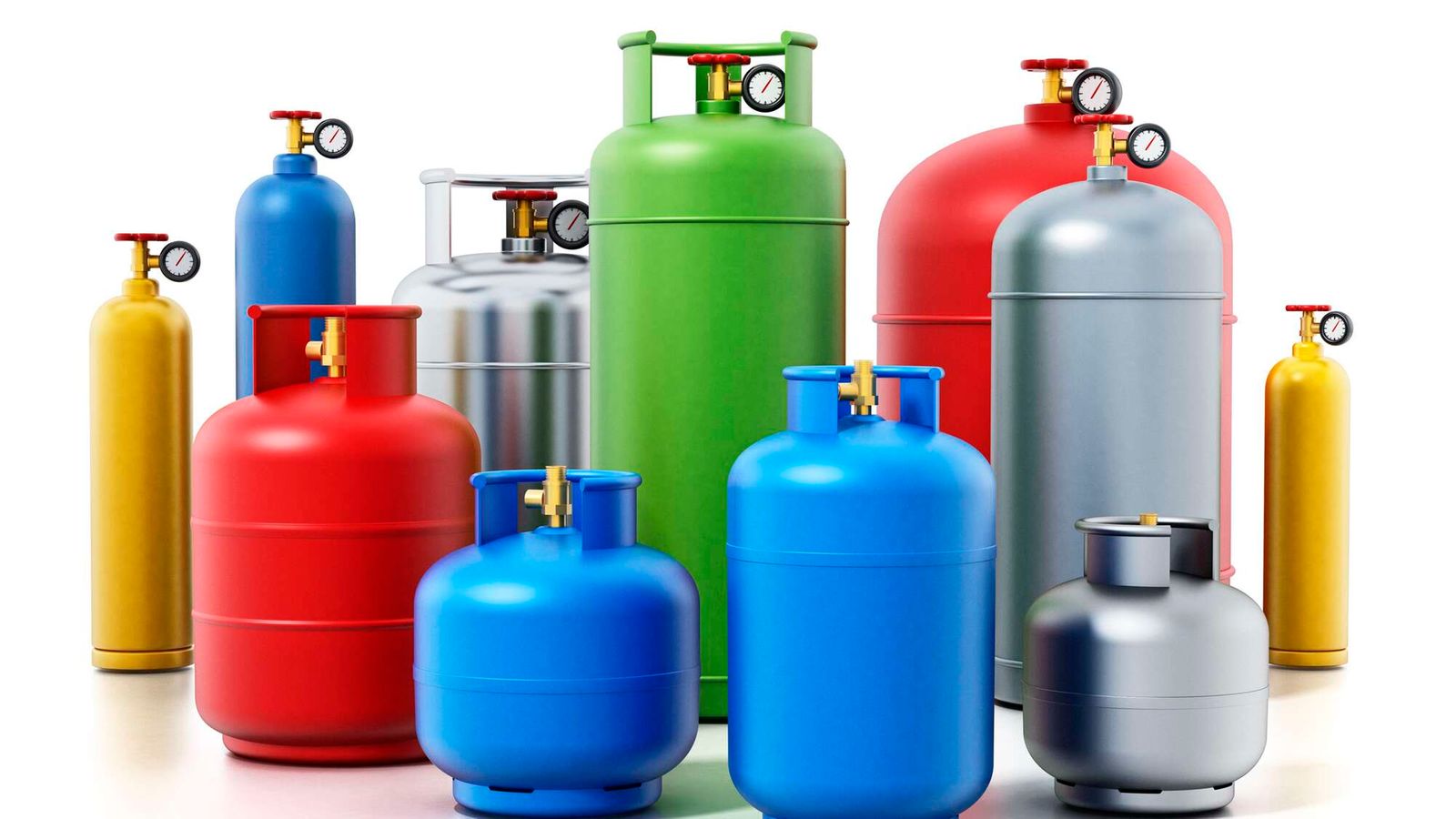
When the price of cooking gas rises in Accra, the mechanism behind that increase rarely surfaces in public debate. Yet the signal now coming from Ghana’s LPG industry executives is precise and worth examining with care: propane and butane, the two hydrocarbon gases blended to produce liquefied petroleum gas, are becoming more expensive on international markets, and households across West Africa will absorb that cost before the next billing cycle closes.
The disruption originates in the Middle East, where ongoing conflict has introduced fresh volatility into the global hydrocarbon supply chain. Ghana’s LPG sector, like most of its West African counterparts, sources these feedstocks through international commodity markets that remain structurally exposed to geopolitical shocks thousands of kilometres from the point of consumption. Industry executives have confirmed that retail prices are set to rise next month, a timeline short enough to preclude any meaningful policy response at the national level and revealing, in the process, a governance gap that neither Accra nor the ECOWAS Secretariat in Abuja has adequately addressed.
The structural vulnerability here is not incidental. West Africa’s LPG markets are, with few exceptions, price-takers on the global stage. Ghana imports the bulk of its propane and butane rather than extracting and processing them domestically at scale, despite the country’s proven natural gas reserves offshore in the Western Region. The Tema Oil Refinery, long underutilised, has not been positioned to close this gap in any sustained way. The result is a market architecture in which a conflict in the Strait of Hormuz translates, with near-mechanical reliability, into higher costs at the cylinder-filling station in Kumasi or Takoradi.
This dynamic matters beyond its immediate consumer impact. Ghana’s government has, over successive administrations, promoted LPG adoption as a public health and environmental policy, seeking to wean households off charcoal and firewood whose combustion carries severe respiratory and deforestation costs. The World Health Organisation estimates that household air pollution from solid fuel use kills approximately 3.8 million people globally each year, with sub-Saharan Africa bearing a disproportionate burden. Each price spike in LPG effectively reverses that policy trajectory, pushing price-sensitive households back toward biomass fuels and undermining years of subsidy expenditure and public communication investment.
The governance question, then, is not simply whether prices will rise, but whether Ghana’s regulatory institutions possess the instruments to insulate the energy transition from commodity volatility. The National Petroleum Authority, which oversees downstream petroleum pricing, operates within a price-deregulation framework that passes global market movements directly to consumers. That framework was adopted under IMF-supported fiscal consolidation programmes and reflects a legitimate concern about the fiscal cost of blanket subsidies, which historically distorted consumption, drained public finances, and benefited wealthier households disproportionately. The Bank of Ghana has separately flagged energy price pass-throughs as a persistent driver of headline inflation, complicating monetary policy at a moment when Ghana is already navigating a post-debt-restructuring stabilisation path.
Ivory Coast, Ghana’s immediate competitor for regional investment and its closest peer in the ECOWAS coastal economy cluster, has pursued a somewhat different downstream energy model, maintaining tighter state involvement in LPG distribution through its national energy company and managing price signals with greater administrative discretion. Senegal, now an emerging hydrocarbon producer following the Sangomar field development, is positioning itself to become a net LPG exporter within this decade, a prospect that could reshape intra-regional supply dynamics if the governance framework around revenue management and domestic processing holds. Nigeria, the bloc’s dominant economy, sits on enormous associated gas reserves that are still largely flared or under-monetised, a structural failure with direct implications for regional LPG availability and pricing if ever corrected at scale.
These national trajectories point toward a regional coordination deficit that the ECOWAS Energy Protocol and the AU’s Agenda 2063 energy access goals have not yet bridged. A regionally integrated LPG supply architecture, one that pools procurement, harmonises safety and cylinder standards, and creates shared strategic reserves, would reduce the exposure of individual member states to the kind of external shock now hitting Ghana. The African Continental Free Trade Area’s investment protocols offer a potential legal framework for cross-border energy infrastructure investment, but translating that framework into operational supply chains requires institutional will and technical capacity that remain unevenly distributed across the bloc.
For investors and development finance institutions currently assessing West African energy sector exposure, the current episode carries a specific signal. Markets that lack domestic feedstock processing capacity, transparent and rules-based pricing mechanisms, and regional supply buffers will continue to transmit external commodity shocks directly into consumer prices and macroeconomic instability. Ghana’s post-restructuring fiscal position, while improving, leaves limited room for emergency subsidy interventions of the kind that might otherwise cushion the impact. The Ministry of Finance and the National Petroleum Authority will need to coordinate quickly if the social costs of this price increase are to be managed without reigniting the subsidy dynamics that previous administrations struggled to exit.
What this moment ultimately reveals is the distance between West Africa’s stated energy transition ambitions and the institutional infrastructure required to sustain them. Promoting LPG as a cleaner cooking fuel while leaving its supply chain exposed to unmediated global commodity volatility is a policy contradiction that compounds with each external shock. The path toward a more resilient architecture runs through domestic processing investment, regional procurement cooperation under existing ECOWAS and AfCFTA frameworks, and a pricing governance model sophisticated enough to distinguish between fiscally unsustainable blanket subsidies and targeted, time-bound buffers for vulnerable households. Ghana has the institutional capacity and the regional standing to lead that conversation. Whether the political economy permits it is a different, harder question.