Every time a Ghanaian exporter invoices a Kenyan buyer, both parties absorb a cost that has nothing to do with the goods exchanged, the logistics involved, or the regulatory compliance required. They pay simply because their currencies cannot speak to each other directly. This structural inefficiency, replicated across thousands of intra-African transactions daily, drains an estimated US$5 billion annually from the continent’s businesses, according to AfCFTA Secretary-General Wamkele Mene. The question is not whether this cost exists, but why African monetary and trade institutions have not yet dismantled the architecture that produces it.
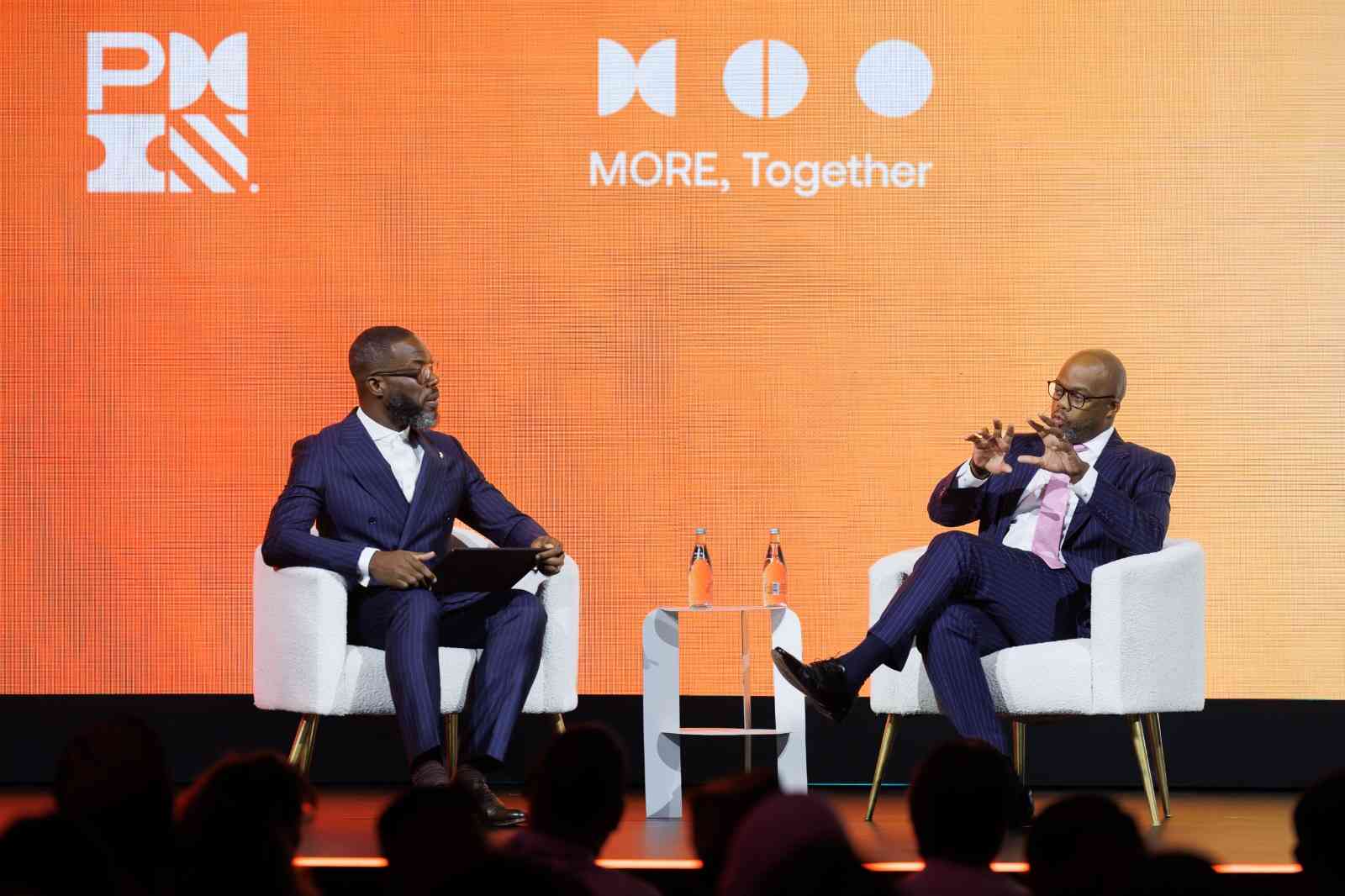
Mene raised the figure during a fireside discussion with George Asamani, Managing Director for Sub-Saharan Africa at the Project Management Institute (PMI), at the institute’s Global Summit Series in Cape Town. His remarks cut to the core of a governance gap that persists beneath the AfCFTA’s ambitious legal framework: continental trade commitments mean little when payment infrastructure forces African firms to route transactions through the US dollar, the euro, or the British pound before reaching a neighboring market.
The mechanism is straightforward, if damaging. A business in Accra seeking to pay a supplier in Nairobi typically cannot execute a direct Ghana Cedi-to-Kenyan Shilling transfer through standard correspondent banking channels. The transaction passes through a third currency, usually the US dollar, triggering conversion fees at each leg of the exchange. Both firms absorb the spread, the processing delay, and the exchange rate volatility. Multiply that friction across West Africa’s 15 ECOWAS member states, each operating distinct national currencies except for the eight WAEMU countries sharing the CFA Franc, and the aggregate cost becomes structurally significant.
For West Africa specifically, this currency fragmentation represents a particular governance contradiction. ECOWAS has long maintained a roadmap toward a single regional currency, the Eco, which has been deferred repeatedly since its original 2003 target date. Nigeria and Ghana, the bloc’s two largest non-WAEMU economies, continue to operate independent monetary frameworks with limited bilateral payment coordination. The result is that two countries accounting for a combined GDP exceeding US$600 billion conduct bilateral trade at a cost premium that smaller, more monetarily integrated peers in WAEMU do not face to the same degree.
Mene pointed to the Pan-African Payment and Settlement System (PAPSS), developed by Afreximbank in collaboration with the AfCFTA Secretariat, as the most concrete institutional response to this problem. Operational since its commercial launch in 2022, PAPSS enables cross-border payments in local African currencies by connecting central banks and commercial banks across the continent through a single multilateral settlement infrastructure. Rather than routing a Cedi-to-Shilling payment through New York’s correspondent banking system, PAPSS allows the transaction to settle within Africa, reducing both cost and processing time. The Bank of Ghana is among the central banks that have engaged with the system, though adoption across the ECOWAS region remains uneven and commercial bank integration incomplete.
The adoption gap is itself a governance question. PAPSS requires regulatory buy-in from central banks, technical onboarding by commercial banks, and sufficient transaction volume to sustain liquidity across currency pairs. In markets where dollar-denominated trade finance remains the default, institutional inertia is a real obstacle. Côte d’Ivoire and Senegal, operating within the WAEMU’s more integrated monetary framework, face a different set of incentives than Ghana or Nigeria, where independent monetary policy and foreign exchange controls shape how banks approach cross-border settlement. Any regional payment integration strategy must account for this asymmetry rather than assume uniform readiness.
Asamani’s contribution to the Cape Town discussion added a dimension that often goes underweighted in policy debates about trade integration: implementation capacity. “A continental agreement becomes meaningful when a business can use it,” he said. “That depends on people who can coordinate institutions, manage risk, deliver reliable systems and keep the intended benefit in view.” This is a precise description of the gap between AfCFTA’s legal architecture, which is largely in place, and its operational reality, which remains fragmented. Customs modernization, digital trade facilitation, and cross-border payment infrastructure are not self-executing. They require sustained project management across institutional and national boundaries, a capacity that African public administrations are building but have not yet consolidated at scale.
Mene also addressed the political economy of liberalization directly, acknowledging that opening markets creates competitive pressure on domestic industries. AfCFTA’s framework includes provisions for infant industry protection, allowing member states to apply temporary safeguards for sectors vulnerable to import competition. Ghana has used such provisions in specific agricultural and manufacturing segments. The policy question is whether these safeguards function as genuine transition mechanisms, giving firms time to restructure and compete, or as permanent shields that delay the productivity improvements that trade integration is meant to generate. The answer depends on whether governments pair protection with active industrial policy, skills investment, and access to trade finance, conditions that are inconsistently met across the region.
Mene’s call for greater investment in trade infrastructure and digital systems points to a financing dimension that shapes everything else. The AfCFTA’s Digital Trade Protocol, adopted to create regulatory conditions for cross-border e-commerce and data flows, requires member states to build or upgrade digital customs systems, establish data protection frameworks, and enable electronic certification of origin. For smaller ECOWAS economies, the upfront investment is substantial relative to fiscal capacity. Ghana, which has made measurable progress in digital public infrastructure through systems like the Ghana.gov platform and the National Identification Authority’s database, is better positioned than several regional peers, but the regional digital trade ecosystem is only as functional as its weakest national link.
The investor confidence dimension is concrete. Foreign direct investment into West Africa responds to transaction cost signals. When regional payment systems are fragmented and customs processes manual or opaque, the effective market size for any given investment is the national market, not the ECOWAS market of roughly 400 million people. Closing the US$5 billion currency cost gap would not merely save existing businesses money; it would expand the addressable market for investors who currently price regional fragmentation into their return calculations. That is a structural argument for monetary and payment integration that goes beyond efficiency, touching the fundamental question of whether West Africa can attract the capital its infrastructure deficit requires.
What AfCFTA’s secretariat, ECOWAS, and the Bank of Ghana should pursue concretely is a sequenced integration agenda: accelerating PAPSS commercial bank onboarding across all ECOWAS member states, establishing a regional technical facility to support customs digitization in lower-capacity economies, and revisiting the Eco currency roadmap with a credible convergence timeline backed by fiscal discipline commitments from Nigeria and Ghana. None of these steps requires abandoning monetary sovereignty in the short term. Each requires institutional coordination, political will, and the kind of cross-boundary project management capacity that Asamani rightly identifies as the binding constraint. The US$5 billion figure is not an abstraction. It is the annual price of institutional incoherence, and it is a price West African businesses, not distant creditors or multilateral donors, are paying every day.