Ghana’s President Joins African Heads of State in Alamein for Coordination Summit
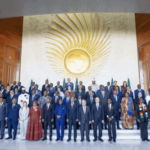
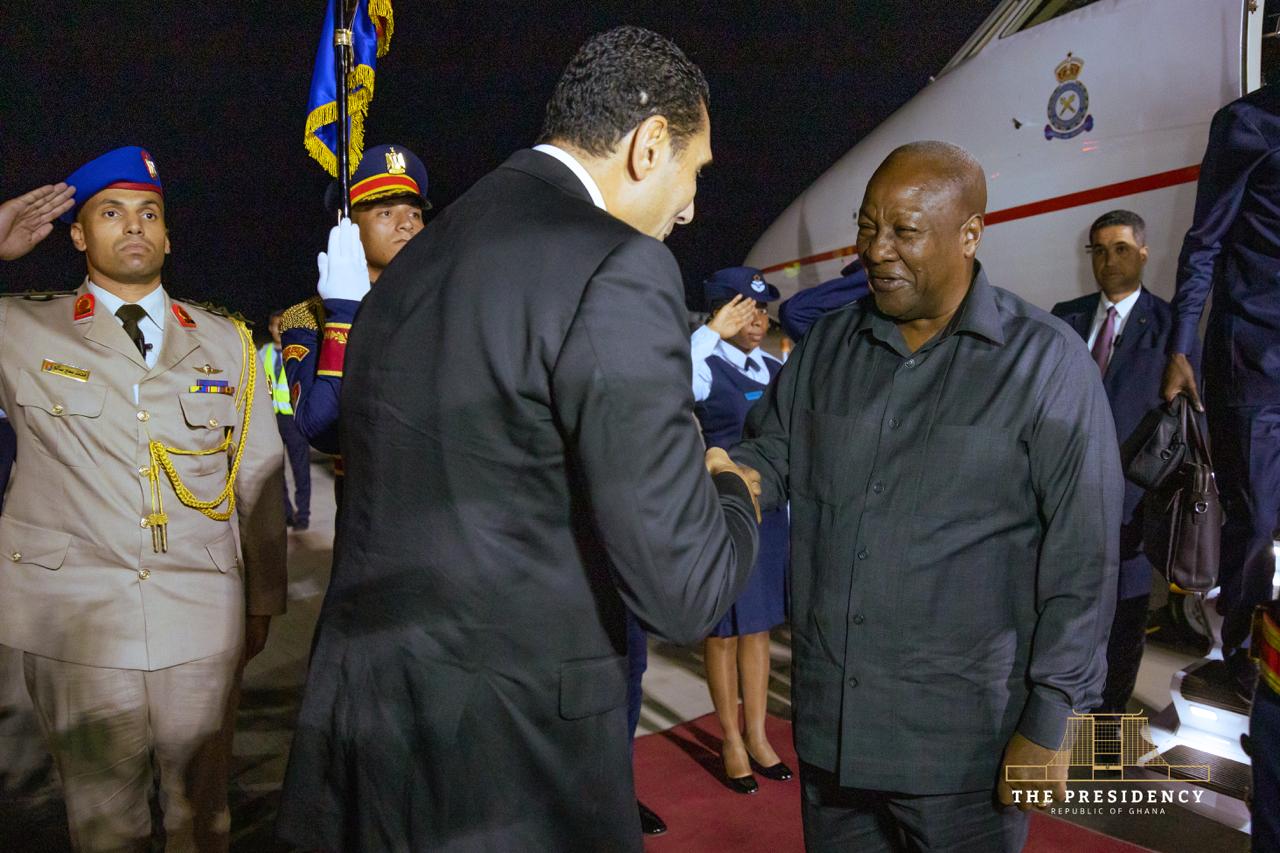
President John Dramani Mahama arrived in Alamein, Egypt, on Friday to attend the 8th African Union Mid-Year Coordination Summit, a gathering that brings together African heads of state to align continental policy priorities between the AU’s annual January summits. Running parallel to the heads of state meeting, the inaugural Alamein Africa Forum is convening governments, financial institutions, and private sector actors to examine investment frameworks and continental economic partnerships, with particular attention to health manufacturing and regional value chains.
Forum Opens With Dangote Keynote as Business and Governance Agendas Converge
The Alamein Africa Forum opened on Saturday with an address by Egyptian President Abdel Fattah el-Sisi, followed by a keynote from Nigerian industrialist Aliko Dangote, whose cross-border business footprint across West and Central Africa has made him a recurring reference point in continental investment debates. The forum’s architecture, positioning private sector voices alongside heads of state, reflects a deliberate institutional design: the AU and its member states have increasingly sought to operationalize the African Continental Free Trade Area (AfCFTA) not through diplomatic declarations alone, but through direct engagement with the capital and logistics networks that determine whether intra-African trade targets are met. Ghana, as an AfCFTA Secretariat host country based in Accra, carries particular institutional weight in these conversations.
President Mahama is scheduled to deliver the keynote address at a plenary session titled “Investing in Health: Manufacturing and Regional Value Chains,” a framing that signals a deliberate repositioning of health infrastructure within economic policy rather than social expenditure. The session addresses one of the most structurally significant gaps exposed by the COVID-19 pandemic: Africa’s dependence on imported pharmaceutical products, with the continent accounting for roughly 3% of global pharmaceutical manufacturing output despite bearing approximately 25% of the global disease burden. Regional health manufacturing capacity has since become a formal priority within both the AU’s Agenda 2063 framework and the AfCFTA’s sectoral protocols under negotiation.
Health Manufacturing as a Regional Integration Instrument
Ghana’s engagement on health manufacturing carries direct regional relevance for ECOWAS member states, where pharmaceutical supply chains remain fragmented and import-dependent. The Economic Community of West African States has identified pharmaceutical harmonization as a priority under its regional integration agenda, yet West African countries collectively produce a small fraction of the medicines consumed across the bloc’s 15 member states. Mahama’s keynote framing, positioning health as a “strategic economic sector and investable market,” aligns with AU-level efforts to attract both domestic capital and foreign direct investment into local production facilities, cold chain logistics, and regulatory infrastructure. For investors operating across ECOWAS markets, regulatory harmonization between national medicines agencies remains the primary bottleneck, and summit-level political commitments carry weight in accelerating those technical processes.
The Alamein Forum’s emphasis on regional value chains also speaks directly to the structural ambitions of the AfCFTA, which targets a 52% increase in intra-African trade by 2035 from a baseline of approximately 15% to 18% of total African trade, a figure that compares poorly with intra-regional trade shares in Europe (67%), North America (47%), and Southeast Asia (35%). Health manufacturing, if developed through regionally integrated supply chains rather than country-by-country import substitution, represents one of the sectors with the clearest potential to generate sustained intra-African trade flows, given the universality of demand and the scalability of production.
Bilateral Diplomacy on the Sidelines
On Sunday, the heads of state summit convenes formally, with President Mahama expected to hold bilateral meetings on the margins of the gathering, including a meeting with President el-Sisi. Egypt-Ghana relations sit within a broader Egypt-West Africa diplomatic corridor that has grown in salience as Cairo has deepened its engagement with ECOWAS-zone economies through trade finance, infrastructure investment, and agricultural partnerships. The bilateral meeting offers an opportunity to discuss Ghana’s ongoing economic stabilization program, its engagement with the International Monetary Fund under a US$3 billion Extended Credit Facility agreed in 2023, and potential areas for Egyptian investment in Ghana’s energy and agro-processing sectors. Egypt has positioned itself as a continental economic actor through state-linked enterprises and development finance, and Mahama’s new administration, which took office in January 2025, has signaled a foreign investment-oriented posture as part of its economic recovery agenda.
The AU Mid-Year Coordination Summit itself serves a specific institutional function within the AU calendar: it aligns member state positions ahead of United Nations General Assembly sessions and other multilateral forums, ensuring that African blocs can negotiate with greater coherence on issues ranging from debt restructuring and climate finance to peace and security mandates. Ghana’s participation at head-of-state level, rather than through a ministerial delegation, reflects the summit’s significance within the AU’s institutional architecture and Mahama’s stated priority of repositioning Ghana as an active continental voice following a period of domestic economic crisis that constrained the previous administration’s diplomatic bandwidth.
Policy Implications for West African Governance and Investment
The convergence of the AU summit and the Alamein Forum illustrates a broader institutional trend: African governance forums are increasingly structured to generate bankable investment commitments alongside political declarations, a response to the persistent gap between continental policy ambition and on-the-ground implementation. For Ghana specifically, Mahama’s keynote on health manufacturing represents an opportunity to attract pharmaceutical sector investment at a moment when the country’s regulatory environment, anchored by the Food and Drugs Authority, has made incremental progress toward international quality standards. Whether summit-level visibility translates into capital deployment depends on the durability of Ghana’s macroeconomic stabilization, the predictability of its regulatory framework, and the degree to which ECOWAS-level harmonization reduces the market fragmentation that currently discourages regional-scale manufacturing investment. Those are institutional questions that no single summit resolves, but that sustained political engagement at the AU level helps to advance.