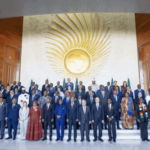

A seat at the table, for too long, was the finish line.
Esther Mwaniki, Founder and CEO of Lapid Leaders Africa, is making the case that it should be the starting point. Speaking ahead of the Women of Purpose Summit 2026 — convened on 10 October 2025 at Emara Ole-Sereni in Nairobi under the theme “Beyond Representation” — Mwaniki articulated a governance argument that extends well beyond Kenya’s borders and lands squarely in the institutional architecture of West and East African development: what women do with power matters more, structurally, than the fact of their having it.
Her argument is deceptively simple, but its implications for how African institutions recruit, retain and evaluate leadership are substantial. “It is not enough for us to just talk about Women’s Rep, women in tech, women in healthcare,” she said on Capital FM’s The Jam. “The question is, what happens when women are on the table?” That question, posed plainly, reframes representation from a metric of equity into a mechanism of governance accountability — and it is a reframing that African policymakers, from Abuja to Accra, have been slow to operationalize.
Across West Africa, the representation debate has dominated gender policy for the better part of two decades. ECOWAS member states committed to the Dakar Declaration’s 50/50 gender parity targets, and the African Union’s Agenda 2063 enshrines gender equality as a foundational pillar of continental development. Yet the conversion rate between women’s presence in institutions and measurable institutional improvement remains poorly tracked and weakly enforced. Mwaniki’s framing — what she calls “purpose-driven leadership” — offers a corrective, one that ties individual leadership conduct to collective institutional outcomes in ways that governance frameworks have struggled to codify.
Her own biography is instructive precisely because it maps onto the institutional pathways that shape African professional leadership. Trained as an accountant at Kenyatta University, she spent eight years in audit at PricewaterhouseCoopers, including two years in the United Kingdom, before moving into banking and eventually founding Lapid Leaders Africa in 2014. She has said that her time in the UK sharpened her understanding of how functional systems — not exceptional individuals — produce durable social outcomes. That systems-level thinking is embedded in Lapid’s architecture: its programme rests on three pillars, Lead Self, Lead Marketplace and Lead Africa, designed to develop self-awareness, professional competence and a pan-African orientation simultaneously. The name itself, drawn from the Hebrew word for a burning torch, signals an organizational philosophy rooted in diffusion rather than accumulation of leadership capacity.
The summit Mwaniki convened drew women leaders from technology, healthcare, finance, education, legal services and business — sectors that, taken together, constitute the connective tissue of any functional economy. The gathering was not designed as a networking event but as a deliberate institutional exercise: how do leaders use their positions to build systems rather than simply occupy them? The distinction is not semantic. In governance terms, the difference between a minister who manages a portfolio and one who restructures the institutional capacity of a ministry is the difference between transactional and transformational public administration. Mwaniki’s summit was making that case in the language of professional leadership development.
She cited the work of Catherine Muraga, Managing Director of the Microsoft Africa Development Centre in Nairobi, as a concrete illustration of leadership that builds local capacity rather than extracting it. Under Muraga’s stewardship, the centre has engaged Kenyan universities, supported curriculum reform, invested in lecturer training and developed youth skills pipelines — interventions that operate at the interface of private sector strategy and public institutional development. For Mwaniki, this represents the template: leaders who leverage institutional platforms to expand the supply of opportunity rather than simply benefit from existing demand.
Lapid Leaders Africa has set a target of unlocking one million opportunities over the next ten years — a figure that, if achieved, would constitute a meaningful contribution to East Africa’s youth employment challenge. The continent adds approximately 12 million young people to its labour force annually, a demographic pressure that no single institution can absorb but that networks of purpose-driven leaders, operating across sectors and borders, might collectively address. Mwaniki’s framing of this challenge — “What can I build, not what can I inherit?” — is a direct rebuke of patronage-based leadership cultures that have historically constrained institutional development across sub-Saharan Africa.
The governance implications of her argument extend to how African institutions design leadership pipelines. If representation without accountability produces no structural improvement, then the policy instruments that measure gender progress — quota legislation, parity targets, ministerial appointments — require supplementary frameworks that track institutional outcomes attributable to women’s leadership. The AU’s African Peer Review Mechanism and ECOWAS’s governance assessment tools offer potential vehicles for this kind of accountability architecture, but neither has yet integrated gender-disaggregated institutional performance metrics in a systematic way.
Mwaniki was equally direct about the personal discipline that underpins institutional effectiveness. “Don’t pretend. Go look for somebody, sit under them for a while, work, build the character for work,” she said — a counsel against the performative dimensions of leadership culture that social media has amplified across African professional classes. Her own early leadership was forged not in a boardroom but in a secondary school corridor, where as a Form Three student she confronted the bullying of junior students and was subsequently elected school captain. The trajectory from that moment through PricewaterhouseCoopers to Lapid Leaders Africa is a study in compounding institutional experience, the kind of formation that governance systems need to deliberately design rather than leave to individual biography.
What Mwaniki is ultimately proposing is a recalibration of how African institutions measure the value of women’s leadership — not by counting bodies in rooms, but by auditing the systems those leaders leave behind. That is a harder measurement to make, and a harder standard to meet. It demands that women in decision-making positions ask not only whether they arrived, but whether the institution they inhabited is more capable, more equitable and more structurally sound because of their tenure. For ECOWAS, for the AU, and for the national governance frameworks that shape professional life from Dakar to Nairobi, building the tools to answer that question is not an aspiration. It is an institutional obligation.