A five-member Supreme Court panel has cleared the way for a criminal trial that cuts to the heart of Ghana’s public infrastructure governance.
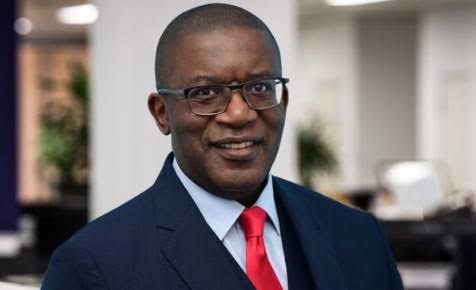
The case began years before it reached the Supreme Court’s chambers. Solomon Asamoah served as Chief Executive Officer of the Ghana Infrastructure Investment Fund, a state vehicle established to mobilise and deploy capital for large-scale infrastructure projects. Alongside him, Professor Ameyaw Akumfi held the position of Board Chair at the same institution. Between them, they oversaw the Fund at a moment when Ghana was actively courting ambitious infrastructure partnerships, including a proposed Sky Train project intended to ease urban transit pressures.
The Sky Train proposal attracted funds before it attracted results. Prosecutors allege that Asamoah and Akumfi authorised the disbursement of US$2 million connected to the project, doing so without the requisite board approval and at a point when no substantive work had been undertaken to justify the expenditure. The state’s position is that this sequence of decisions inflicted a direct financial loss on the public purse, a charge that strikes at the institutional controls the Ghana Infrastructure Investment Fund was designed to uphold.
When the prosecution closed its case, both accused filed a submission of no case, a standard procedural mechanism by which defendants argue that the evidence presented is insufficient to require them to mount a defence. Justice Audrey Kocuvie-Tay, presiding over the trial court, rejected that submission and ordered the accused to proceed with their defence. Her ruling was unambiguous: the prosecution had presented enough to warrant a response.
Asamoah refused to accept that determination as final. He escalated to the Supreme Court, framing his judicial review application around a specific jurisdictional complaint. His argument was that Justice Kocuvie-Tay had overstepped by making definitive pronouncements during the no-case ruling, including what he characterised as a premature finding that he bore personal responsibility for the financial loss. In his reading, such language exceeded what a no-case ruling properly permits and compromised his right to a fair hearing before an impartial tribunal.
The Supreme Court panel, presided over by Justice Gabriel Scott Pwamang and joined by Justices Asiedu Adibu, Hafisata Amaleboba, Sophia Bernasko-Essah and Anthony Forson Jnr., examined the application and found it wanting. The court held that the concerns Asamoah raised did not constitute sufficient grounds to justify the exercise of its discretionary supervisory jurisdiction. The application was dismissed, and the trial before Justice Kocuvie-Tay was left to continue on its course.
The ruling carries significance beyond the immediate procedural question. Ghana’s public financial management architecture rests on a chain of institutional controls, board oversight, expenditure authorisation, and audit accountability, that are only as strong as the willingness of courts to enforce them when breached. The Sky Train case tests precisely that chain. The Ghana Infrastructure Investment Fund was created to operate with governance discipline, channelling capital into projects that meet defined criteria. Allegations that funds moved without board approval, and ahead of any verified project activity, describe a failure at the institutional level, not merely an individual lapse.
Within West Africa’s broader governance landscape, the case resonates. ECOWAS member states have repeatedly committed, through the ECOWAS Protocol on Democracy and Good Governance and associated fiscal transparency frameworks, to standards of public financial management that require traceable, authorised expenditure. Ghana’s ability to demonstrate that its courts hold state institutions and their officers accountable to those standards carries weight for regional credibility. Peer economies such as Côte d’Ivoire and Senegal, both active in infrastructure financing through their own state vehicles, watch how Accra handles cases of this nature, since investor confidence in regional public-private infrastructure deals depends partly on the perceived integrity of the institutions managing public capital.
The AfCFTA Secretariat, headquartered in Accra, adds another dimension. Ghana’s positioning as a continental governance hub requires that its domestic institutional record match its regional ambitions. A credible judicial process in the Sky Train case, one that moves without political interference and concludes on evidentiary merit, reinforces that positioning. A process that stalls through procedural attrition does the opposite.
The Supreme Court’s refusal to intervene at this stage signals that Ghana’s judiciary is prepared to let the trial run its course on the facts. That restraint is itself a governance signal, one that distinguishes judicial review as an extraordinary remedy rather than a routine appellate bypass. The court’s supervisory jurisdiction exists to correct clear jurisdictional overreach, not to second-guess every contested ruling at trial level. By holding that line, the panel has protected the integrity of the trial process while leaving the substantive questions of evidence and culpability where they belong: before Justice Kocuvie-Tay.
What the trial must now resolve is whether the institutional failures alleged by prosecutors were the product of deliberate decisions, negligence, or a governance environment that permitted ambiguity in authorisation chains. The answer will shape how Ghana structures accountability within state investment funds going forward, and how seriously regional partners take Accra’s commitments to public financial discipline in infrastructure financing.