The shooting deaths of two Egyptian truck drivers at a market south of Khartoum in May 2025 set off a chain of institutional responses that now threaten one of the few functioning land trade corridors between North Africa and the Sahel, raising questions about how regional bodies can protect commercial routes in active conflict zones.
The incident unfolded in the weeks following Egypt’s Ministry of Transport directive of 11 May 2025, which had already instructed drivers to avoid Sudan’s conflict zones and restrict cargo unloading to designated safe areas within Sudan’s Northern State. That directive was itself a response to a deteriorating security environment along the Egypt-Sudan corridor, one that Egyptian transport regulators had been monitoring since the outbreak of the Sudanese civil war in April 2023.
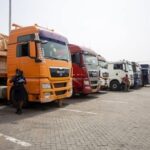
When news of the killings reached Cairo, the management of Qustul land port, operating under the General Authority for Land and Dry Ports at the Ministry of Transport, moved swiftly. It ordered all trucks en route to the port to halt and barred ferry crossings into Sudan pending further instructions. The stated justification cited “security developments in Sudan’s Northern State,” framing the suspension as a protective measure rather than a political signal.
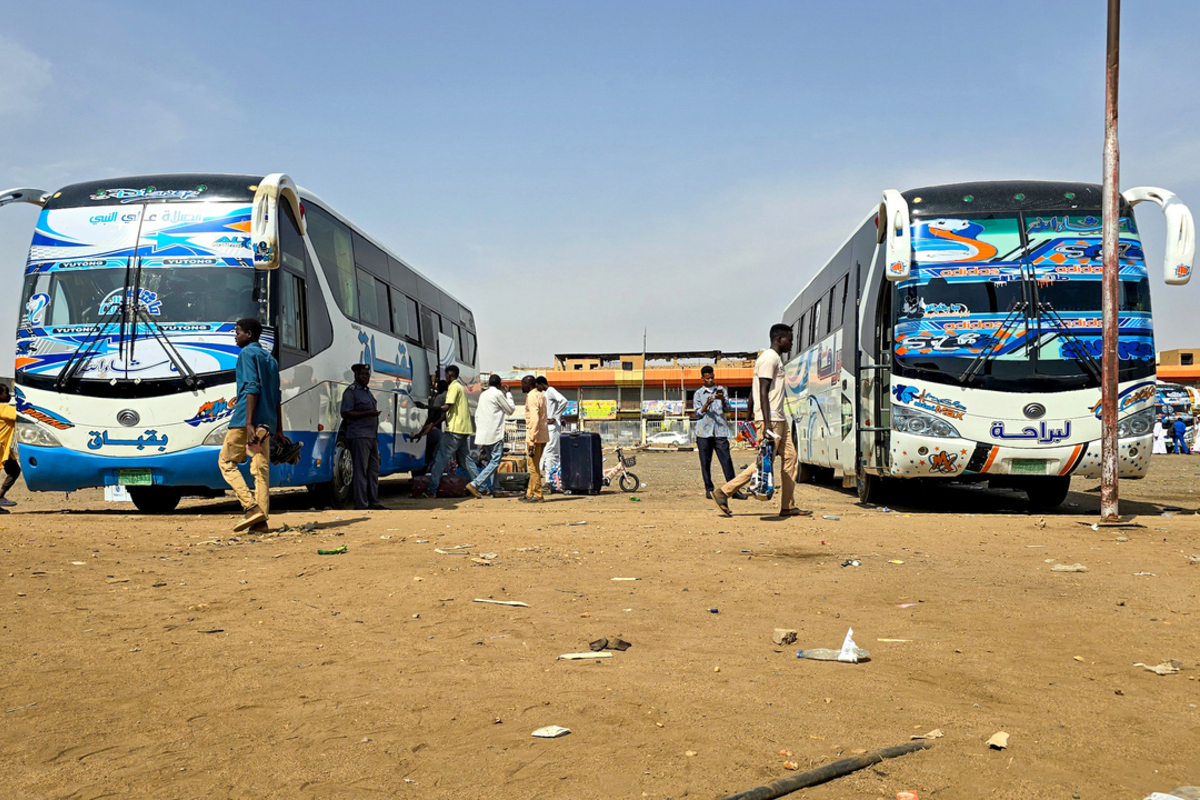
Qustul sits at the heart of bilateral trade between Egypt and Sudan, a relationship that carries significant weight for landlocked communities in northern Sudan dependent on Egyptian goods. The port’s closure to trucks, even while passenger traffic, including buses, private cars, minibuses and individual travellers, continued unimpeded, effectively severed the commercial artery while preserving human movement. That distinction matters: it reflects a calibrated institutional response rather than a blanket border shutdown, yet its economic consequences for Sudanese traders and Egyptian transport operators are immediate and concrete.
Weeks before the suspension, Egypt’s Land and International Transport Regulatory Authority had already moved to limit commercial truck access within Sudan, confining legally permitted routes to Wadi Halfa, Argeen and the city of Dongola. Drivers were explicitly prohibited from entering conflict zones under any circumstances, a regulation that the Khartoum-area shooting demonstrated was difficult to enforce once trucks entered Sudanese territory beyond the Northern State’s safer corridors.
The regulatory architecture Egypt has assembled reflects a genuine governance challenge: how to maintain bilateral trade flows with a neighbouring state engulfed in civil war while discharging a duty of care to its own nationals operating commercial vehicles in that environment. Egypt’s phased approach, from ministerial directive to route restrictions to full suspension, shows institutional responsiveness, yet it also exposes the limits of unilateral regulatory action when the security failure originates across an international border.
A Corridor Under Pressure and What Regional Frameworks Can Offer
The Egypt-Sudan land corridor is not merely a bilateral concern. Within the African Union‘s AfCFTA framework, cross-border road transport represents a foundational layer of intra-African trade integration. Sudan, despite its internal crisis, remains a signatory to AfCFTA, and the corridor through Qustul connects Egyptian goods to markets that extend further south toward COMESA member states in East and Central Africa. Each disruption to this route compounds the structural costs of conflict on regional trade connectivity.
Egypt and Sudan are both members of COMESA, the Common Market for Eastern and Southern Africa, which has established transit facilitation protocols designed precisely for situations where goods must cross multiple jurisdictions under varying security conditions. Whether those protocols have been activated or whether COMESA’s trade facilitation mechanisms have been formally engaged in response to the current suspension remains, as of this writing, publicly unconfirmed, and that silence is itself a governance gap worth noting.
For West African observers and policymakers, the Qustul suspension carries a cautionary lesson. ECOWAS member states have invested considerable institutional energy in the ECOWAS Trade Liberalization Scheme and the community’s free movement protocols, yet the bloc’s own corridors, particularly those running through the Sahel states now under military governance, face analogous vulnerabilities. The mechanisms Egypt deployed, ministerial directives, route restrictions, port-level operational orders, mirror the kind of layered regulatory responses that ECOWAS transport ministries may need to formalise as insecurity along trans-Sahelian routes intensifies.
By late May 2025, with no timeline announced for lifting the truck suspension, Egyptian transport operators faced mounting pressure. Goods already loaded and in transit toward Qustul were effectively stranded, and the commercial losses accrued not only to Egyptian hauliers but to Sudanese importers awaiting supplies. The human cost had already been paid in the deaths of two drivers whose names Egyptian authorities did not publicly release, a detail that underscores how frequently the individuals most exposed to conflict-zone trade risks remain invisible in the institutional record.
The path toward restoring the corridor runs through security guarantees that Egypt alone cannot provide. Sudan’s Sudanese Armed Forces and the Rapid Support Forces remain locked in a conflict that has displaced over 10 million people and disrupted governance across vast swathes of Sudanese territory. Egypt’s regulatory response is rational within its own jurisdiction, but durable restoration of commercial traffic requires either a ceasefire arrangement that stabilises the Northern State corridor or a formal multilateral framework, potentially convened under AU auspices, that establishes protected commercial transit zones with verifiable security guarantees. Neither outcome appears imminent, and until one materialises, Qustul’s trucks will remain stationary on the Egyptian side of the Nile.