Public financial accountability in Ghana is not broken at the margins. It is broken at the centre.
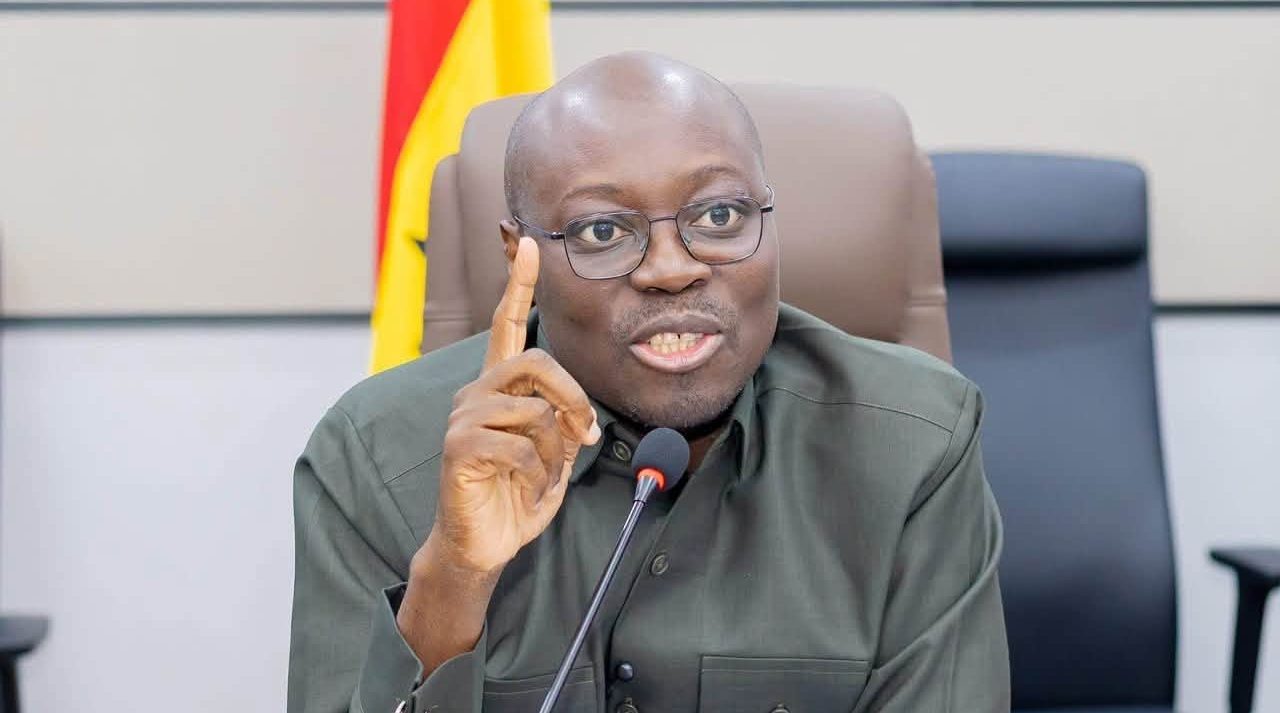
Finance Minister Dr Cassiel Ato Forson delivered that message with unusual directness on 15 April 2025, addressing regional ministers and metropolitan, municipal and district chief executives (MMDCEs) at a structured engagement convened around the Auditor-General’s Report. The occasion was procedural. The language was not. “Public money does not belong to government officials; we are only the custodians of those resources,” Forson told the assembled officials, framing the problem not as administrative negligence but as a fundamental misunderstanding of the state’s fiduciary role.
That framing matters. Ghana has operated under the Public Financial Management Act (PFMA) of 2016, one of West Africa’s more comprehensive legislative frameworks for fiscal discipline, for nearly a decade. Yet annual Auditor-General reports continue to document recoverable funds, unretired imprest, and unaccounted expenditures running into hundreds of millions of GHS. The gap between legislative intent and institutional practice defines Ghana’s public finance challenge more precisely than any single corruption case or budget shortfall.
Forson’s call to “recover every cedi that is recoverable” was paired with a more structurally significant demand: to build systems where recovery becomes the exception rather than an annual ritual. That distinction separates reactive accountability from preventive governance. Ghana has historically excelled at the former and struggled with the latter. The Auditor-General’s office, constitutionally mandated under Article 187 of Ghana’s 1992 Constitution, produces reports with documented findings, but enforcement mechanisms remain diffuse, distributed across the Attorney General’s Department, the Economic and Organised Crime Office (EOCO), and individual ministries, with coordination gaps that allow findings to age without prosecution or recovery.
The regional dimension of this problem is underappreciated. Ghana’s decentralisation architecture pushes significant budget execution authority down to MMDCEs, yet financial oversight capacity rarely follows. District assemblies across Ghana’s 16 regions operate with internal audit units that are chronically understaffed relative to their expenditure mandates. When regional ministers and district chief executives sit across from the Finance Minister to discuss the Auditor-General’s findings, the conversation frequently circles back to the same structural deficit: accountability frameworks designed at the centre do not translate into enforcement capacity at the periphery.
Within the ECOWAS region, Ghana’s fiscal governance architecture compares reasonably well on paper. The ECOWAS Fiscal Convergence Criteria require member states to maintain budget deficits below 3% of GDP and to demonstrate transparent public expenditure management. Ghana’s successive IMF programmes, including the current US$3 billion Extended Credit Facility agreed with the International Monetary Fund in 2023, have embedded additional conditionalities around public financial management reform. But conditionality and institutional capacity are not the same thing. Senegal, navigating its own fiscal transparency pressures ahead of its 2024 elections, and Côte d’Ivoire, which has invested heavily in integrated financial management information systems, both illustrate that reform requires sustained domestic political will beyond donor-driven compliance cycles.
The AfCFTA context adds further urgency to Ghana’s governance credibility. As Accra positions itself as the headquarters city of the African Continental Free Trade Area Secretariat, the country’s domestic institutional performance carries reputational weight beyond its borders. Investors and trading partners evaluating Ghana as a gateway to West African markets factor public financial management quality into their risk assessments. Persistent Auditor-General findings of unaccounted public funds do not remain a domestic political embarrassment; they register in sovereign credit ratings, in FDI due diligence processes, and in the confidence of regional partners considering deeper economic integration.
Forson’s engagement with MMDCEs signals an awareness that accountability cannot be legislated from Accra and expected to materialise automatically at the district level. The meeting format itself represents a governance mechanism worth examining. Direct ministerial engagement with sub-national executives on audit findings creates a vertical accountability loop that formal reporting chains often fail to establish. Whether that loop produces durable behavioural change depends on whether findings generate consequences, not whether they generate press releases.
Ghana’s Ministry of Finance has in recent years pushed for the expansion of the Ghana Integrated Financial Management Information System (GIFMIS) as the technical backbone of improved expenditure tracking. GIFMIS, when fully operational across budget entities, reduces the discretionary space in which unaccounted expenditures accumulate. But system coverage remains incomplete, particularly at the district assembly level, and data quality depends on consistent user compliance and trained personnel. Technology is a necessary condition for financial management reform in Ghana. It is not sufficient.
The political economy of public fund recovery is equally important. Ghana’s annual audit cycle produces findings, but the conversion rate from finding to recovery to prosecution has historically been low. The Auditor-General holds the power under the Audit Service Act of 2000 to surcharge and disallow irregular expenditures, a power that has been exercised more assertively in recent years but remains contested in practice. Officials who face surcharge orders frequently challenge them through administrative and judicial channels, extending resolution timelines and diluting deterrence. Forson’s insistence that recovery must become systemic rather than episodic implicitly acknowledges that deterrence, not just detection, must drive the reform agenda.
For Ghana’s creditors, regional partners, and domestic taxpayers, the policy pathway runs through three institutional nodes. First, the Audit Service requires consistent political backing to enforce surcharge decisions without interference from the executives being audited. Second, GIFMIS expansion must reach full district assembly coverage with dedicated capacity-building investment, not as a donor project deliverable but as a permanent budget line. Third, the Ministry of Finance must establish a transparent, publicly reported mechanism for tracking the status of all Auditor-General recommendations, from finding to recovery or prosecution, so that the annual report cycle closes rather than merely restarts. These are not aspirational reforms. They are the minimum institutional architecture for a state that intends to govern its own resources.