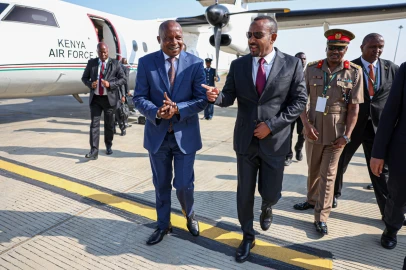
When Kenya’s Cabinet Secretary for Interior and National Administration, Kithure Kindiki, landed at Bahir Dar International Airport on Saturday to be received by Ethiopian Prime Minister Abiy Ahmed, the optics carried weight beyond diplomatic protocol. His arrival for the Tana High-Level Forum on African Security, running from 23 to 25 October 2024, signalled a deliberate convergence of two policy domains that African institutions have historically treated as separate: economic governance and continental peace.
The forum’s theme, “Pathways to Peace in Africa: Economic Sovereignty and Geopolitical Transformation,” is not rhetorical decoration. It encodes a specific analytical claim: that Africa’s security deficits are structurally linked to its economic vulnerabilities, and that durable peace requires sovereign control over resources, monetary systems, and regional institutions. This is the institutional question at the heart of the Bahir Dar gathering.
What exactly does the Tana Forum do, and why does it matter now?
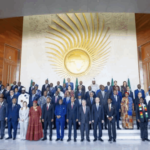
Established in 2012 in direct response to the African Union’s 2009 Tripoli Declaration, the Tana Forum was designed to fill a specific institutional gap. The AU’s formal Peace and Security Council operates through binding mandates and diplomatic constraints; Tana was conceived as an informal, high-level deliberative space where sitting and former heads of state, academics, civil society representatives, diplomats, and private sector leaders could debate African-led security responses without the procedural rigidity of multilateral summits. Organised by the Institute for Peace and Security Studies at Addis Ababa University, it carries academic credibility while maintaining direct access to decision-makers. Roughly 250 participants are expected at this edition, a scale that allows substantive exchange rather than performative consensus.
What makes the 2024 edition analytically significant is the explicit framing of economic sovereignty as a security variable. The agenda addresses resource wealth and monetary sovereignty for industrial development, macroeconomic governance frameworks, and the destabilising impact of illicit economies on regional stability. Each of these topics maps directly onto active governance crises across the continent: from the Sahel’s resource-conflict nexus to West Africa’s ongoing debates about CFA franc reform and ECOWAS monetary integration timelines. The forum does not produce binding resolutions, but it shapes the intellectual architecture within which African policymakers subsequently act.
How does economic sovereignty connect to West African security specifically?
For West Africa, the connection between economic governance and security is not abstract. The ECOWAS region has watched three member states, Mali, Burkina Faso, and Niger, withdraw from the bloc and form the Alliance of Sahel States, citing both security failures and economic grievances rooted in perceived external dependency. This institutional rupture directly challenges ECOWAS’s foundational mandate and its credibility as a regional security guarantor. The Tana Forum’s focus on macroeconomic governance and monetary sovereignty speaks to precisely this fault line: whether African regional institutions can offer member states a compelling economic rationale for integration, not merely a security umbrella that has demonstrably failed in the Sahel.
The AfCFTA framework adds another layer of institutional complexity. Continental free trade is premised on the assumption that deepening economic integration reduces the structural grievances that feed conflict. Yet AfCFTA implementation remains uneven, with intra-African trade still accounting for roughly 15 percent of total African trade compared to over 60 percent within the European Union. If the Tana Forum generates actionable analysis linking trade integration to conflict prevention, it could inform both AU Commission programming and ECOWAS’s recalibration strategy toward its suspended Sahel members.
The illicit economies agenda item is equally concrete. Across the Lake Chad Basin, the Gulf of Guinea, and the Sahel corridor, smuggling networks, artisanal mining without regulatory frameworks, and informal cross-border financial flows undermine both state revenue and institutional legitimacy. These are governance failures before they are security failures. Addressing them requires exactly the kind of coordinated macroeconomic and regulatory reform that forums like Tana are positioned to recommend, even if implementation authority rests with national governments and regional bodies like ECOWAS and the AU.
Kindiki’s participation carries specific institutional weight in this context. Kenya has positioned itself as a continental security actor, contributing troops to AU missions and engaging actively in East African Community mediation efforts. His presence at Tana alongside Ethiopian Prime Minister Abiy Ahmed, himself a Nobel Peace laureate navigating the aftermath of the Tigray conflict, reflects the forum’s capacity to bring together leaders whose domestic governance records are themselves subjects of scrutiny. That tension, between the forum’s reform agenda and the complex governance realities of its participants, is not a weakness. It is what makes Tana’s deliberations politically credible rather than aspirationally detached.
For investors and governance analysts tracking West Africa, the forum’s outputs deserve attention. When African heads of state and senior policymakers debate monetary sovereignty in a structured setting, they are also signalling to capital markets, multilateral lenders, and trade partners where institutional priorities are moving. A renewed continental consensus that economic self-determination is a prerequisite for peace would have direct implications for how ECOWAS member states approach IMF conditionality negotiations, Chinese infrastructure partnerships, and the governance of extractive industries. The Tana Forum does not set policy. But it shapes the normative environment in which policy gets made, and in 2024, that environment is shifting in ways that West African governance watchers cannot afford to ignore.