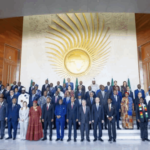
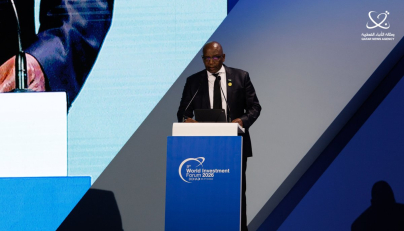
At the 9th World Investment Forum in Doha, Lesotho’s Prime Minister Samuel Matekane delivered an address that reframed the development finance debate, arguing that productive private investment, anchored in local capability-building and regional supply chain integration, must replace the structural dependency that aid relationships have historically reinforced across least developed countries.
The forum’s theme, “Investing in the Future,” provided Matekane with a platform to articulate what amounts to a governance doctrine for small, landlocked economies navigating a global investment environment reshaped simultaneously by technological disruption, geopolitical realignment, and tightening development finance flows. His argument was precise: investment that does not embed itself within the local economy, through knowledge transfer, enterprise development, and supply chain linkage, does not constitute development. It constitutes extraction dressed in the language of partnership.
The Structural Barriers Facing Landlocked and Least Developed Economies
Lesotho’s position within the global economy is instructive precisely because it is not exceptional. As a landlocked country entirely surrounded by South Africa, Lesotho exemplifies the geographic and structural constraints that define the investment climate for a significant cluster of African states. The World Trade Organization estimates that landlocked developing countries face trade costs between 40 and 60 percent higher than their coastal counterparts, a structural disadvantage that no amount of foreign direct investment resolves unless the investment itself is designed to address supply chain connectivity rather than simply extract productive output.
Matekane acknowledged this directly, noting that the current global investment landscape exposes the vulnerabilities of developing nations while simultaneously generating new entry points, provided that investment is oriented toward trade and business rather than aid substitution. The distinction matters institutionally. Aid flows are discretionary, subject to donor political cycles, and structurally disconnected from the productive capacity of recipient economies. Investment, when properly structured through joint ventures, technology transfer agreements, and local procurement mandates, creates compounding returns that aid cannot replicate.
Within the African continental framework, this argument connects directly to the logic of the African Continental Free Trade Area (AfCFTA), which entered its operational phase with the ambition of eliminating tariffs on 90 percent of goods traded among member states and generating US$450 billion in additional income by 2035, according to World Bank projections. For landlocked economies like Lesotho, AfCFTA’s value is only realizable if investment flows build the productive and logistical capacity to participate in intra-African trade, rather than bypassing local economies in favor of enclave export models.
Regional Supply Chains, MSME Integration, and the Governance of Investment Linkages
The Prime Minister placed micro, small, and medium-sized enterprises at the center of his investment framework, identifying them as the fundamental pillar of economic development. This is not rhetorical positioning. The International Finance Corporation estimates that MSMEs represent approximately 90 percent of businesses and more than 50 percent of employment across developing economies globally, yet they account for a disproportionately small share of formal investment flows, largely because risk assessment frameworks used by international capital allocators systematically discount informal and sub-scale enterprises.
Matekane’s call to strengthen local and regional supply chains and build effective links between foreign investors and local exporters identifies a governance mechanism, not merely an aspiration. The mechanism requires regulatory architecture: investment screening frameworks that include local content requirements, procurement linkage obligations, and technology transfer provisions as conditions of market access. Several ECOWAS member states have experimented with versions of this architecture in the extractive sector, with mixed results that reflect the difficulty of enforcement when regulatory capacity is thin and investor leverage is high.
The Southern African Development Community (SADC), within which Lesotho holds membership, has made regional value chain integration a stated priority, but implementation has lagged behind institutional design. The gap between SADC’s formal commitments and the actual investment linkage outcomes experienced by its smaller member economies points to a governance deficit that Matekane’s address implicitly diagnoses: investment frameworks that lack binding local content provisions and enforcement mechanisms reproduce geographic and structural disadvantage rather than correcting it.
Matekane also emphasized the relationship between investment and human capital development, arguing that the digital transformation of production systems makes it essential for youth to acquire technical, entrepreneurial, and digital skills. This framing connects investment policy to education governance in ways that development finance institutions have increasingly recognized. The African Development Bank’s Jobs for Youth in Africa strategy, targeting 25 million jobs and 50 million entrepreneurship opportunities by 2025, rests on precisely this logic: that physical infrastructure investment without corresponding human capital investment generates productivity gains that accrue to capital owners rather than labor markets.
The compound argument, that capital, knowledge, technology, and skills must be combined to build productive and competitive economies, is analytically sound and institutionally demanding. It requires coordination across ministries of finance, trade, education, and labor; between national development banks and private capital allocators; and between regional bodies and national regulatory agencies. That coordination is itself a governance challenge, and one that Lesotho, with a GDP of approximately US$2.2 billion and a public administration constrained by fiscal pressures, cannot resolve unilaterally.
This is where the multilateral dimension of Matekane’s address carries its sharpest implication. Development aid, he argued, should complement and stimulate productive private investment, particularly where funding gaps, infrastructure deficits, and risk perceptions constrain investment flows. The formulation is careful: aid is not dismissed but repositioned as catalytic, a first-loss instrument or a de-risking mechanism that unlocks private capital rather than substituting for it. This is consistent with the blended finance architecture promoted by the G20 and the OECD Development Assistance Committee, though the gap between the architecture’s design and its deployment at the scale required by least developed countries remains substantial.
For West African policymakers and regional institutions, Matekane’s address at the World Investment Forum carries a mirror function. The governance challenges he identified, weak investment linkage mechanisms, underinvestment in human capital, geographic constraints that compound structural disadvantage, are not unique to Lesotho or to southern Africa. Mali, Niger, and Burkina Faso share the landlocked constraint within the ECOWAS zone. Guinea-Bissau and Sierra Leone face comparable MSME financing gaps. The policy question is whether ECOWAS and the WAEMU monetary union can develop the binding investment linkage frameworks and the regional infrastructure financing mechanisms that individual member states cannot construct alone. Matekane’s argument, stripped to its institutional core, is that geography need not be destiny, but only if investment governance is designed with that intention from the outset.