A new report from the Mastercard Foundation, launched in Accra on 24 November 2024, identifies Kenya as one of the few countries on the continent systematically embedding coding, artificial intelligence literacy and green skills into its secondary school curriculum, giving its youth a measurable structural advantage as Sub-Saharan Africa approaches a demographic inflection point of historic proportions. The report, Secondary Education in Africa: Expanding Pathways to Work, Livelihoods, and Lifelong Learning, was presented before the ministers of education of Ghana, Liberia, Rwanda and Sierra Leone, signalling the degree to which secondary schooling has moved from a peripheral policy concern to a central governance priority across the region.
The demographic arithmetic underpinning the report is stark. By 2035, more than 330 million young people in Sub-Saharan Africa will reach working age, a figure that exceeds the rest of the world combined. Only 9 per cent of those young people will proceed to university or tertiary college, which means secondary school functions, for the overwhelming majority, as the terminal institution of formal education. More than 10 million young Africans enter the labour market each year, but the formal economy generates only approximately 3 million new jobs annually. The remaining 90 per cent of youth employment is absorbed by the informal sector, a structural imbalance that secondary curricula have historically done little to address. The report’s central institutional argument is that schools must be redesigned, not merely expanded, to prepare young people for wage employment, self-employment, digital work and the emerging green and creative economies simultaneously.
Kenya and Rwanda Lead on Digital Curriculum Integration
Among the 49 Sub-Saharan countries surveyed for the report, only two explicitly integrate artificial intelligence into their national curricula. Kenya and Rwanda are identified as the regional leaders in teaching computer programming at the secondary level, while Kenya, Nigeria and Zambia are noted as offering some coverage of AI-related topics. This places Kenya in a narrow cohort of states whose educational governance has moved faster than the continental norm in aligning school outputs with the skills that digital labour markets, both domestic and global, are beginning to demand. The practical economic effects are already visible: a study covering Kenya, Nigeria, Ghana, South Africa and Uganda found that online commerce, encompassing everything from mobile money services to retail goods, was the most common form of gig work among young people. Platforms such as Kobo360, an e-logistics service operating across Kenya and four other countries, have extended formal financial access and work opportunities to truck drivers who would previously have operated entirely outside structured markets.
On the green economy, the report credits Kenya with “one of the most advanced approaches to teaching cross-cutting green skills” on the continent, citing short courses in renewable energy, environmental management and sustainable construction embedded within the secondary system. The KenGen Geothermal Training Centre is identified as a regional centre of excellence, a model with direct relevance to ECOWAS member states seeking to build climate-resilient workforces as the continent’s energy transition accelerates under the African Union’s Agenda 2063 frameworks. Samuel Yalew Adela, Senior Director for Secondary Education and Transitions at the Mastercard Foundation, framed the institutional question precisely: “Not only how many young people are in school, but what school prepares them for.” That reorientation, from enrolment metrics to labour-market outcomes, represents a meaningful shift in how education governance is being evaluated across the region.
Inclusion as Economic Policy, Not Only Social Equity
The report examines seven countries in depth, and Sierra Leone’s approach to inclusion is presented as a governance model worth regional attention. The country has legislated fee-free schooling and embedded the inclusion of pregnant girls, learners with disabilities and rural learners into national education policy. Conrad Sackey, Sierra Leone’s Minister of Basic and Senior Secondary Education, articulated the economic rationale directly: “Reaching the last learner is not only a matter of justice; it is how we build the workforce our economy needs.” Kenya’s own 100 per cent transition policy produced a 97 per cent progression rate from Grade 6 to junior secondary school in 2025, a figure that reflects both the ambition and the partial success of administrative mandates designed to close enrolment gaps. The report makes the case that these inclusion policies are not merely redistributive but are structurally necessary for any economy seeking to convert its demographic volume into productive capacity.
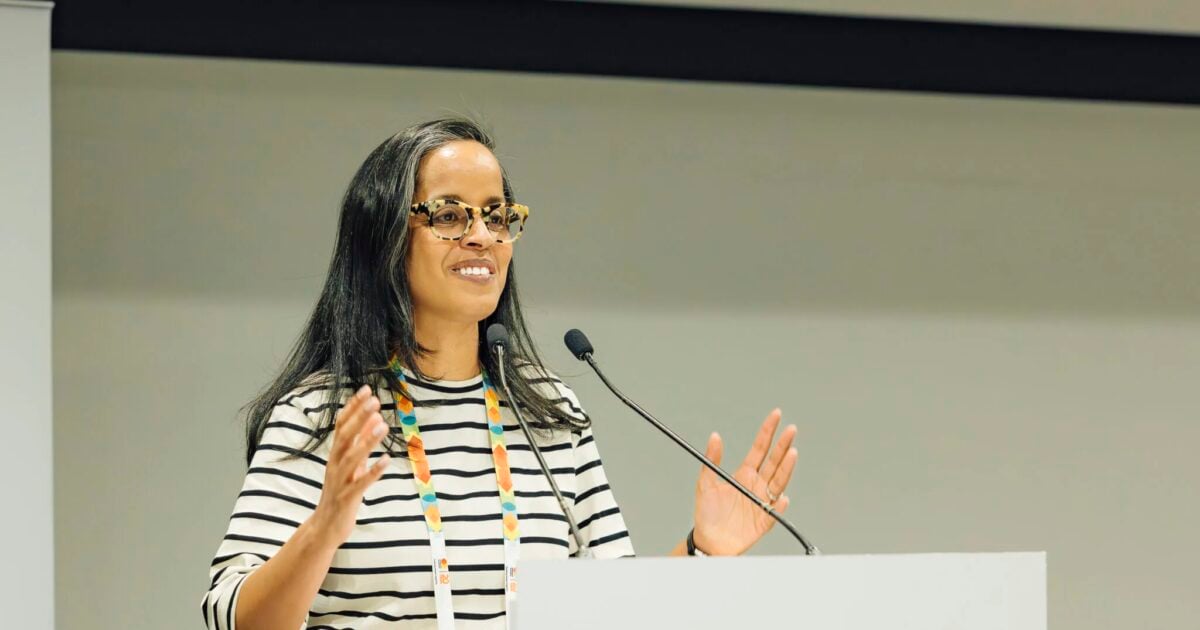
The creative economy receives specific attention as an underutilised pathway. Africa’s music industry is the fastest-growing in the world by several measures, and the report points to film, digital media, fashion and gaming as sectors generating real employment for young people who fall outside the narrow pipeline of formal wage work. For West African economies such as Ghana and Nigeria, where the creative sector already contributes meaningfully to GDP and export earnings, this framing aligns with existing policy conversations around cultural economy development and intellectual property governance. Mastercard Foundation President and CEO Sewit Ahderom, speaking at the Accra launch, described secondary school as “where we can make the biggest difference to whether they find dignified and fulfilling work,” a statement that carries weight in a regional context where secondary enrolment rates remain uneven and curriculum reform has lagged behind labour-market transformation. The Foundation stated its commitment to translating the report’s evidence base into concrete government partnerships, positioning the document as an action instrument rather than a diagnostic exercise.