
Kenya has recorded 687 incidents of school unrest in a single academic term, and the government’s response is another taskforce. The question is whether this one will break a pattern of inquiry without implementation that has defined Kenyan education governance for decades.
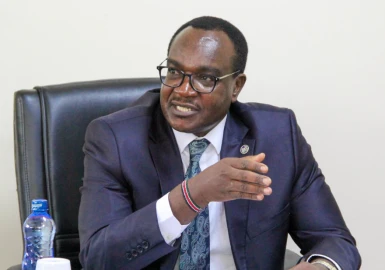
On Tuesday, Education Cabinet Secretary Julius Ogamba inaugurated a 52-member multi-stakeholder taskforce chaired by Professor Peter Mulwa Mbithi, a former Vice-Chancellor of the University of Nairobi. The body carries a 90-working-day mandate to produce an evidence-based report with costed interventions, implementation timelines and accountability mechanisms, with a final submission deadline of 2 March 2027. Its scope spans all 47 Kenyan counties, covering school governance, fire safety, dormitory conditions, learner welfare, bullying, substance abuse, uniform affordability and the role of social media in mobilising student unrest.
The institutional trigger for this latest exercise is stark. The 687 reported incidents occurred during the second term of 2026 alone. CS Ogamba pointed to two recent tragedies as the clearest evidence of what regulatory failure looks like in practice: the Hillside Endarasha Academy fire in 2024, which killed students in their dormitory, and the fire at Utumishi Girls Academy in May 2026. Both incidents raised direct questions about fire prevention standards, emergency preparedness and the supervisory capacity of Kenya’s education management structures.
Ogamba was explicit that these events should not be reduced to disciplinary failures. “These incidents cannot be treated as isolated disciplinary matters,” he told the taskforce at its inauguration. “They point to broader questions concerning school governance, learner welfare, institutional accountability, safety standards and the effectiveness of our education management systems.” That framing matters: it positions the crisis as a structural governance problem, not a behavioral one, and it sets a higher bar for what a credible institutional response should deliver.
The deeper governance challenge is not the absence of diagnosis but the absence of enforcement. Kenya has launched multiple prior inquiries into school unrest, including the Sagini, Macharia, Wangai and Koech investigations, each of which generated evidence and recommendations. None produced durable reform. Ogamba acknowledged this directly and instructed the new taskforce to begin by reviewing why previous recommendations were never implemented. “Kenya has undertaken several enquiries into school unrests,” he said. “The persistence of school unrests demonstrates that our challenges extend beyond identifying causes. It is fundamentally an implementation, enforcement and accountability challenge.”
That admission carries significant weight within a West African and broader continental governance context. Across the region, education systems face a shared structural tension: governments commission credible technical work, but the institutional machinery required to translate findings into binding policy changes, budget allocations and enforceable safety codes often remains underpowered or politically insulated from reform pressure. Kenya’s case is a documented instance of that pattern playing out over multiple administrations and inquiry cycles.
Professor Mbithi, for his part, signaled awareness of the coordination risk that has undermined previous multi-stakeholder bodies. “Every member must understand the scope, expected output and timelines set out in the Terms of Reference,” he told taskforce members. “Each of the sub-committees will contribute to a single coherent set of recommendations without duplicating efforts.” Whether that internal discipline holds across 52 members and multiple subcommittees over 90 working days is a practical governance test in itself.
The taskforce’s mandate to cost its interventions is particularly significant. Costed recommendations force a direct engagement with the Ministry of Finance and the budget cycle, making it harder for the Ministry of Education to accept findings in principle while deferring implementation indefinitely. If the final report submitted in March 2027 includes specific budget lines, procurement timelines for fire safety infrastructure and measurable compliance benchmarks for boarding schools, it will be structurally harder to shelve than its predecessors.
From a regional comparative standpoint, boarding school safety regulation remains inconsistently enforced across East and West Africa alike. Countries operating large public boarding school systems, including Ghana, Nigeria and Senegal, face analogous tensions between national education expansion targets and the infrastructure investment required to make residential schooling safe at scale. Ghana’s secondary school infrastructure, significantly expanded under the Free Senior High School policy introduced in 2017, has generated its own dormitory overcrowding concerns, illustrating that rapid enrollment growth without parallel safety investment creates compounding institutional risk.
For Kenya specifically, the credibility of this taskforce will ultimately be measured against a single metric: whether its report produces enforceable safety standards, binding inspection regimes and named accountability mechanisms within the education bureaucracy. The 90-day clock and the 47-county consultation process give the exercise procedural legitimacy. The CS’s instruction to examine why past recommendations failed gives it analytical depth. What remains to be determined is whether the Ministry of Education and the broader government machinery will treat the March 2027 report as a compliance obligation rather than a reference document.
CS Ogamba’s public warning to the taskforce against producing another inquiry whose findings would never be implemented is itself a governance signal worth tracking. It places the Cabinet Secretary on record as demanding measurable outcomes, creating at least a political accountability baseline against which civil society, parliamentary committees and education sector watchdogs can hold the Ministry to account when the report is delivered.