
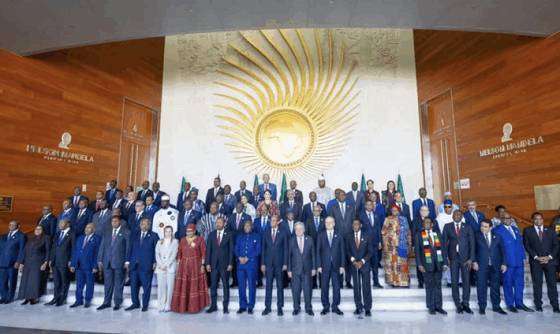
The African Continental Free Trade Area (AfCFTA) has gained fresh political backing after the African Union (AU) inaugurated a Committee of Heads of State and Government to drive implementation. The AU announced the move at the 39th Ordinary Session of the AU Assembly. Officials presented it as a push to speed up the shift from negotiations to full-scale delivery.
Kenya’s President William Ruto will chair the committee. “Business as usual does not deliver the results we seek,” he said, calling for firm support to turn the AfCFTA’s promise into visible outcomes for citizens and companies.
AfCFTA implementation moves to top-level political steering
The committee has a clear mandate. It will provide strategic political leadership, sustain momentum and push for measurable trade and investment results. The AU wants the body to keep leaders focused on delivery, not only on commitments.
The committee will also track progress across Africa’s five regions. In practice, that means monitoring implementation steps and maintaining political support for intra-African trade.
Who sits on the new AU committee
The AU appointed leaders from eight countries. The group includes Kenya, Ghana, Mauritius, Botswana, South Africa, the Democratic Republic of Congo, Burundi and Côte d’Ivoire. The AU framed the membership as a way to anchor follow-through across different parts of the continent.
What the AfCFTA is designed to build
The AfCFTA is Africa’s continent-wide trade agreement. It aims to bring AU member states into a single liberalised market for goods, services and investment. A “liberalised market” means countries reduce barriers such as tariffs and restrictive rules to make cross-border trade easier.
The AU describes the AfCFTA as the world’s largest free trade area by number of participating countries. Supporters see it as a way to deepen intra-African trade and strengthen African value chains.
Progress since 2019 and the push to scale up
The AfCFTA entered its operational phase in 2019. Since then, participating states have concluded negotiations on key legal instruments and set up institutions to support implementation. The agreement has also advanced through the Guided Trade Initiative, which allows participating countries and firms to start trading under AfCFTA terms in a controlled, practical way.
However, AU and AfCFTA officials say the next phase must focus on outcomes. The new committee is expected to keep attention on implementation across borders and sectors, and to encourage faster operational decisions.
AfCFTA officials link the pact to global economic pressures
Wamkele Mene, Secretary-General of the AfCFTA, welcomed the committee’s creation. He stressed the need for sustained leadership and timely operationalisation. He also argued that, amid global economic upheavals, the AfCFTA offers a practical route to activate a continent-wide market, support industrial capacity and reduce external vulnerabilities.
Acknowledging Issoufou Mahamadou’s role in the transition
At its inaugural meeting, the committee welcomed a report from the AfCFTA Champion, Issoufou Mahamadou, the former President of Niger. Members acknowledged his role in helping move the project from negotiations toward implementation.
The committee also underlined the need for deeper engagement with African Development Finance Institutions. Leaders linked that step to the goal of turning policy commitments into bankable projects, investment flows and wider business participation.
The AU’s new committee now carries the task of keeping implementation on track and translating political support into measurable trade and investment gains under the AfCFTA.