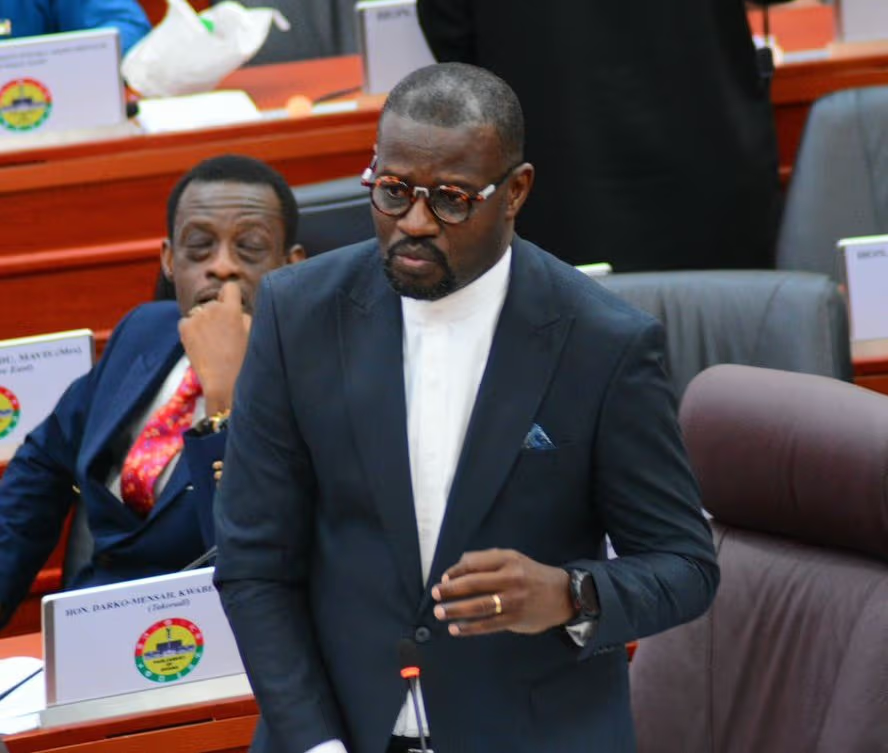


Last weekend, allegations of vote-buying marred the Ayawaso East Constituency primary of the National Democratic Congress (NDC). Vote-buying means offering money or perks to influence a ballot. John Dramani Mahama, the NDC Majority Caucus in Parliament, and party leadership condemned the reports. They also promised investigations. Meanwhile, the Office of the Special Prosecutor (OSP) questioned candidate Mohammed Baba Jamal and released him on self-recognisance bail pending further action.
What happened and who said what
Witness accounts and videos triggered concern after the constituency vote. The NDC set up a short probe and chose not to annul the primary. Baba Jamal denies wrongdoing and says he will cooperate. However, the NDC Majority Caucus urged party authorities to cancel the poll and sanction any proven inducements. Mahama also backed a full, credible inquiry. The message from all sides is clear: the practice is unacceptable, and evidence must be tested.
Why this episode matters beyond one seat
Money in internal contests erodes trust. It skews competition toward wealth, not ideas. It also feeds public cynicism about institutions, from schools to the courts. When citizens believe power is bought, turnout and confidence fall. By responding quickly, the party and the OSP aim to protect the integrity of the process. However, consistency will matter more than statements. Sanctions, if warranted, must be firm and transparent.
The OSP’s role, explained in plain terms
The OSP is Ghana’s independent anti-corruption prosecutor. It can investigate suspected corruption and related offences. It may question suspects, grant bail, and file charges if evidence meets legal tests. Its work is separate from party discipline. Thus, a party may keep or drop a candidate, but only a court can convict. Clear coordination—and respect for due process—will be decisive in this case.
Inside-party rules under scrutiny
Pressure for reform is rising. Veteran figures such as Kwabena Frimpong-Boateng, Nyaho Nyaho-Tamakloe and Christine Amoako-Nuamah have gone to the Supreme Court of Ghana seeking declarations on delegate-based primaries. A “delegate system” is when only selected party delegates vote to pick candidates. Reformers argue that opening primaries to all card-bearing members would dilute cash influence. They also want a ban on cash or gifts tied to votes, with enforcement outside party control.
Lessons from elsewhere, without exaggeration
Many democracies have faced similar tests. Brazil’s “Operation Car Wash” showed how patient judicial work can expose illicit networks across politics and business. Contexts differ, yet one principle travels well: strong cases rest on document trails, financial analysis, and impartial courts. Ghana’s institutions can apply the same discipline, case by case.
What to watch next
Three tracks now matter. First, the OSP inquiry: was there an offence under Ghanaian law? Second, party action: will the NDC publish clear rules and penalties and apply them the same way everywhere? Third, possible court guidance on primary systems: broader membership voting, tighter financing rules, and national oversight of party registers could follow. Each step would help align internal democracy with the Constitution’s spirit.
The stakes for Ghana’s democracy
Ghanaians expect clean contests and equal chances. They also expect accountability that does not spare the powerful. If parties reduce the role of cash, more qualified people can run without “soiling their hands.” That is how to keep plutocracy—rule by wealth—at bay. The Ayawaso East case is a warning sign. It is also a chance to show that rules apply, investigations proceed, and democratic competition remains fair.