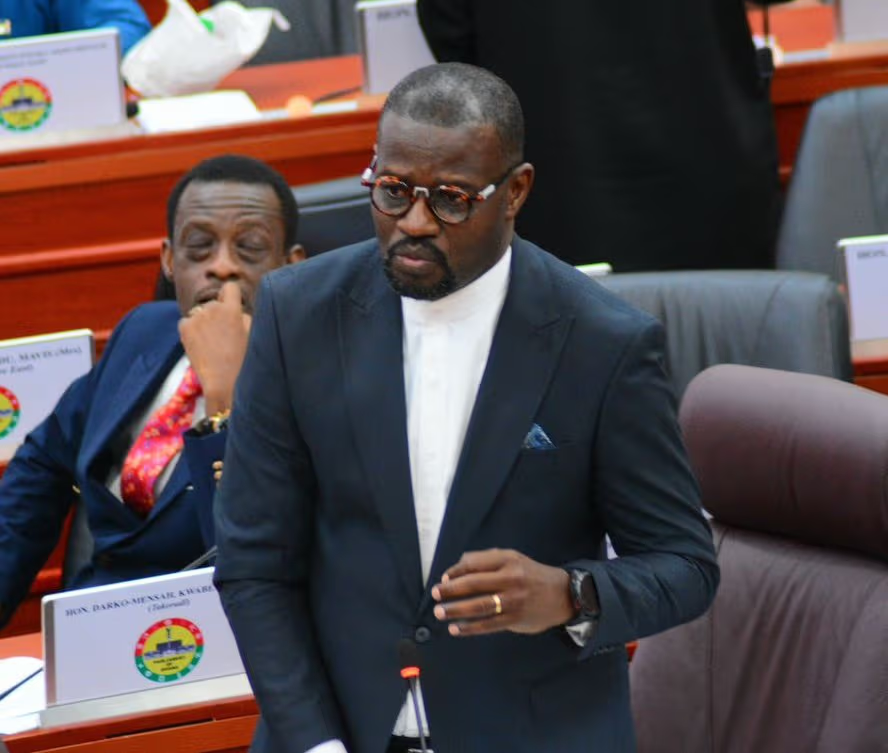


Government will seek Parliament’s approval to restructure about GH¢5.8 billion of legacy debt owed by the Ghana Cocoa Board (COCOBOD) to the Bank of Ghana and the Ministry of Finance (Ghana). Finance Minister Cassiel Ato Forson said the plan is central to stabilising the cocoa sector and restoring COCOBOD’s balance sheet. He announced the measures at a press briefing in Accra.
COCOBOD debt restructuring: what government plans to change
The restructuring targets legacy obligations that have strained cash flow and investor confidence. Officials say the overhaul should ease pressure on the regulator and align with broader reforms now before Parliament. “Legacy debt” refers to liabilities from past policies and projects that still weigh on current finances. Cabinet support includes options to convert or reprofile portions of the GH¢5.8 billion and tighten oversight.
Ending quasi-fiscal spending to refocus the Board
Dr. Forson said COCOBOD will be barred from “quasi-fiscal” activities—government-type spending conducted outside the budget—such as funding road construction. A forthcoming Cocoa Board Bill will codify this shift and move cocoa-roads liabilities to the appropriate ministries. The objective is clear: keep COCOBOD focused on production, regulation and marketing, with stronger fiscal discipline.
Oversight push: forensic and criminal audit over eight years
The Attorney-General will initiate a concurrent forensic and criminal audit of COCOBOD’s activities covering the last eight years. The review will examine financial management, procurement and any irregularities. Authorities say the exercise aims to enforce accountability and rebuild confidence across the cocoa value chain.
Pricing, financing and the wider reform track
The debt plan sits alongside a domestic cocoa-bond financing model and steps to boost local processing. Policy proposals would link the farmgate price more closely to international benchmarks. The government has also signalled a medium-term goal to process a larger share of Ghana’s beans locally, with measures to reduce arrears and curb smuggling.
Government frames the GH¢5.8 billion restructuring, the ban on quasi-fiscal spending and the eight-year audit as a unified programme to stabilise COCOBOD. The next milestones are parliamentary approval of the debt plan, operational transfer of liabilities and the start of the Attorney-General’s probe.