
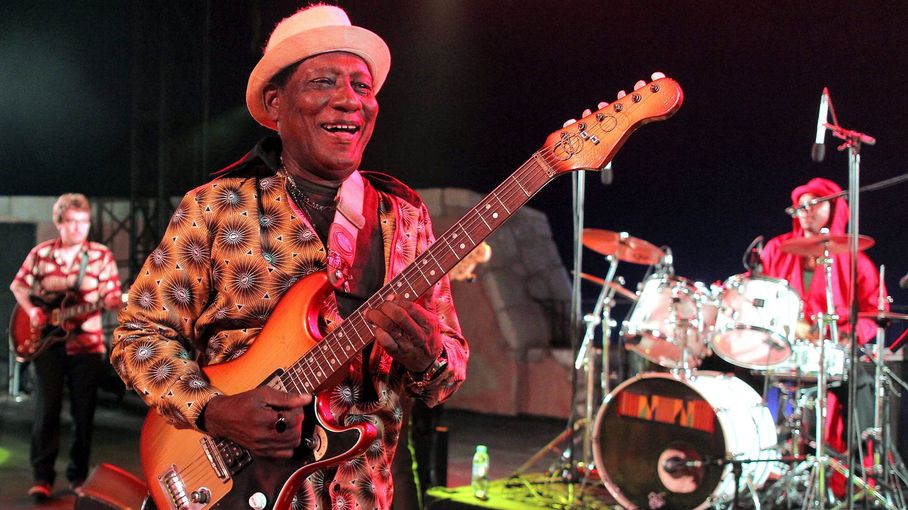
Ebo Taylor, the Ghanaian guitarist, composer and bandleader widely credited with helping define highlife and influencing generations of African musicians, has died aged 90, according to announcements by his family and Ghana’s Musicians Union (MUSIGA).
Taylor, born Deroy Taylor in Cape Coast on January 6, 1936, died on February 7 at Saltpond Hospital, MUSIGA said. The union’s president, Bessa Simons, described him as “a great son,” while MUSIGA said he passed away shortly after his 90th birthday and a day after the launch of an event created to honour his legacy.
Ebo Taylor dies and Ghana’s music scene pays tribute
Tributes from musicians and cultural figures followed news of Taylor’s death, with artists describing him as a major influence on Ghanaian music and beyond. Music In Africa reported condolences from figures including Rocky Dawuni and Black Sherif, who hailed Taylor’s impact on African popular music.
A statement carried by Spain-based Spectrum FM also quoted presidential spokesperson Felix Kwakye Ofosu as saying the country was “deeply saddened” by the loss of a “colossus” of Ghanaian music.
A career built in highlife’s formative decades
Taylor rose to prominence in the late 1950s and early 1960s as highlife became Ghana’s dominant popular sound, building a reputation for intricate arrangements and a distinctive guitar style. He performed with leading bands of the era including the Stargazers and the Broadway Dance Band, according to MUSIGA and Music In Africa.
Over more than six decades in music, Taylor fused Ghanaian rhythms with elements of jazz, funk, soul and early Afrobeat, helping shape a sound that travelled widely across West Africa and later reached audiences far beyond the continent.
London years and a link to Afrobeat’s rise
A pivotal chapter in Taylor’s development came in 1962 when he took his Black Star Highlife Band to London, where he collaborated with other African musicians, including Nigerian artist Fela Kuti. Music In Africa and MyJoyOnline both describe that period as an important part of Taylor’s career and a broader exchange of musical ideas among African artists based in the UK.
After returning to Ghana, Taylor became a sought-after arranger, producer and bandleader, working with prominent Ghanaian artists including Pat Thomas and C.K. Mann.
International rediscovery through recordings and sampling
Taylor’s music gained renewed attention internationally in the 2000s and 2010s through reissues, later-life releases and sampling in global pop and hip-hop. MyJoyOnline reported that Usher sampled Taylor’s track “Heaven” for “She Don’t Know” featuring Ludacris, while Music In Africa said Taylor’s recordings were later sampled by artists including the Black Eyed Peas, Kelly Rowland, Jidenna, Vic Mensa and Rapsody.
MUSIGA also noted that Taylor continued performing and recording into his late 80s, with a 2025 release as part of the Jazz Is Dead series among his most recent projects.
Across Ghana and the wider diaspora, Taylor is remembered as a foundational figure who bridged traditional musical forms and modern innovations, leaving a catalogue that continues to inform contemporary African popular music.