
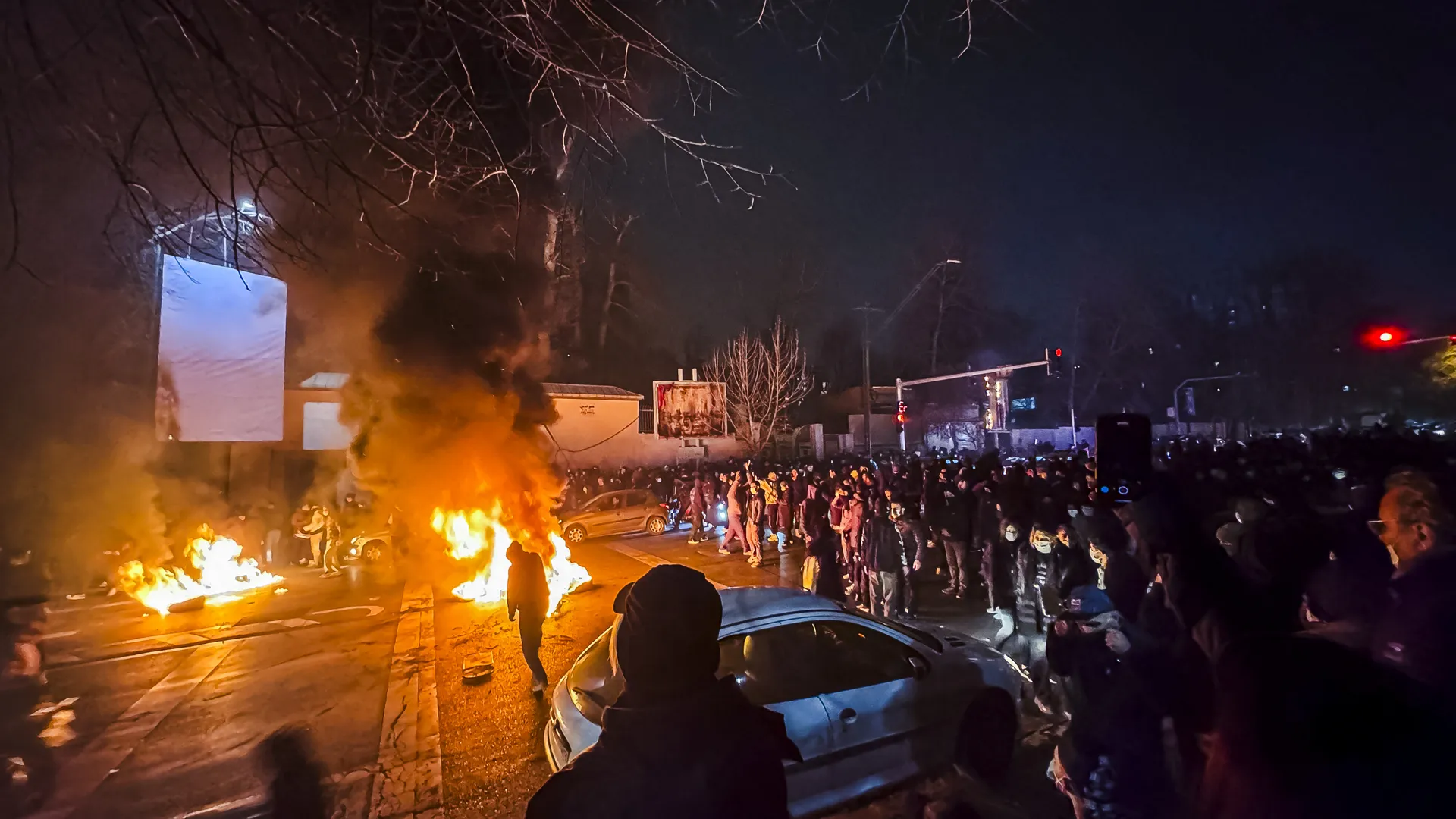
An Iranian member of parliament warned that protests could return “with greater intensity” unless the government addresses public grievances, as authorities continued a security crackdown during the largest demonstrations seen in years.
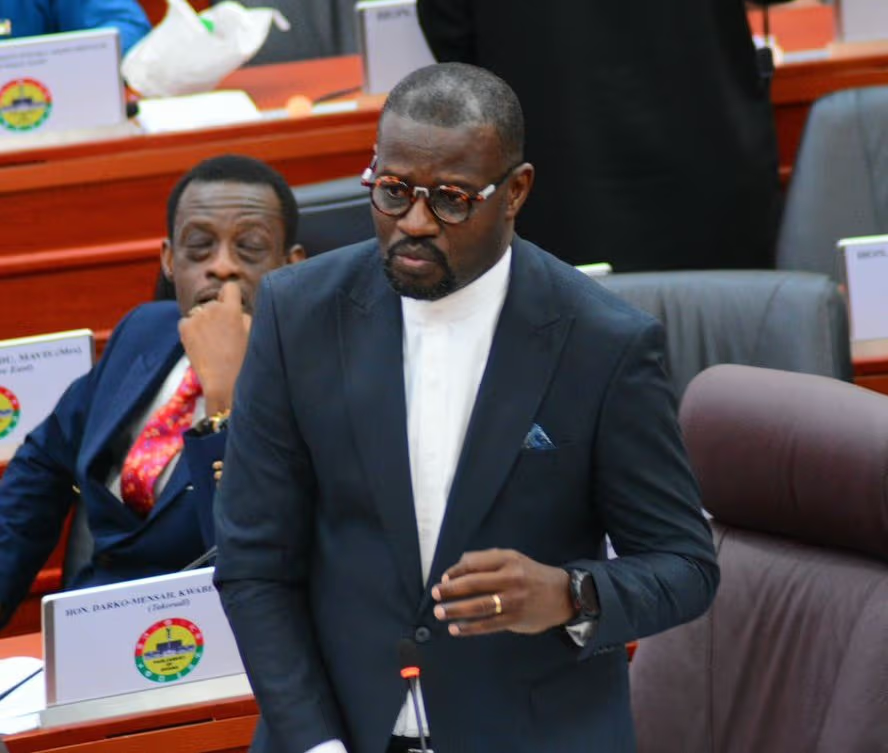
Parliamentarian Mohammadreza Sabaghian, who represents a constituency in Yazd province in central Iran, said the state needed to resolve people’s dissatisfaction to prevent unrest from escalating again, according to Reuters.
The nationwide protests were triggered by worsening economic conditions, including a sharp decline in the value of Iran’s currency, and have expanded into broader demonstrations that include calls for political change. The unrest began on December 28 and has continued for more than two weeks.
Iran unrest warning and domestic pressure
Iranian authorities have combined a crackdown with public messaging that some economic complaints are legitimate, while also blaming foreign actors for fueling the demonstrations.
An Iranian official said about 2,000 people had been killed in the protests, marking the first time authorities have publicly acknowledged such a high death toll during the current unrest. The official said those described as “terrorists” were responsible for deaths among both protesters and security forces, without providing a breakdown.
Iran’s judiciary has said specialized courts have been appointed to handle cases linked to the protests. Authorities have also reported arrests of individuals they described as protest organizers, including in Tehran.
U.S. statements and trade pressure
U.S. President Donald Trump urged Iranians to continue protesting in a social media post, saying “help is on its way,” without giving details. He also said he had canceled meetings with Iranian officials until what he called the killing of protesters stopped.
Trump announced a 25% import tariff on products from any country doing business with Iran. Iran is already under extensive U.S. sanctions, and it exports much of its oil to China, with other key trade partners including Turkey, Iraq, the United Arab Emirates and India.
Iran’s foreign minister, Abbas Araqchi, said Tehran had continued communications with U.S. special envoy Steve Witkoff during the protests and that Iran was reviewing ideas proposed by Washington.
Iranian authorities have accused the United States and Israel of fomenting the unrest.
International reaction and diplomatic moves
Russia condemned what it called “subversive external interference” in Iran’s internal affairs and said U.S. threats of additional military strikes were “categorically unacceptable.” Russia’s foreign ministry warned that using unrest as a pretext for renewed military action could have serious consequences for the Middle East and global security.
Several European governments also responded. Britain, France, Germany and Italy summoned Iranian ambassadors in protest over the crackdown.
German Chancellor Friedrich Merz said he believed Iran’s government would fall, describing the use of violence to maintain power as a sign of terminal weakness. Iran’s foreign minister rejected Merz’s remarks, accusing Germany of double standards.
Communications restrictions and rights concerns
Communications disruptions and restrictions, including periods of internet shutdown, have limited the flow of information from inside Iran. The United Nations human rights office said phone services had been restored, but internet connectivity remained patchy.
Iran’s intelligence ministry said it had confiscated electronic devices it claimed were intended for use in protests for espionage and for establishing communications, including internet access. A Kurdish rights group, Hengaw, reported broader operations in multiple cities to seize communications devices from households.
Hengaw also said a 26-year-old man, Erfan Soltani, detained in connection with protests in the city of Karaj, was scheduled to be executed on Wednesday. The group said the family had been informed the sentence was final and warned that the process raised concerns about the death penalty being used to suppress protests. Independent confirmation of the report was not available, and Iranian state media had not reported death sentences in relation to the current unrest.
The protests have unfolded amid deep economic strain and heightened regional tensions following Israeli and U.S. strikes last year, with authorities maintaining a heavy security posture as the unrest continues.