
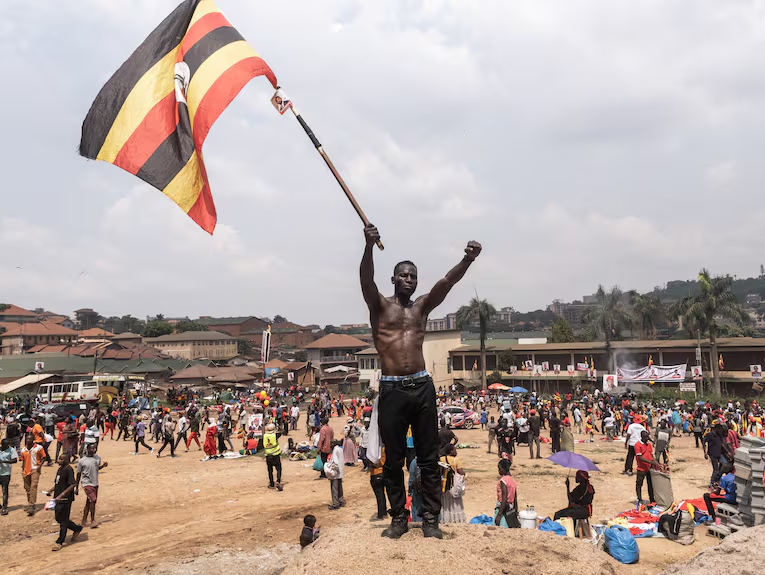
Uganda ordered a temporary internet shutdown and deployed soldiers across Kampala two days before the presidential election scheduled for January 15, 2026, intensifying concerns over civic space and election transparency. Authorities said the blackout would curb misinformation, fraud and incitement; opposition figures called it an attempt to suppress scrutiny.
What authorities announced
The Uganda Communications Commission on Tuesday directed providers to suspend public internet access, with limited exemptions for critical services, framing the measure as a short-term security step during the sensitive pre-election period. Local and regional outlets reported the order taking effect on the evening of January 13. Officials have linked the restrictions to efforts to prevent online manipulation and mobilization for violence. Meanwhile, the military presence in Kampala expanded, with soldiers posted at key intersections and public buildings. Government representatives said the deployment aims to deter unrest as campaigning ends and logistics are finalized for polling day.
The political stakes on January 15
President Yoweri Museveni, 81, who has led Uganda since 1986, is seeking a seventh term. His principal challenger is Robert Kyagulanyi Ssentamu—widely known as Bobi Wine—whose youth-driven movement has grown in urban areas. Roughly 22 million Ugandans are registered to vote, according to local reporting.
Campaigning has been marked by arrests, violent dispersals and restrictions on opposition activities, with rights groups and diplomats voicing concern. Authorities insist their actions are necessary to keep order and enforce electoral rules.
Internet blackout complicates election monitoring
Observation missions and civil society organizations warned that cutting connectivity risks undermining real-time reporting of incidents, parallel vote tabulation and public access to official information. Regional media highlighted how the blackout could hamper domestic observers and the East African Community mission’s situational awareness. The government maintains that election operations will proceed and that core systems remain functional. However, the disruption mirrors the approach taken during Uganda’s 2021 elections, when authorities also blocked internet access nationwide.
Conflicting claims and official messaging
In the days leading up to the order, a purported regulator notice about a shutdown circulated online and was labelled fake by fact-checkers. Subsequent statements and reporting on January 13 referenced an official directive and described rolling service suspensions, underscoring the fluidity of information in the pre-election environment.
Why the Uganda internet shutdown matters
Internet access has become integral to credible elections: it supports transparent communication by the electoral commission, enables independent incident reporting, and allows parties and observers to share evidence quickly. Shutting it down—combined with a visible military posture—raises the threshold for demonstrating that the process is open, peaceful and verifiable, particularly in a contest involving a long-standing incumbent and a mobilized opposition. The decisions taken on January 13 will shape both voter confidence and international assessments of Uganda’s vote this week.
As Ugandans head to the polls on Thursday, attention will focus on whether connectivity is restored in time for results transmission, how security forces manage gatherings around polling sites, and whether observers can operate freely under the restrictions now in place.